
Filter
4436
Text search:
monitoring
and
surveillance
Featured
451
1275
Language
4121
261
100
89
47
37
27
26
5
5
2
2
2
1
1
1
1
1
1
1
1
1
1
1
1
1
1
1
Document type
2077
800
750
325
252
82
62
54
16
6
5
3
2
1
Countries
222
170
121
119
112
106
101
90
85
85
80
78
72
67
67
63
60
58
52
52
49
46
41
40
40
39
34
33
32
31
31
30
29
29
28
26
24
24
24
23
23
22
20
19
18
17
16
15
15
14
14
14
12
12
12
12
11
10
9
9
9
9
9
8
8
8
8
8
7
7
6
6
6
6
6
6
6
6
6
6
6
5
5
4
4
4
4
4
4
4
4
4
4
3
3
3
3
3
3
3
3
3
2
2
2
2
2
2
2
2
2
2
2
2
2
2
2
2
2
2
2
2
2
1
1
1
1
1
1
1
1
1
1
1
1
1
1
1
1
1
1
1
1
1
1
1
1
1
1
1
Authors & Publishers
842
239
157
143
93
68
60
56
55
45
40
39
36
33
30
29
27
25
23
20
19
19
19
18
17
17
17
16
15
15
15
14
14
14
13
12
12
12
12
12
12
12
11
11
11
11
11
11
11
11
11
10
10
10
10
10
10
10
10
10
10
10
10
9
9
9
9
9
9
9
9
9
8
8
8
8
8
8
8
8
7
7
7
7
7
7
7
7
7
7
6
6
6
6
6
6
6
6
6
6
6
5
5
5
5
5
5
5
5
5
5
5
5
5
5
5
5
5
5
5
5
5
5
5
5
5
5
5
5
5
5
5
5
5
4
4
4
4
4
4
4
4
4
4
4
4
4
4
4
4
4
4
4
4
4
4
4
4
4
4
4
4
4
4
4
4
4
4
4
4
4
3
3
3
3
3
3
3
3
3
3
3
3
3
3
3
3
3
3
3
3
3
3
3
3
3
3
3
3
3
3
3
3
3
3
3
3
3
3
3
3
3
3
3
3
3
3
3
3
3
3
3
3
3
3
3
3
3
3
3
3
3
3
3
3
3
3
3
3
3
3
3
3
3
3
3
3
2
2
2
2
2
2
2
2
2
2
2
2
2
2
2
2
2
2
2
2
2
2
2
2
2
2
2
2
2
2
2
2
2
2
2
2
2
2
2
2
2
2
2
2
2
2
2
2
2
2
2
2
2
2
2
2
2
2
2
2
2
2
2
2
2
2
2
2
2
2
2
2
2
2
2
2
2
2
2
2
2
2
2
2
2
2
2
2
2
2
2
2
2
2
2
2
2
2
2
2
2
2
2
2
2
2
2
2
2
2
2
2
2
2
2
2
2
2
2
2
2
2
2
2
2
2
2
2
2
2
2
2
2
2
2
2
2
2
2
2
2
2
2
2
2
2
2
2
2
2
2
2
2
2
2
2
2
2
2
2
2
2
2
2
2
2
2
2
2
2
2
2
2
2
2
2
2
2
2
2
2
2
2
2
2
2
2
2
2
2
2
2
2
2
2
2
2
2
2
2
2
2
1
1
1
1
1
1
1
1
1
1
1
1
1
1
1
1
1
1
1
1
1
1
1
1
1
1
1
1
1
1
1
1
1
1
1
1
1
1
1
1
1
1
1
1
1
1
1
1
1
1
1
1
1
1
1
1
1
1
1
1
1
1
1
1
1
1
1
1
1
1
1
1
1
1
1
1
1
1
1
1
1
1
1
1
1
1
1
1
1
1
1
1
1
1
1
1
1
1
1
1
1
1
1
1
1
1
1
1
1
1
1
1
1
1
1
1
1
1
1
1
1
1
1
1
1
1
1
1
1
1
1
1
1
1
1
1
1
1
1
1
1
1
1
1
1
1
1
1
1
1
1
1
1
1
1
1
1
1
1
1
1
1
1
1
1
1
1
1
1
1
1
1
1
1
1
1
1
1
1
1
1
1
1
1
1
1
1
1
1
1
1
1
1
1
1
1
1
1
1
1
1
1
1
1
1
1
1
1
1
1
1
1
1
1
1
1
1
1
1
1
1
1
1
1
1
1
1
1
1
1
1
1
1
1
1
1
1
1
1
1
1
1
1
1
1
1
1
1
1
1
1
1
1
1
1
1
1
1
1
1
1
1
1
1
1
1
1
1
1
1
1
1
1
1
1
1
1
1
1
1
1
1
1
1
1
1
1
1
1
1
1
1
1
1
1
1
1
1
1
1
1
1
1
1
1
1
1
1
1
1
1
1
1
1
1
1
1
1
1
1
1
1
1
1
1
1
1
1
1
1
1
1
1
1
1
1
1
1
1
1
1
1
1
1
1
1
1
1
1
1
1
1
1
1
1
1
1
1
1
1
1
1
1
1
1
1
1
1
1
1
1
1
1
1
1
1
1
1
1
1
1
1
1
1
1
1
1
1
1
1
1
1
1
1
1
1
1
1
1
1
1
1
1
1
1
1
1
1
1
1
1
1
1
1
1
1
1
1
1
1
1
1
1
1
1
1
1
1
1
1
1
1
1
1
1
1
1
1
1
1
1
1
1
1
1
1
1
1
1
1
1
1
1
1
1
1
1
1
1
1
1
1
1
1
1
1
1
1
1
1
1
1
1
1
1
1
1
1
1
1
1
1
1
1
1
1
1
1
1
1
1
1
1
1
1
1
1
1
1
1
1
1
1
1
1
1
1
1
1
1
1
1
1
1
1
1
1
1
1
1
1
1
1
1
1
1
1
1
1
1
1
1
1
1
1
1
1
1
1
1
1
1
1
1
1
1
1
1
1
1
1
1
1
1
1
1
1
1
1
1
1
1
1
1
1
1
1
1
1
1
1
1
1
1
1
1
1
1
1
1
1
1
1
1
1
1
1
1
1
1
1
1
1
1
1
1
1
1
1
1
1
1
1
1
1
1
1
1
1
1
1
1
1
1
1
1
1
1
1
1
1
1
1
1
1
1
1
1
1
1
1
1
1
1
1
1
1
1
1
1
1
1
1
1
1
1
1
1
1
1
1
1
1
1
1
1
1
1
1
1
1
1
1
1
1
1
1
1
1
1
1
1
1
1
1
1
1
1
1
1
1
1
1
1
1
1
1
1
1
1
1
1
1
1
1
1
1
1
1
1
1
1
1
1
1
1
1
1
1
1
1
1
1
1
1
1
1
1
1
1
1
1
1
1
1
1
1
1
1
1
1
1
1
1
1
1
1
1
1
1
1
1
1
1
1
1
1
1
1
1
1
1
1
1
1
1
1
1
1
1
1
1
1
1
1
1
1
1
1
1
1
1
1
1
1
1
1
1
1
1
1
1
1
1
1
1
1
1
1
1
1
1
1
1
1
1
1
1
1
1
1
1
1
1
1
1
1
1
1
1
1
1
1
1
1
1
1
1
1
1
1
1
1
1
1
1
1
1
1
1
1
1
1
1
1
1
1
1
1
1
1
1
1
1
1
1
1
1
1
1
1
1
1
1
1
1
1
1
1
1
1
1
1
1
1
1
1
1
1
1
1
1
1
1
1
1
1
1
1
1
1
1
1
1
1
1
1
1
1
1
1
1
1
1
1
1
1
1
1
1
1
1
1
1
1
1
1
1
1
1
1
1
1
1
1
1
1
1
1
1
1
1
1
1
1
1
1
1
1
1
1
1
1
1
1
1
1
1
1
1
1
1
1
1
1
1
1
1
1
1
1
1
1
1
1
1
1
1
1
1
1
1
1
1
1
1
1
1
1
1
1
1
1
1
1
1
1
1
1
1
1
1
1
1
1
1
1
1
1
1
1
1
1
1
1
1
1
1
1
1
1
1
1
1
1
1
1
1
1
1
1
1
1
1
1
1
1
1
1
1
1
1
1
1
1
1
1
1
1
1
1
1
1
1
1
1
1
1
1
1
1
1
1
1
1
1
1
1
1
1
1
1
1
1
1
1
1
1
1
1
1
1
1
1
1
1
1
1
1
1
1
1
1
1
1
1
1
1
1
1
1
1
1
1
1
1
1
1
1
1
1
1
1
1
1
1
1
1
1
1
1
1
1
1
1
1
1
1
1
1
1
1
1
1
1
1
1
1
1
1
1
1
1
1
1
1
1
1
1
1
1
1
1
1
1
1
1
1
1
1
1
1
1
1
1
1
1
1
1
1
1
1
1
1
1
1
1
1
1
1
1
1
1
1
1
1
1
1
1
1
1
1
1
1
1
1
1
1
1
1
1
1
1
1
1
1
1
1
1
1
1
1
1
1
1
1
1
1
1
1
1
1
1
1
1
1
1
1
1
1
1
1
1
1
1
1
1
1
1
1
1
1
1
1
1
1
1
1
1
1
1
1
1
1
1
1
1
1
1
1
1
1
1
1
1
1
1
1
1
1
1
1
1
1
1
1
1
1
1
1
1
1
1
1
1
1
1
1
1
1
1
1
1
1
1
1
1
1
1
1
1
1
1
1
1
1
1
1
1
1
1
1
1
1
1
1
1
1
1
1
1
1
1
1
1
1
1
1
1
1
1
1
1
1
1
1
1
1
1
1
1
1
1
1
1
1
1
1
1
1
1
1
1
1
1
1
1
1
1
1
1
1
1
1
1
1
1
1
1
1
1
1
1
1
1
1
1
1
1
1
1
1
1
1
1
1
1
1
1
1
1
1
1
1
1
1
1
1
1
1
1
1
1
1
1
1
1
1
1
1
1
1
1
1
1
1
1
1
1
1
1
1
1
1
1
1
1
1
1
1
1
1
1
1
1
1
1
1
1
1
1
1
1
1
1
1
1
1
1
1
1
1
1
1
1
1
1
1
1
1
1
1
1
1
1
1
1
1
1
1
1
1
1
1
1
1
1
1
1
1
1
1
1
1
1
1
1
1
1
1
1
1
1
1
1
1
1
1
1
1
1
1
1
1
1
1
1
1
1
1
1
1
1
1
1
1
1
1
1
1
1
1
1
1
1
1
1
1
1
1
1
1
1
1
1
1
1
1
1
1
1
1
1
1
1
1
1
1
1
1
1
1
1
1
1
1
1
1
1
1
1
1
1
1
1
1
1
1
1
1
1
1
1
1
1
1
1
1
1
1
1
1
1
1
1
1
1
1
1
1
1
1
1
1
1
1
1
1
1
1
1
1
1
1
1
1
1
1
1
1
1
1
1
1
1
1
1
1
1
1
1
1
1
1
1
1
1
1
1
1
1
1
1
1
1
1
1
1
1
1
1
1
1
1
1
1
1
1
1
1
1
1
1
1
1
1
1
1
1
1
1
1
1
1
1
1
1
1
1
1
1
1
1
1
1
1
1
1
1
1
1
1
1
1
1
1
1
1
1
1
1
1
1
1
1
1
1
1
1
1
1
1
1
1
1
1
1
1
1
1
1
1
1
1
1
1
1
1
1
1
1
1
1
1
1
1
1
1
1
1
1
1
1
1
1
1
1
1
1
1
1
1
1
1
1
1
1
1
1
1
1
1
1
1
1
1
1
1
1
1
1
1
1
1
1
1
1
1
1
1
1
1
1
1
1
1
1
1
1
1
1
1
1
1
1
1
1
1
1
1
1
1
1
1
1
1
1
1
1
1
1
1
1
1
1
1
1
1
1
1
1
1
1
1
1
1
1
1
1
1
1
1
1
1
1
1
1
1
1
1
1
1
1
1
1
1
1
1
1
1
1
1
1
1
1
1
1
1
1
1
1
1
1
1
1
1
1
1
1
1
1
1
1
1
1
1
1
1
1
1
1
1
1
1
1
1
1
1
1
1
1
1
1
1
1
1
1
1
1
1
1
1
1
1
1
1
1
1
1
1
1
1
1
1
1
1
1
1
1
1
1
1
1
1
1
1
1
1
1
1
1
1
1
1
1
1
1
1
1
1
1
1
1
1
1
1
1
1
1
1
1
1
1
1
1
1
1
1
1
1
1
1
1
1
1
1
1
1
1
1
1
1
1
1
1
1
1
1
1
1
1
1
1
1
1
1
1
1
1
1
1
1
1
1
1
1
1
1
1
1
1
1
1
1
1
1
1
1
1
1
1
1
1
1
1
1
1
1
1
1
1
1
1
1
1
1
1
1
1
1
1
1
1
1
1
1
1
1
1
1
1
1
1
1
1
1
1
1
1
1
1
1
1
1
1
1
1
1
1
1
1
1
1
1
1
1
1
1
1
1
1
1
1
1
1
1
1
1
1
1
1
1
1
1
1
1
1
1
1
1
1
1
1
1
1
1
1
1
1
1
1
1
1
1
1
1
1
1
1
1
1
1
1
1
1
1
1
1
1
1
1
1
1
1
1
1
1
1
1
1
1
1
1
1
1
1
1
1
1
1
1
1
1
1
1
1
1
1
1
1
1
1
1
1
1
1
1
1
1
1
1
1
1
1
1
1
1
1
1
1
1
1
1
1
1
1
1
1
1
1
1
1
1
1
1
1
1
1
1
1
1
1
1
1
1
1
1
1
1
1
1
1
1
1
1
1
1
1
1
1
1
1
1
1
1
1
1
1
1
1
1
1
1
1
1
1
1
1
1
1
1
1
1
1
1
1
1
1
1
1
1
1
1
1
1
1
1
1
1
1
1
1
1
1
1
1
1
1
1
1
1
1
1
1
1
1
1
1
1
1
1
1
1
1
1
1
1
1
1
1
1
1
1
1
1
1
1
1
1
1
1
1
1
1
1
1
1
1
1
1
1
1
1
1
1
1
1
1
1
1
1
1
1
1
1
1
1
1
1
1
1
1
Publication Years
1579
2546
297
14
Category
1813
341
278
265
150
53
53
Toolboxes
456
316
256
199
179
148
148
144
123
108
107
102
84
82
66
66
65
63
55
54
53
36
33
29
3
The second ECDC/EFSA/EMA joint report on the integrated analysis of antimicrobial consumption (AMC) and antimicrobial resistance (AMR) in bacteria from humans and food-producing animals addressed da
...
ta obtained by the Agencies’ EU-wide surveillance networks for 2013–2015. AMC in both sectors, expressed in mg/kg of estimated biomass, were compared at country and European level. Substantial variations between countries were observed in both sectors. Estimated data on AMC for pigs and poultry were used for the first time. Univariate and multivariate analyses were applied to study associations between AMC and AMR. In 2014, the average AMC was higher in animals (152 mg/kg) than in humans (124 mg/kg), but the opposite applied to the median AMC (67 and 118 mg/kg, respectively). In 18 of 28 countries, AMC was lower in animals than in humans. Univariate analysis showed statistically-significant (p < 0.05) associations between AMC and AMR for fluoroquinolones and Escherichia coli in both sectors, for 3rd- and 4th-generation cephalosporins and E. coli in humans, and tetracyclines and polymyxins and E. coli in animals. In humans, there was a statistically-significant association between AMC and AMR for carbapenems and polymyxins in Klebsiella pneumoniae. Consumption of macrolides in animals was significantly associated with macrolide resistance in Campylobacter coli in animals and humans. Multivariate analyses provided a unique approach to assess the contributions of AMC in humans and animals and AMR in bacteria from animals to AMR in bacteria from humans. Multivariate analyses demonstrated that 3rd- and 4th-generation cephalosporin and fluoroquinolone resistance in E. coli from humans was associated with corresponding AMC in humans, whereas resistance to fluoroquinolones in Salmonella spp. and Campylobacter spp. from humans was related to consumption of fluoroquinolones in animals. These results suggest that from a ‘One-health’ perspective, there is potential in both sectors to further develop prudent use of antimicrobials and thereby reduce AMR.
more
In the light of the transmissibility of coronaviruses, and the global experience with MERS-CoV (ongoing) and SARS in 2003 which were also caused by coronaviruses, South African authorities have comp
...
iled this guideline document to support surveillance, case finding, diagnosis, management and public health responses to cases under investigation.
*Please note*
The interim guidelines are based on what is currently known about the Coronavirus Disease 2019 (COVID-19). The National Department of Health (NDOH) and National Institute for Communicable Diseases will update these interim guidelines as needed and as additional information becomes available.
more
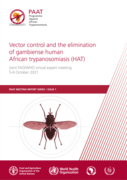
The main purpose of the meeting was to review tsetse control tools, activities and their contribution to the elimination of gHAT and the monitoring
...
thereof. Seven endemic countries provided reports on recent and ongoing vector control interventions at the national level (Angola, Cameroon, Côte d’Ivoire, Chad, Democratic Republic of the Congo, Guinea and Uganda). Country reports focused on the in situations implementing and supporting vector control activities, the tools and the approaches in use, the coverage of the activities in space and time and their impacts on tsetse populations. Future perspectives for vector control in the respective countries were also discussed, including opportunities and challenges to sustainability.
more

Yaws, a neglected tropical disease (NTD) of the skin caused by the bacterium Treponema pallidum subspecies pertenue, is targeted in the latest WHO NTD Roadmap for eradication by 2030. In January, 2022, WHO published a manual that outlines the key activities that Ministries of Health in endemic count
...
ries should undertake to achieve this goal. The aim of the manual is to provide guidance on surveillance and evaluation of yaws as programmes progress towards eradication. However, yaws eradication in Africa faces several challenges.
more
Disability inclusive shelter programming enables persons with disabilities to contribute more to their communities, participate more in consultations and decision-making, and facilitate their own pr
...
otection. The key concepts include: Disability inclusive shelter programming is both a process and an outcome. By engaging persons with disabilities in the process, we will also improve the outcomes for persons with disabilities.
The disability community has the slogan “Nothing about us without us,” reminding that we should include and work with persons with disabilities and their representative groups rather than plan or make decisions on their behalf. Persons with disabilities should be engaged throughout shelter programme planning, implementation, monitoring and evaluation.
more

Tsetse traps and targets (insecticide-impregnated screens) function by attracting the flies to a device that collects and/or kills them. Traps can be used for entomological
...
surveillance, and also for control. Targets are simpler than traps, but are not used for surveillance. They are impregnated with biodegradable insecticides in order to kill any flies that alight on them. Traps can also be impregnated with insecticides. Traps and targets can both be used to eliminate a fraction of the tsetse population.
more
Application of a One Health approach .
The present guidance was developed with the support of the WHO Advisory Group on Integrated Surveillance of Antimicrobial Resistance (AGISAR) to assist countries and
...
other stakeholders in the establishment and development of programmes of integrated surveillance of antimicrobial resistance in the foodborne bacteria (i.e., bacteria commonly transmitted by food) by taking a One Health approach.
more
The global emergence of antimicrobial resistance (AMR) is posing a threat to human health. Putting resources into the containment of AMR – including surveillance – is one of the highest-yield investments a country can make to mitigate its impact
...
. In 2015, WHO launched the Global Antimicrobial Resistance Surveillance System (GLASS), the first global collaborative effort to foster AMR surveillance in bacteria causing acute infections. As of December 2018, 71 countries are enrolled in GLASS. The aim of this report is to document participation efforts and outcomes across these countries, and highlight differences and constraints identified to date. This report follows on from the first GLASS Report – Early implementation 2016-17, published in January 2018, and drawing on data from GLASS first data call in 2017.
more

The document is a report by an expert group that presents a framework for improving future pandemic preparedness and emergency response, particularly in the context of India but with relevance to global health systems. It analyzes lessons learned fr
...
om COVID-19 and past epidemics, identifies key weaknesses in areas such as governance, surveillance, data management, research, and coordination, and proposes a comprehensive strategy to address them. The report emphasizes the importance of early detection, strong public health infrastructure, coordinated governance, scientific innovation, and international collaboration. A central idea is the ability to respond effectively within the first 100 days of an outbreak by having systems, resources, and policies already in place. Overall, it aims to strengthen resilience and ensure faster, more efficient responses to future health crises.
more
Clinical guideline, Methods, Evidence and Recommendations
In this guideline the following is covered: information needs of people with chronic hep
titis B and their carers; where children, young p
...
eople and adults with chronic hepatitis B a-
should be assessed; assessment of liver disease, including the use of non-invasive tests and genotype testing; criteria for offering antiviral treatment; the efficacy, safety and cost effectiveness of currently available treatments; selection of first-line therapy; management of treatment failure or drug resistance; prophylactic treatment during im-
munosuppressive therapy; and monitoring for treatment response
more
Specific measures are being taken within the National Tuberculosis Control Programme (NTP) to address the MDR TB problem through appropriate management of patients and strategies to prevent the propagation
...
and dissemination of MDR TB.
The term "Programmatic Management of Drug Resistant TB" (PMDT) refers to programme based MDR TB diagnosis, management and treatment. This guideline promotes full integration of basic TB control and PMDT activities under the NTP, so that patients with TB are evaluated for drug resistance and are placed on the appropriate treatment regimen and properly managed from the outset of treatment, or as early as possible. The guidelines also integrate the identification and treatment of more severe forms of drug resistance, such as extensively drug resistant TB (XDR TB).
At the end, the guideline introduces new standards for registering, monitoring and reporting outcomes of multidrug resistant TB cases. more
The term "Programmatic Management of Drug Resistant TB" (PMDT) refers to programme based MDR TB diagnosis, management and treatment. This guideline promotes full integration of basic TB control and PMDT activities under the NTP, so that patients with TB are evaluated for drug resistance and are placed on the appropriate treatment regimen and properly managed from the outset of treatment, or as early as possible. The guidelines also integrate the identification and treatment of more severe forms of drug resistance, such as extensively drug resistant TB (XDR TB).
At the end, the guideline introduces new standards for registering, monitoring and reporting outcomes of multidrug resistant TB cases. more
Specifically the Strategy focuses on five strategic objectives:
commitment to action on Healthy Ageing in every country;
developing age-friendly environments;
aligning health systems to the needs of older populations;
developing sustainable
...
and equitable systems for providing long-term care (home, communities, institutions); and
improving measurement, monitoring and research on Healthy Ageing.
Available in Englisch, French, Arabic, Chinese, Russian, Spanish
more
Guidelines for the management of pregnant and breastfeeding women in the context of Ebola virus disease
recommended
To save the lives of mothers and their babies, mitigate complications, and limit the spread of disease, it is critical that recommendations are made on the prevention, treatment,
...
and surveillance of women who are exposed to EVD, acquire EVD during pregnancy or breastfeeding, or survive EVD with ongoing pregnancies. These guidelines are the first to provide such recommendations.
more
Despite the considerable improvement in global health, millions of people still lack access to quality health services, including access to effective antimicrobial medicines, or are impoverished as a result of health spending. At the same time, antimicrobial resistance – a consequence of overuse
...
and misuse of antimicrobials – is increasingly a barrier to accessing effective care. The declining effectiveness of antibiotics is driven by multiple factors, many of which can be addressed through well functioning primary health care. However, primary health care has not always had much attention in national health sector responses to
antimicrobial resistance, which often focus on tertiary care, laboratory detection and surveillance. The three pillars of primary health care (community engagement, front-line health services including primary care and essential public health, and multisectoral action on wider health determinants) are central not just to Universal Health Coverage and the Sustainable Development Goals, but also to an effective response to antimicrobial resistance.
more
The ECDC, the EFSA and the EMA have for the first time jointly explored associations between consumption of antimicrobials in humans and food-producing animals,
...
and antimicrobial resistance in bacteria from humans and food-producing animals, using 2011 and 2012 data currently available from their relevant five EU monitoring networks. Combined data on antimicrobial consumption and corresponding resistance in animals and humans for EU MSs and reporting countries were analysed using logistic regression models for selected combinations of bacteria and antimicrobials. A summary indicator of the proportion of resistant bacteria in the main food-producing animal species was calculated for the analysis, as consumption data in food-producing animals were not available at the species level
more
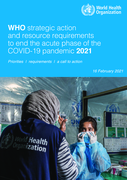
WHO has a unique combination of technical public health and scientific expertise, and a global operational footprint, with field offices in more than 150 countries. In 2020, this global, technical,
...
and operational reach meant WHO was able to support countries around the world in every aspect of COVID-19 public health response, from surveillance and laboratory testing to maintaining essential health services in the most vulnerable and fragile contexts.
more

On August 13, 2024, the Africa CDC declared the mpox outbreak a Public Health Emergency of Continental Security (PHECS). The following day, the WHO declared it a Public Health Emergency of International Concern (PHEIC). A coordinated, continent-wide response is essential, co-led by the African Union
...
(AU) through the Africa CDC and the World Health Organization (WHO), in close collaboration with global partners working under a unified plan, budget, and monitoring framework.
more

Trachoma is the leading infectious cause of blindness worldwide. In April 2023, it was a public health problem
in approximately 40 countries, with an estimated 116 million people at risk and 1.5 million people affected
by the late blinding stage o
...
f the disease (1). About 84% of those at risk of trachoma are in the World Health
Organization (WHO)’s African Region; about 52% of those at risk of trachoma live in Ethiopia
more

All malaria-endemic countries in the Region of the Americas have taken on the challenge to eliminate the disease and to put in place measures to orient their health programs and strategies in that d
...
irection. This manual explains how to implement measures to achieve malaria elimination and prevent its reestablishment by increasing the intensity and quality of interventions, reorienting initiatives, reducing delays that favor transmission, and ensuring adequate monitoring to adjust interventions.
more
The WHO handbook “Epidemiological Data Analysis for the Early Warning Alert and Response Network (EWARN) in Humanitarian Emergencies” explains how to collect, analyse, interpret, and share healt
...
h data during crises such as conflicts or natural disasters. It is a practical guide for health and surveillance officers to detect disease outbreaks early and guide quick public health responses. The document outlines steps for managing data at different levels (local, regional, national), analysing disease trends by time, place, and person, and using indicators to monitor outbreak risks. It also provides methods for interpreting and communicating results clearly to decision-makers to support effective health interventions in emergencies.
more
