
Filter
569
Text search:
health
assets
Featured
Recommendations
39
New Publications
182
Language
Document type
No document type
344
Studies & Reports
113
Guidelines
39
Strategic & Response Plan
37
Manuals
21
Fact sheets
6
Training Material
4
Situation Updates
3
Resource Platforms
1
Infographics
1
Countries / Regions
Global
35
India
23
Kenya
20
Syria
18
Myanmar / Burma
16
Sierra Leone
15
Liberia
14
Nepal
13
Malawi
13
Nigeria
10
South Sudan
10
South Africa
10
Uganda
9
Africa
9
Congo, Democratic Republic of
8
Philippines
8
Tanzania
8
Yemen
8
Western and Central Europe
8
Pakistan
7
Indonesia
7
Guinea
6
Ethiopia
6
Bangladesh
6
Namibia
6
Ukraine
6
Venezuela
6
Zimbabwe
5
Afghanistan
5
Lebanon
5
Cambodia
5
Rwanda
5
Cameroon
4
Ghana
4
Haiti
4
Zambia
4
South–East Asia Region
4
Asia
4
Senegal
3
Thailand
3
Brazil
3
Botswana
3
Jordan
2
China
2
Mozambique
2
Sudan
2
Eswatini/ Swaziland
2
Lesotho
2
Latin America and the Carribbean
2
Palestine
2
Tajikistan
2
Iran
2
Iraq
1
Turkey
1
Chad
1
Singapore
1
Benin
1
Central African Republic
1
North Macedonia
1
Croatia
1
Colombia
1
Libya
1
Madagascar
1
Sri Lanka
1
Other region
1
Fiji
1
Bhutan
1
Eastern Europe
1
Mongolia
1
Canada
1
Estonia
1
Authors & Publishers
Publication Years
Category
Countries
233
Key Resources
79
Public Health
22
Women & Child Health
21
Clinical Guidelines
12
Capacity Building
8
Toolboxes
COVID-19
56
Conflict
44
Planetary Health
33
Natural Hazards
32
Disability
24
Mental Health
22
HIV
20
Ebola & Marburg
18
Global Health Education
18
Health Financing Toolbox
16
Refugee
14
Rapid Response
10
Caregiver
9
TB
8
2.0 Rapid Response
8
Polio
7
Pharmacy
7
Social Ethics
6
Specific Hazards
5
AMR
4
NCDs
4
Typhoon
3
Zika
3
Cholera
2
NTDs
2
Audit Report
War Child put forward a specific request for comparative study, addressing the following questions: •What are the key types of intervention for psychosocial assistance that are being applied to children in war-affected areas? •What are the results of (scientific) research into the effects of th
...
The Lancet Volume 5, Issue 10100972October 2024 Chagas Disease Serie 3
A Guide for UNICEF Staff

Thailand is exposed to flooding, landslides, drought, earthquakes, tsunamis, heat waves, forest fires, and epidemics. Thailand is also exposed to technological hazards such as chemical accidents. Flooding is the natural hazard with the most significant impact on human life, livelihoods, and the econ
...
The purpose of this brief is to provide practical tips for UNICEF country offices, partners and young people themselves on engaging adolescents and youth as part of the COVID-19 preparedness and response. As a first step, we recommend engaging with adolescents and youth to understand what their need
...

In low- and middle-income middle-income countries, reliable and disaggregated disability data on prevalence, participation and barriers are often unavailable. This study aimed to estimate disability prevalence, determine associated socio-demographic factors and compare access in the community betwee
...
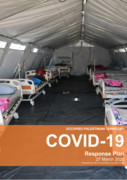
The primary focus of the plan continues to be prevention, preparedness and treatment of the the Novel Coronavirus (COVID-19) outbreak. Central to the plan are the following overall objectives:
To prevent further transmission of COVID-19 in the oPt;
To provide adequate care for patients aff
...
Unlike foot and mouth disease, the avian flu, e-coli or listeria, the COVID-19 pandemic has not spread directly through livestock or agriculture commodities, and has therefore not directly disrupted on-farm production. However, the crisis is undermining the ability of farms and agri-enterprises to e
...
Developing countries face disastrous healthcare setbacks, hunger and huge international debt as covid-19’s ‘final wave’
Disaster Management Reference Handbook Series Overview.
Floods, storms, and wind account for large proportions of displacement compared to other disasters. Floods are the most frequent type of disaster whereas wind-related disasters constitute the biggest losses in terms of economic damage, displac
...
The Impact of the Zika Outbreak on Women and Girls in Northeastern Brazil
The purpose of this guidance is to provide emergency planners with nuclear detonationspecific
response recommendations to maximize the preservation of life in the event of
an urban nuclear detonation. This guidance addresses the unique effects and impacts of a
nuclear detonation such as scale of
...

Oxfam’s report found that Covid-19 has the potential to increase economic inequality in almost every country at once, the first time this has happened since records began over a century ago. It sets out how a rigged economy is enabling a super-rich elite to amass wealth in the middle of the worst
...
New funding requirements: CHF 2.8 billion IFRC-wide of which CHF 670 million is channelled through the IFRC Emergency Appeal in support of National Societies
