
Filter
491
Text search:
World
Health
Organization,
South-East
Asia
Featured
Recommendations
60
New Publications
133
Language
Document type
No document type
237
Studies & Reports
104
Guidelines
71
Manuals
31
Strategic & Response Plan
21
Training Material
8
Fact sheets
6
Resource Platforms
5
Situation Updates
4
Infographics
3
Online Courses
1
Countries / Regions
Global
41
South–East Asia Region
34
India
20
Myanmar / Burma
15
Asia
15
Bangladesh
10
Nepal
7
Western and Central Europe
6
Nigeria
5
Philippines
5
Kenya
5
Cambodia
5
Syria
4
Indonesia
4
Latin America and the Carribbean
4
Congo, Democratic Republic of
3
Tanzania
3
Thailand
3
South Africa
3
Middle East and North Africa
3
Western Pacific Region
3
Ethiopia
2
Uganda
2
China
2
Rwanda
2
Brazil
2
East and Southern Africa
2
West and Central Africa
2
Eastern Europe and Central Asia
2
Africa
2
Russia
2
Cameroon
1
Ghana
1
South Sudan
1
Egypt
1
Malaysia
1
Malawi
1
Sudan
1
Benin
1
Eswatini/ Swaziland
1
Serbia
1
Croatia
1
Sri Lanka
1
Yemen
1
Other region
1
Venezuela
1
Eastern Europe
1
Timor Leste/ East Timor
1
Tajikistan
1
Kazakhstan
1
Vietnam
1
Japan
1
Maldives
1
Authors & Publishers
Publication Years
Category
Countries
94
Clinical Guidelines
71
Women & Child Health
44
Public Health
43
Key Resources
32
Capacity Building
13
Pharmacy & Technologies
10
Toolboxes
HIV
45
Mental Health
36
NTDs
34
TB
32
Planetary Health
28
COVID-19
25
AMR
21
Caregiver
20
Rapid Response
16
Global Health Education
15
Disability
14
NCDs
10
Zika
9
Pharmacy
9
Conflict
7
Natural Hazards
7
Ebola & Marburg
6
Refugee
6
2.0 Rapid Response
6
Polio
5
Malaria
4
Specific Hazards
3
Cholera
2
Typhoon
1
Social Ethics
1
Health Financing Toolbox
1
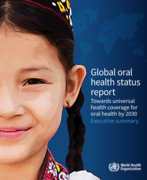
The executive summary of the WHO Global oral health status report presents a snapshot of the most recent data on major oral diseases, risk factors, health system challenges and opportunities for ref
...
Disaster planning - organization and administration. 2.Emergency medical services - methods. 3.Emergency medical services - organization and administration. 4.Emergencies. 5.
...

The 2018 global health financing report presents health spending data for all WHO Member States between 2000 and 2016 based on the SHA 2011 methodology. It shows a transformation trajectory for the
...

The standards define 10 key competencies for health and care workers to support self-care in their clinical practice as well as the specific, measurable behaviours that demonstrate those competencies, focusing on people-centredness; decision-making;
...
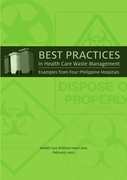
Best Practices in health care waste management
recommended
Examples from four Philippine Hospitals
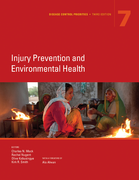
The substantial burden of death and disability that results from interpersonal violence, road traffic injuries, unintentional injuries, occupational health risks, air pollution, climate change, and inadequate water and sanitation falls disproportion
...

In the last decade, Timor-Leste has made remarkable progress in strengthening its health system and improving the health status of its population. This has resulted in an increased life expectancy,
...

Road safety is an issue that does not receive anywhere near the attention it deserves – and it really is one
of our great opportunities to save lives around the world

The WHO standard: Universal access to rapid tuberculosis diagnostics sets benchmarks to achieve universal access to WHO-recommended rapid diagnostics (WRDs), increase bacteriologically confirmed tuberculosis and drug resistance detection, and reduce the time to diagnosis. WHO-recommended rapid diagn
...
To assess national-level responses to NCDs, WHO has implemented NCD country capacity surveys periodically since 2001. This report is the latest in that series. Since the first survey round, the NCD Country Capacity Survey (NCD CCS) has been conducted a further seven times, most recently in 2021. In
...

The 2023 Country Presence Report provides an overview of what WHO does in countries to advance towards the SDGs and implement GPW13, how we do it, with whom we work, and what is needed to overcome challenges for achieving results and impact in countries.
The key to a lasting world free of all forms of poliovirus lies in rapidly interrupting all remaining endemic transmission of WPV in the endemic areas of Pakistan and Afghanistan. This is the only way to ensure that such strains do not re-emerge glo
...

About one fourth of the world’s population is estimated to have been infected with the tuberculosis (TB) bacilli, and about 5–10% of those infected develop TB disease in their lifetime. The risk for TB disease after infection depends on several
...
This document sets out the criteria and procedures to be followed by countries in verifying the interruption of yaws transmission. It is intended for use by international verification teams, national yaws eradication programmes and WHO technical staff involved in the eradication of yaws.

The 2023 meeting of the WHO Clinical Consortium on Healthy Ageing (CCHA) was the group’s ninth gathering and took place in Geneva 5–7 December 2023. The meeting was structured around seven panels, with a series of technical presentations, plenary discussions and group work, and a final session o
...
Safe drinking-water management must consider drinking-water quality, acceptability and quantity in the context of public health protection. In this manual, the term “safety” encompasses these three elements. Although the principles in this manua
...
