
Filter
999
Text search:
World
Health
Organization,
Regional
Office
Africa
Featured
Recommendations
106
New Publications
245
Language
Document type
No document type
490
Studies & Reports
203
Guidelines
133
Strategic & Response Plan
60
Manuals
53
Training Material
19
Situation Updates
19
Fact sheets
15
Resource Platforms
4
App
1
Online Courses
1
Videos
1
Countries / Regions
Global
56
Kenya
38
Ethiopia
30
Sierra Leone
29
Africa
27
Uganda
24
Liberia
22
Tanzania
20
Malawi
19
Zambia
17
India
16
South Africa
15
West and Central Africa
14
Congo, Democratic Republic of
13
South Sudan
13
Western and Central Europe
13
Ghana
12
Guinea
11
Nigeria
11
Syria
11
Senegal
10
Rwanda
10
East and Southern Africa
10
Middle East and North Africa
10
Asia
10
Latin America and the Carribbean
9
Zimbabwe
7
Yemen
7
South–East Asia Region
7
Cameroon
6
Ukraine
6
Somalia
5
Mozambique
5
Namibia
5
Lesotho
5
Mali
4
Nepal
4
Sudan
4
Brazil
4
Myanmar / Burma
4
Russia
4
Togo
3
Philippines
3
Bangladesh
3
Central African Republic
3
Eswatini/ Swaziland
3
Botswana
3
Eastern Europe
3
Côte d’Ivoire / Ivory Coast
2
Haiti
2
Pakistan
2
Afghanistan
2
Lebanon
2
Chad
2
Thailand
2
Benin
2
North Macedonia
2
Colombia
2
Madagascar
2
Sri Lanka
2
Eastern Europe and Central Asia
2
Venezuela
2
Kazakhstan
2
Burkina Faso
1
Guinea-Bissau
1
Morocco
1
Niger
1
Jordan
1
Cambodia
1
China
1
Indonesia
1
Argentina
1
Peru
1
Hungary
1
Burundi
1
Angola
1
Mexico
1
Western Pacific Region
1
Southern Africa
1
Laos
1
Tajikistan
1
Estonia
1
Moldova
1
Iran
1
Kyrgyzstan
1
Georgia
1
Jamaica
1
Mauritius
1
Norway
1
Portugal
1
Authors & Publishers
Publication Years
Category
Countries
302
Clinical Guidelines
87
Key Resources
69
Public Health
65
Women & Child Health
63
Capacity Building
18
Pharmacy & Technologies
14
Toolboxes
HIV
108
COVID-19
86
Planetary Health
60
Mental Health
53
Ebola & Marburg
46
TB
44
AMR
38
Disability
35
Rapid Response
34
Caregiver
28
Conflict
27
NTDs
25
2.0 Rapid Response
25
Refugee
20
Global Health Education
20
Pharmacy
15
NCDs
14
Health Financing Toolbox
13
Natural Hazards
9
Polio
7
Zika
7
Cholera
6
Malaria
5
Typhoon
3
Specific Hazards
2
Social Ethics
2
The Updated guidelines on Management of tuberculosis in children and adolescents include new recommendations that cover diagnostic approaches for TB, shorter treatment for children with non-severe drug-susceptible TB, a new option for the treatment of TB meningitis, the use of bedaquiline and delama
...
Available in Arabic, Chinese, English, French, Russian and Spanish. You can download a summary of the main report and background documents!
The report demonstrates that the current system—at both national and international levels— was not adequate to protect people from COVID-19. The time it t
...
When setting national drinking-water quality regulations and standards, many countries consider the WHO Guidelines for drinking-water quality (GDWQ). To better understand the extent to which the GDWQ are used and reflected in these standards, this global review summarizes information from 104
...
The WHO Guidelines on physical activity and sedentary behaviour provide evidence-based public health recommendations for children, adolescents, adults and older adults on the amount of physical activity (frequency, intensity and duration) required t
...
Recent efforts to fight malaria in the Greater Mekong Subregion (GMS) have yielded impressive results. According to the latest WHO estimates, the six GMS countries cut their malaria case incidence by an estimated 54% between 2012 and 2015. Malaria death rates fell by 84% over the same period.
I ...
I ...
WHO’s sentinel surveys of acquired HIV resistance to dolutegravir among people receiving dolutegravir-containing antiretroviral therapy is intended for easy and frequent implementation. Results from sentinel surveys provide insight into the prevalence and year-over-year trends of dolutegravir resi
...
A step towards implementation of the Convention on the Rights of Persons with Disabilities (CRPD) related to personal mobility.
WHO clinical guidelines.
For the first time, WHO has published guidelines to help (primarily) front-line healthcare providers give high-quality, compassionate, and respectful care to children and adolescents (up to age 18) who have or may have experienced sexual abuse, including sexual assault or r
...
1 March 2021 This roadmap aims to define the key questions users should consider to assess indoor ventilation and the major steps needed to reach recommended ventilation levels or simply improve indoor air quality (IAQ) in order to reduce the risk of spread of COVID-19.
It also includes recommendat
...
The approach is in line with two of the five objectives outlined in the Every Newborn Action Plan (ENAP): Strategic Objective 2 – Improve the quality of maternal and newborn care; and Strategic Objective 5 – Count every newborn through measurement, programme-tracking and accountability to genera
...
Available in English, French, Spanish and Russian from the website https://apps.who.int/iris/handle/10665/344562
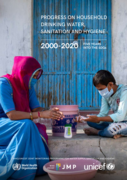
The Joint Monitoring Programme (JMP) report – Progress on household drinking water, sanitation and hygiene 2000 - 2020 – presents estimates on household access to safely managed drinking water, sanitation and hygiene services over the past five years, and assesses progress toward achieving the s
...
Bulletin of the World Health Organization 2007;85:637–643
Une traduction en français de ce résumé figure à la fin de l’article.
Al fin
...
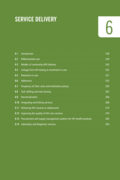
Consolidated guidelines on the use of antiretroviral drugs for treating and preventing HIV infection
Accessed: 26.02.2020
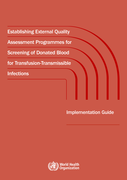
External quality assessment (EQA) is an important component of quality systems for blood transfusion services. Establishing external quality assessment programmes for screening of donated blood for transfusion-transmissible infections (TTI): implementation guide aims to support WHO member States in
...
