Filter
500
Text search:
Vaccine
Makers
Project
Featured
Recommendations
45
New Publications
128
Language
Document type
No document type
241
Studies & Reports
122
Guidelines
49
Strategic & Response Plan
34
Manuals
33
Training Material
7
Situation Updates
5
Fact sheets
4
Videos
2
App
1
Resource Platforms
1
Online Courses
1
Countries / Regions
Global
37
Nigeria
19
Kenya
17
Uganda
12
Nepal
12
Ethiopia
11
Tanzania
11
Bangladesh
11
Western and Central Europe
11
Zambia
10
Sierra Leone
8
Myanmar / Burma
8
Ghana
7
India
7
Liberia
6
Mozambique
6
Africa
6
Syria
5
Malawi
5
Asia
5
Pakistan
4
South Africa
4
Ukraine
4
Latin America and the Carribbean
4
Eastern Europe
4
Burkina Faso
3
Congo, Democratic Republic of
3
Zimbabwe
3
Philippines
3
Cambodia
3
Sudan
3
Lesotho
3
Middle East and North Africa
3
South–East Asia Region
3
Eastern Europe and Central Asia
3
Laos
3
Haiti
2
South Sudan
2
Thailand
2
Indonesia
2
Malaysia
2
Namibia
2
Botswana
2
Sri Lanka
2
Western Pacific Region
2
Japan
2
Guinea
1
Mali
1
Cameroon
1
Somalia
1
Afghanistan
1
China
1
Rwanda
1
North Macedonia
1
Colombia
1
East and Southern Africa
1
West and Central Africa
1
Southern Africa
1
Timor Leste/ East Timor
1
Tajikistan
1
Moldova
1
Vietnam
1
Spain
1
Authors & Publishers
Publication Years
Category
Countries
168
Women & Child Health
41
Clinical Guidelines
39
Key Resources
28
Public Health
23
Pharmacy & Technologies
5
Capacity Building
3
Toolboxes
COVID-19
53
HIV
39
TB
33
AMR
25
Global Health Education
22
Health Financing Toolbox
22
Planetary Health
19
Conflict
11
Rapid Response
10
NTDs
10
Ebola & Marburg
8
Refugee
8
Mental Health
8
Caregiver
8
Pharmacy
8
Malaria
8
Natural Hazards
6
2.0 Rapid Response
6
Polio
4
Disability
2
Cholera
2
Zika
2
Specific Hazards
1
NCDs
1

The brief concludes that sustaining the continuity of EHS requires policies that ensure a whole-society and systems strengthening approach. This involves increased health care investment, community engagement, disease control regulations, and multisector approaches to improve resilience, EHS quality
...

Universal health coverage ensures everyone has access to the health services they need without suffering financial hardship as a result. In December 2012, a UN resolution was passed encouraging governments to move towards providing universal access to affordable and quality health care services. As
...

The most significant finding of the case study for integrating antimicrobial resistance (AMR)into existing programs and mobilising resources for funding in Nigeria, is that most of the AMR activities within the Nigerian National Action Plan (NAP)canalready be incorporated within exi
...
Infectious disease outbreaks and epidemics are increasing in frequency, scale and impact. Health care facilities can amplify the transmission of emerging infectious diseases or multidrug-resistant organisms (MDRO) within their settings and communities. Therefore, evidence-based infection prevention
...

Nepal has only recently started its journey on the path to an integrated response to the challenge of antimicrobial resistance (AMR). Despite this, it is notable that the Nepal Health Sector Strategy Plan (HSSP)-2 mentions growing antibiotic resistanceas a public health challenge.
A practical tool for field based humanitarian workers. It provides up-to-date, clear and succint guidance on topics accross the humanitarian sector including references to current, relevant resources and practical tools.
Workplace Pandemic Preparedness. Training Manual
recommended
A training manual for identifying, assessing, preventing and controlling the risks of pandemics in the workplace. This training manual has been developed for both medical and non-medical personnel who may be called upon to lead emergency response, (eg epidemic outbreak, etc), ensure effective conta
...
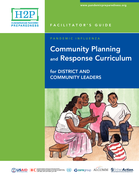
The Humanitarian Pandemic Preparedness (H2P) Initiative and its many partners have developed ready-to-use training curricula for district- and community-level leaders, and community volunteers and workers in order to minimize morbidity and mortality in the event of an influenza pandemic. The time t
...

This document is an output of a WHO cross-programme initiative aiming to improve the prevention, diagnosis and management of anaemia and thereby accelerate reduction in its prevalence. It comes at an important time, midway through the era of the Sustainable Development Goals, when progress in reduci
...

Four initiatives have estimated the value of aid for reproductive, maternal, newborn, and child health
(RMNCH): Countdown to 2015, the Institute for Health Metrics and Evaluation (IHME), the Muskoka Initiative, and
the Organisation for Economic Co-operation and Development (OECD) policy marker. We
...
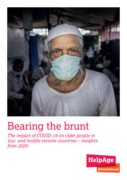
The report shows that older people are not getting the healthcare treatments they desperately need. The COVID-19 response has disrupted services for non-communicable diseases such as cancer and diabetes, communicable diseases such as malaria, and much-needed services for mental health. Combined with
...
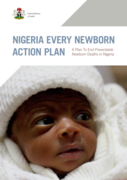
The Newborn Situational Analysis reports of 2009 and 2011, as well as the “Bottleneck analysis on neonatal health” of 2013, culminated in the Nigeria launch of “Call to action on Newborn health” at the first National Newborn Health Conference in 2014. This call to action provided the framewo
...
Guidelines for national programmes and other stakeholders, for annexes see http://www.who.int/tb/publications/2012/tb_hiv_policy_9789241503006/en/
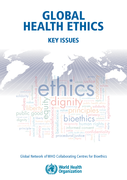
This document aims to assist policy‑makers, health care providers and researchers to understand key concepts in health ethics and to identify basic ethical questions surrounding health and health care. It illustrates the challenges of applying ethical principles to global public health and outline
...

Outstanding child and adolescent TB priorities include the need to: find the missing children with active TB and link them to TB care; prevent TB in children who are in contact with infectious TB cases (through implementation of active contact investigation and provision of preventive treatment); an
...