
Filter
2321
Filtered Results: 2321
Text search:
United
Nations
Children’s
Fund
(UNICEF),
World
Health
Organization
(WHO)
Featured
Recommendations
188
New Publications
789
Language
Document type
No document type
1461
Studies & Reports
367
Guidelines
221
Manuals
98
Strategic & Response Plan
87
Situation Updates
33
Training Material
25
Fact sheets
21
Infographics
4
Resource Platforms
3
Online Courses
1
Countries / Regions
Global
113
Liberia
75
Kenya
74
Sierra Leone
71
Nepal
65
Ethiopia
65
Nigeria
60
Uganda
57
Zambia
54
Myanmar / Burma
54
Bangladesh
43
Syria
42
Malawi
38
Ghana
32
Rwanda
32
India
32
Tanzania
31
Namibia
30
South Sudan
30
Ukraine
28
Africa
26
Zimbabwe
24
Congo, Democratic Republic of
23
Lesotho
22
Philippines
22
Guinea
22
Indonesia
21
Latin America and the Carribbean
20
South Africa
20
Mozambique
19
Cambodia
18
Western and Central Europe
18
Yemen
18
Asia
17
Senegal
14
Pakistan
14
Afghanistan
13
Haiti
13
Jordan
13
South–East Asia Region
13
East and Southern Africa
12
Venezuela
10
Middle East and North Africa
10
Lebanon
10
Cameroon
9
West and Central Africa
9
Central African Republic
9
Brazil
8
Botswana
8
Laos
6
Eastern Europe and Central Asia
6
Eastern Europe
6
Sudan
6
Madagascar
6
Colombia
5
Thailand
5
Burkina Faso
5
Moldova
5
Russia
5
Mali
5
Iraq
5
Somalia
5
Turkey
4
Benin
4
Togo
4
Guinea-Bissau
4
Western Pacific Region
4
Vietnam
4
Papua New Guinea
4
Sri Lanka
4
Eswatini/ Swaziland
4
North Macedonia
3
Iran
3
Albania
3
Germany
3
Côte d’Ivoire / Ivory Coast
3
Tajikistan
2
China
2
Niger
2
Peru
2
Bulgaria
2
Italy
2
Croatia
2
Paraguay
2
Turkmenistan
2
Japan
2
Egypt
2
Greece
2
Georgia
2
Chad
2
Libya
2
Bhutan
2
North Korea
1
Timor Leste/ East Timor
1
Mexico
1
Serbia
1
Gambia
1
Kazakhstan
1
Kyrgyzstan
1
Burundi
1
Malaysia
1
Vanuatu
1
Hungary
1
Portugal
1
Spain
1
Azerbaijan
1
Belarus
1
Bosnia and Herzegovina
1
Southern Africa
1
Argentina
1
Romania
1
Slovakia
1
Poland
1
Angola
1
Solomon Islands
1
Authors & Publishers
Publication Years
Category
Countries
983
Women & Child Health
273
Key Resources
183
Clinical Guidelines
118
Public Health
94
Capacity Building
44
Pharmacy & Technologies
11
Toolboxes
HIV
195
COVID-19
174
Disability
140
Conflict
117
Mental Health
103
Ebola & Marburg
71
Caregiver
57
Planetary Health
57
Refugee
47
Health Financing Toolbox
41
Global Health Education
38
Rapid Response
33
TB
30
AMR
25
Natural Hazards
24
Pharmacy
21
Polio
20
2.0 Rapid Response
18
NTDs
16
Cholera
15
Zika
11
Malaria
9
Specific Hazards
7
NCDs
7
South Sudan
1
Social Ethics
1

WHO Ghana 2022 annual report
recommended
“2022 was an eventful year for the WHO Country Office in Ghana,” says Dr Francis Kasolo, WHO Representative to Ghana.
In 2022, WHO Ghana collaborated with partners to deliver interventions in support of the Government of Ghana's health sector agenda to ensure healthy lives for all towards ach...
The development of this Operational Roadmap has been driven by a growing consensus in Ukraine on the need to prioritize activities that are urgently required to address the mental health and psychosocial needs of the country’s population and also the importance of basing the response on existing s...

This timely report comes at a decisive moment in history where
we can reshape urban environments and health systems for the
majority of the world’s population that live in cities. Enabling
this transformation are the SDGs, which have reconfigured how
governments and the international community...
Communication Risk in Public Health Emergencies
recommended
A WHO Guideline for Emergency Risk Communication (ERC) policy and practice.
Recent public health emergencies, such as the Ebola virus disease outbreak in West Africa (2014–2015), the emergence of the Zika virus syndrome in 2015–2016 and multi-country yellow fever outbreaks in Africa in 2016, h...

Strategic communication is at the heart of public health and more important than ever in the digital age. Using communication strategically requires expertise, skills and resources to plan, implement and evaluate interventions that encourage governments to implement policies that improve people’s ...
To understand the patterns of Rwanda’s achievements in health development, it is important to explore how Rwanda addresses the Social Determinants of Health (SDH) particularly those related to routine conditions in which people are born, live and work. It is in this particular context that a case ...

This report provides an overview of the operations and activities of the WHO Country Office in Ukraine in 2023. Despite the acute health impacts of the war in Ukraine, the Country Office continued its work according to its core mandate. WHO supported the Government of Ukraine in managing the health ...
WHO published the first COVID-19 Strategic Response and Preparedness Plan (SPRP) on 3 February, 2020. This report highlights the main points of progress that were made up to 30 June 2020 under the three objectives outlined in the SPRP: scaling up international coordination and support; scaling up co...
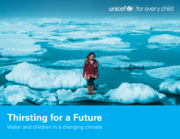
Children without access to safe water are more likely to die in infancy -- and throughout childhood -- from diseases caused by
water-borne bacteria, to which their small bodies are more vulnerable.
This assessment is the first of its kind to be conducted in the south-eastern region of Myanmar. It is an important contribution to ensuring the full inclusion of women and children in Myanmar’s political, social, and cultural systems, with a specific focus on the issue of gender-based violence (G...

Available in English, French and Spanish
The well-being of children in sub-Saharan Africa is under siege from all directions since the advent of the COVID-19 pandemic. The region is now suffering its first-ever economic recession, pushing about 50 million people into extreme poverty, a majority of whom are children.
December 2020 — May 2021
Including Therapeutic Food, Dietary Vitamin and Mineral Supplementation - 2nd edition
Special Focus on COVID-19
The report provides updated estimates for drinking water, sanitation and hygiene in schools including progress from 2015 to 2019. It highlights the rapid improvement needed to ensure students have access to handwashing facilities with soap and water during the COVID-19 pan...
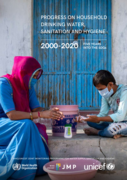
The Joint Monitoring Programme (JMP) report – Progress on household drinking water, sanitation and hygiene 2000 - 2020 – presents estimates on household access to safely managed drinking water, sanitation and hygiene services over the past five years, and assesses progress toward achieving the s...
Action on behalf of unaccompanied and separated children should be guided by principles enshrined in international standards. The validity of these principles has been confirmed by experience and lessons learnt from conflicts and natural disasters in recent years. The objective of the present public...
Policy Brief
Accessed: 20.11.2019
