
Filter
408
Text search:
Romania
Featured
28
68
Language
Document type
210
111
36
17
12
9
8
2
1
1
1
Countries
85
36
28
27
9
9
8
6
5
4
3
3
2
2
2
2
2
1
1
1
1
1
1
1
1
1
1
1
1
1
1
1
1
1
1
1
1
1
1
1
1
1
1
1
1
Authors & Publishers
Publication Years
Category
62
40
24
24
16
4
3
Toolboxes
79
46
37
34
30
19
13
11
11
10
9
7
7
6
6
6
5
5
4
4
3
2
2
1
1
This report presents country, regional and global estimates of low birth weight for 2000, together with a detailed description of the methods used in calculating the estimates. Some limited data on trends are also included. The limitations of low-birth-weight data are described and recommendations a
...
English Analysis on World about Food and Nutrition and Epidemic; published on 13 Dec 2021 by FAO
Das Recht auf eine unverzügliche Geburtenregistrierung nach der UN-Kinderrechtskonvention und seine Durchsetzung
Updated Treatment Guidelines
Lancet Public health 2022 January 6, 2022 https://doi.org/10.1016/ S2468-2667(21)00249-8
Growth in the number of individuals living with dementia underscores the need for public health planning efforts and policy to address the needs of this group. Country-level estimates can be used to inform nati
...
Access to controlled medicines. 3rd edition

A Snapshot of European Collection Schemes
Community pharmacists are the health professionals most accessible to the public and are a cornerstone of primary health care. The role of community pharmacists is expanding globally. This report provides an overview of existing components and provisions of the legal and regulatory framework for com
...
The purpose of cancer screening tests is to detect pre-cancer or early-stage cancer in asymptomatic individuals so that timely diagnosis and early treatment can be offered, where this treatment can lead to better outcomes for some people.
The aim of a cancer screening programme is either to reduc
...

Palliative care has been shown to provide significant and diverse benefits for patients with serious, complex,or life-limiting health problem.
Jamison DT, Gelband H, Horton S, Jha P, Laxminarayan R, Mock CN, Nugent R., editors. Disease Control Priorities, 3rd Edition,
Volume 9: Improving Health an
...
A full-scale military attack (invasion) of Ukraine was started by Russia in the night of February 23/24, 2022. Cities, towns and other targets in all regions of Ukraine have been shelled or attacked with rockets, and columns of military vehicles have been invaded the country from three directions (n
...
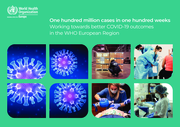
Working towards better COVID-19 outcomes in the WHO European Region.From the first COVID-19 cases in Europe reported on
24 January 2020, the pandemic reached 1 million cases
within 3 months, 10 million cases within 8 months, and
100 million cases in Europe alone within 2 years. Over
the course o
...
This report of the EFSA and ECDC presents the results of zoonoses monitoring activities carried out in 2020 in 27 EU Member States (MS) and nine non-MS. Key statistics on zoonoses and zoonotic agents in humans, food, animals and feed are provided and interpreted historically.

Current evidence that the climate is changing is overwhelming. Impacts of climate change and variability are being observed: more intense heat-waves, fires and floods; and increased prevalence of food- water- and vector-borne diseases. Climate change will put pressure on environmental and health det
...

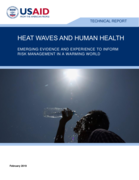
Emerging evidence and experience to inform risk management in a warming world
