
Filter
826
Text search:
Ministry
of
Health,
Rwanda
Featured
Recommendations
56
New Publications
173
Language
Document type
No document type
509
Studies & Reports
152
Guidelines
66
Strategic & Response Plan
30
Manuals
26
Training Material
21
Situation Updates
12
Fact sheets
5
Resource Platforms
3
Infographics
1
Online Courses
1
Countries / Regions
Rwanda
197
Uganda
42
Global
37
Africa
32
Congo, Democratic Republic of
31
Kenya
29
Ethiopia
27
Nigeria
18
Liberia
16
Malawi
15
Tanzania
14
Zambia
12
East and Southern Africa
12
Sierra Leone
11
Ghana
9
South Sudan
9
Senegal
8
South Africa
7
Mozambique
7
West and Central Africa
7
Zimbabwe
6
Namibia
6
Guinea
5
India
5
Burundi
5
Cameroon
4
Nepal
4
Syria
4
Cambodia
4
Lesotho
4
Myanmar / Burma
4
Burkina Faso
3
Somalia
3
Ukraine
3
Togo
2
Haiti
2
Afghanistan
2
Chad
2
Indonesia
2
Bangladesh
2
Sudan
2
Central African Republic
2
Eswatini/ Swaziland
2
Botswana
2
Angola
2
Madagascar
2
Yemen
2
Middle East and North Africa
2
South–East Asia Region
2
Asia
2
Southern Africa
2
Russia
2
Iran
2
Mali
1
Côte d’Ivoire / Ivory Coast
1
Philippines
1
Pakistan
1
Iraq
1
China
1
Papua New Guinea
1
Benin
1
Vanuatu
1
Libya
1
Mexico
1
Latin America and the Carribbean
1
Solomon Islands
1
Eastern Europe
1
Palestine
1
North Korea
1
Armenia
1
Tajikistan
1
Estonia
1
Mauritius
1
Morocco
1
Authors & Publishers
Publication Years
Category
Countries
370
Clinical Guidelines
51
Public Health
50
Key Resources
45
Women & Child Health
43
Capacity Building
14
Pharmacy & Technologies
7
Toolboxes
HIV
88
Mental Health
50
Ebola & Marburg
45
TB
41
COVID-19
32
Disability
31
Caregiver
24
Planetary Health
22
Global Health Education
18
Health Financing Toolbox
16
Rapid Response
14
Conflict
13
Pharmacy
13
Refugee
12
NTDs
8
NCDs
8
AMR
7
Malaria
7
2.0 Rapid Response
7
Cholera
3
Specific Hazards
3
Polio
2
Natural Hazards
2
South Sudan
1
Social Ethics
1
These guidelines present evidence-based recommendations and best practice statements on use of medically important antimicrobials in food-producing animals, based on the WHO list of critically impor
...
These WHO guidelines which were updated in 2018, are valid for any country and suitable to local adaptations, and take account of the strength of available scientific evidence, the cost and resource
...
The main purpose of the meeting was to review tsetse control tools, activities and their contribution to the elimination of gHAT and the monitoring thereof. Seven endemic countries provided reports
...

Building on the 2021 Interim guidance, this second version and update, incorporates the lessons and feedback from the hepatitis pilots that successfully demonstrated the feasibility of measuring hepatitis B and C impact targets to demonstrate elimin
...

January 2020 to December 2021
n 2015, Member States of the United Nations adopted the 2030 Agenda for Sustainable Development and its accompanying Sustainable Development Goals (SDGs), with the third goal of the agenda focusing
...
To provide information on trends on official development assistance (ODA) disbursement patterns for
reproductive health activities in 18 conflict-affected countries
This report reviews the current situation in relation to national capacity to address NCDs and the progress made at country level over the past decade. It highlights that, while progress is being made, there is still much work to be done to create the infrastructure, policies, surveillance and
...

30 October 2017
Overview: Risk communication and community engagement are essential for any disease outbreak response. This is particularly critical during outbreaks of Ebola which may create fear in the public and frontline responders alike due to severe presentat
...
Since the beginning of December a significant increase in the incidence of new cases has been observed particularly along the corridor towards the large urban center
...
The World Health Organization Regional Office for Africa (WHO AFRO), in accordance with recommendations from various WHO committees, has developed three flagship programmes to support Member States in the African region to prepare for, detect and re
...
July 2014
This report was made possible through support provided by the One Million Community Health Workers Campaign, mPowering Frontline Health Workers, Intel, and USAID. This report was author
...
The 2013 RMIS is a nationally representative, household-based survey that provides data on malaria indicators, which are used to assess the progress of a malaria control program. The primary objective of
...
Despite the increasing population of refugees stuck in protracted situations and our awareness of the vulnerability of children and adolescents gro
...
DHS Further Analysis Reports No. 111
This study is a theory-driven analysis of the socio-demographic determinants of maternal care seeking in Kenya. Specifically, it examines predisposing, enab ...
This study is a theory-driven analysis of the socio-demographic determinants of maternal care seeking in Kenya. Specifically, it examines predisposing, enab ...
The Demographic Dividend study on Rwanda assessed the socio-economic and human development potential of our country in the short, medium and long-term period using a comprehensive approach. It gener
...
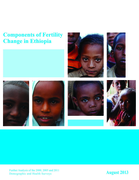
Further Analysis of the 2000, 2005, and 2011 Demographic and Health Surveys. DHS Further Analysis Reports No. 80
DHS Working Papers No. 105 - Rwanda has developed and implemented many strategies at the national level to reduce the incidence of HIV in the general population. One
...
