
Filter
784
Text search:
Ministry
of
Health,
Government
of
Nepal
Featured
Recommendations
65
New Publications
305
Language
Document type
No document type
528
Studies & Reports
117
Guidelines
56
Manuals
45
Strategic & Response Plan
16
Situation Updates
7
Fact sheets
6
Training Material
3
Infographics
3
Resource Platforms
2
Brochures
1
Countries / Regions
Nepal
252
Global
41
South–East Asia Region
29
India
24
Asia
23
Bangladesh
19
Myanmar / Burma
10
Ethiopia
9
Uganda
8
Tanzania
7
Nigeria
6
Pakistan
6
Kenya
6
Cambodia
6
Thailand
6
Vietnam
6
Haiti
5
Zambia
5
Indonesia
5
Malawi
5
Liberia
4
Ghana
4
Philippines
4
South Sudan
4
Syria
4
Rwanda
4
Latin America and the Carribbean
4
Africa
4
Congo, Democratic Republic of
3
Jordan
3
Afghanistan
3
Lebanon
3
Mozambique
3
Namibia
3
Sri Lanka
3
Laos
3
Sierra Leone
2
Zimbabwe
2
Somalia
2
China
2
South Africa
2
Brazil
2
Serbia
2
Yemen
2
East and Southern Africa
2
West and Central Africa
2
Middle East and North Africa
2
Western and Central Europe
2
Eastern Europe
2
Russia
2
Guinea
1
Cameroon
1
Germany
1
Central African Republic
1
Peru
1
North Macedonia
1
Croatia
1
Colombia
1
Ecuador
1
Lesotho
1
Mexico
1
Eastern Europe and Central Asia
1
Bhutan
1
Iran
1
Kyrgyzstan
1
Turkmenistan
1
Japan
1
Portugal
1
Spain
1
Azerbaijan
1
Bosnia and Herzegovina
1
Authors & Publishers
Publication Years
Category
Countries
343
Key Resources
69
Women & Child Health
49
Public Health
39
Clinical Guidelines
29
Capacity Building
9
Pharmacy & Technologies
2
Toolboxes
Disability
74
HIV
53
Mental Health
44
COVID-19
33
Natural Hazards
21
TB
21
Planetary Health
21
AMR
19
NTDs
19
Conflict
16
Global Health Education
16
Caregiver
14
Health Financing Toolbox
11
Pharmacy
10
2.0 Rapid Response
9
Refugee
8
Rapid Response
7
NCDs
7
Malaria
7
Ebola & Marburg
3
Cholera
3
Polio
3
Specific Hazards
2
Typhoon
1
Zika
1
In the aftermath of the April 2015 earthquake in Nepal, this paper looks at lessons drawn from previous comparable disasters and seeks to provide invaluable information and assistance to the operati
...
The majority of developing countries will fail to achieve their targets for Universal Health Coverage (UHC)1 and the health- and poverty-related Su
...
Modelling the health impacts of disruptions to essential health services during COVID-19 Module 1
Several epidemiological models have been created
...

Experience of national TB partnerships
More than a quarter of the global population still cook meals over open fires and/or on simple stoves fuelled by firewood, agricultural waste, dried dung, charcoal, and coal. This practice results in the emission
...

WHO guideline on health policy and system support to optimize community health worker programmes
recommended
The guideline uses state-of-the-art evidence to identify effective policy options to strengthen community health worker (CHW) programme performance through their proper integration in
...
This Guide is part of WHO’s overall programme of work on Political Economy of Health Financing
...

The purpose of the toolkit is to bring together existing learning and guidance as a starting point for stakeholders to begin SRH preparedness work. Within the SRH sector the field of preparedness is
...
"This is the final report of the six-year collaboration between the WHO Department of Mental Health and Substance Abuse and the Gulbenkian Global M
...

The purpose of this publication is to to provide a practical, stepwise approach to the implementation of the national action plans on AMR within the human
...
Nepal: Urban Housing Sector Profile
recommended
Based on research by a team of Nepalese and international experts, this report carries an analysis of the five key elements in the sector - land, basic services, housing finance, building materials
...

People with mental disorders in low-income countries are at risk of being left behind during efforts to expand universal health coverage. Aim is to propose context-relevant strategies for moving tow
...
Data on the essential building blocks of mental health systems, including mental health
governance, financing, service delivery, human resources a
...

This integrated operational framework provides an overview of the connections between mental health, neurological and substance use (MNS) conditions, and their links to
...
Many low-resource settings have a shortage of physicians and health workers. (1) In order to provide patient-centred continuous care more effectively, primary care systems can include team-based car
...

This sourcebook aims to detail why health needs to be part of urban and territorial planning and how to make this happen. It brings together two vital elements we need to build habitable cities on a
...

An estimated 1.3 billion people – or 16% of global population worldwide – experience a significant disability today. Persons with disabilities have the right to the highest attainable standard of
...
CoPEH-Canada has generated a series of teaching and training resources over more than a decade. These resources began with the production of the CoPEH-Canada Teaching Manual (2012), which is dedicat
...
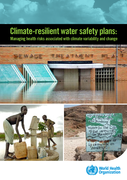
Long-term planning for an adequate and safe supply of drinking-water should be set in the context of growing external uncertainties arising from changes in the climate and environment. The water sa
...

The Quality Criteria for Health National Adaptation Plans (HNAPs) presents examples of good practice in HNAP development to assist countries in developing a comprehensive, feasible and implementable
...
