
Filter
5087
Text search:
political
Featured
358
1367
Language
4893
157
125
83
71
46
36
35
9
8
7
6
6
6
6
6
6
5
5
5
5
4
4
4
4
4
3
3
3
3
3
3
3
3
2
2
2
2
2
2
2
2
2
2
2
2
1
1
1
1
1
1
1
1
1
1
1
1
1
1
1
1
Document type
2673
1164
429
286
269
99
79
39
18
12
12
1
1
1
Countries
323
112
112
111
111
108
105
103
103
102
94
84
82
79
79
76
74
60
56
54
53
52
51
51
47
40
39
38
37
37
37
35
34
34
33
32
32
31
30
27
27
27
25
24
23
21
21
21
19
19
18
18
16
16
15
14
12
12
11
11
11
10
10
9
8
8
8
8
8
8
7
7
6
6
6
6
6
6
6
6
5
5
5
4
4
4
4
4
3
3
3
3
3
3
3
3
3
3
3
3
3
3
2
2
2
2
2
2
2
2
2
2
2
2
2
2
2
2
2
2
2
2
1
1
1
1
1
1
1
1
1
1
1
1
1
1
1
1
1
1
1
1
1
1
Authors & Publishers
558
178
140
132
128
85
84
61
45
44
38
33
27
27
26
26
26
26
26
24
22
22
22
20
19
18
17
17
17
17
16
16
16
16
15
15
15
14
14
14
14
13
13
13
13
13
12
12
12
12
12
12
12
11
11
11
11
11
11
11
11
10
10
10
10
10
10
9
9
9
9
9
9
9
9
9
9
9
9
8
8
8
8
8
8
7
7
7
7
7
7
7
7
7
7
6
6
6
6
6
6
6
6
6
6
6
6
6
6
6
6
6
6
6
6
6
6
6
6
6
5
5
5
5
5
5
5
5
5
5
5
5
5
5
5
5
5
5
5
5
5
5
5
5
5
5
5
5
5
5
5
5
5
5
5
5
5
5
5
5
5
5
4
4
4
4
4
4
4
4
4
4
4
4
4
4
4
4
4
4
4
4
4
4
4
4
4
4
4
4
4
4
4
4
4
4
4
4
4
4
4
4
4
4
4
4
4
4
4
4
4
4
4
4
4
4
4
4
4
4
4
4
4
4
4
3
3
3
3
3
3
3
3
3
3
3
3
3
3
3
3
3
3
3
3
3
3
3
3
3
3
3
3
3
3
3
3
3
3
3
3
3
3
3
3
3
3
3
3
3
3
3
3
3
3
3
3
3
3
3
3
3
3
3
3
3
3
3
3
3
3
3
3
3
3
3
3
3
3
3
3
3
3
3
3
3
3
3
2
2
2
2
2
2
2
2
2
2
2
2
2
2
2
2
2
2
2
2
2
2
2
2
2
2
2
2
2
2
2
2
2
2
2
2
2
2
2
2
2
2
2
2
2
2
2
2
2
2
2
2
2
2
2
2
2
2
2
2
2
2
2
2
2
2
2
2
2
2
2
2
2
2
2
2
2
2
2
2
2
2
2
2
2
2
2
2
2
2
2
2
2
2
2
2
2
2
2
2
2
2
2
2
2
2
2
2
2
2
2
2
2
2
2
2
2
2
2
2
2
2
2
2
2
2
2
2
2
2
2
2
2
2
2
2
2
2
2
2
2
2
2
2
2
2
2
2
2
2
2
2
2
2
2
2
2
2
2
2
2
2
2
2
2
2
2
2
2
2
2
2
2
2
2
2
2
2
2
2
2
2
2
2
2
2
2
2
2
2
2
2
2
2
2
2
2
2
2
2
2
2
2
2
2
2
2
2
2
2
2
2
2
2
2
2
2
2
2
2
2
2
2
2
2
2
2
2
2
2
2
2
2
2
2
2
2
2
2
2
2
2
2
2
2
2
2
2
2
2
2
2
2
2
2
2
2
2
2
2
2
2
2
2
2
2
2
2
2
2
2
2
2
2
2
2
2
2
1
1
1
1
1
1
1
1
1
1
1
1
1
1
1
1
1
1
1
1
1
1
1
1
1
1
1
1
1
1
1
1
1
1
1
1
1
1
1
1
1
1
1
1
1
1
1
1
1
1
1
1
1
1
1
1
1
1
1
1
1
1
1
1
1
1
1
1
1
1
1
1
1
1
1
1
1
1
1
1
1
1
1
1
1
1
1
1
1
1
1
1
1
1
1
1
1
1
1
1
1
1
1
1
1
1
1
1
1
1
1
1
1
1
1
1
1
1
1
1
1
1
1
1
1
1
1
1
1
1
1
1
1
1
1
1
1
1
1
1
1
1
1
1
1
1
1
1
1
1
1
1
1
1
1
1
1
1
1
1
1
1
1
1
1
1
1
1
1
1
1
1
1
1
1
1
1
1
1
1
1
1
1
1
1
1
1
1
1
1
1
1
1
1
1
1
1
1
1
1
1
1
1
1
1
1
1
1
1
1
1
1
1
1
1
1
1
1
1
1
1
1
1
1
1
1
1
1
1
1
1
1
1
1
1
1
1
1
1
1
1
1
1
1
1
1
1
1
1
1
1
1
1
1
1
1
1
1
1
1
1
1
1
1
1
1
1
1
1
1
1
1
1
1
1
1
1
1
1
1
1
1
1
1
1
1
1
1
1
1
1
1
1
1
1
1
1
1
1
1
1
1
1
1
1
1
1
1
1
1
1
1
1
1
1
1
1
1
1
1
1
1
1
1
1
1
1
1
1
1
1
1
1
1
1
1
1
1
1
1
1
1
1
1
1
1
1
1
1
1
1
1
1
1
1
1
1
1
1
1
1
1
1
1
1
1
1
1
1
1
1
1
1
1
1
1
1
1
1
1
1
1
1
1
1
1
1
1
1
1
1
1
1
1
1
1
1
1
1
1
1
1
1
1
1
1
1
1
1
1
1
1
1
1
1
1
1
1
1
1
1
1
1
1
1
1
1
1
1
1
1
1
1
1
1
1
1
1
1
1
1
1
1
1
1
1
1
1
1
1
1
1
1
1
1
1
1
1
1
1
1
1
1
1
1
1
1
1
1
1
1
1
1
1
1
1
1
1
1
1
1
1
1
1
1
1
1
1
1
1
1
1
1
1
1
1
1
1
1
1
1
1
1
1
1
1
1
1
1
1
1
1
1
1
1
1
1
1
1
1
1
1
1
1
1
1
1
1
1
1
1
1
1
1
1
1
1
1
1
1
1
1
1
1
1
1
1
1
1
1
1
1
1
1
1
1
1
1
1
1
1
1
1
1
1
1
1
1
1
1
1
1
1
1
1
1
1
1
1
1
1
1
1
1
1
1
1
1
1
1
1
1
1
1
1
1
1
1
1
1
1
1
1
1
1
1
1
1
1
1
1
1
1
1
1
1
1
1
1
1
1
1
1
1
1
1
1
1
1
1
1
1
1
1
1
1
1
1
1
1
1
1
1
1
1
1
1
1
1
1
1
1
1
1
1
1
1
1
1
1
1
1
1
1
1
1
1
1
1
1
1
1
1
1
1
1
1
1
1
1
1
1
1
1
1
1
1
1
1
1
1
1
1
1
1
1
1
1
1
1
1
1
1
1
1
1
1
1
1
1
1
1
1
1
1
1
1
1
1
1
1
1
1
1
1
1
1
1
1
1
1
1
1
1
1
1
1
1
1
1
1
1
1
1
1
1
1
1
1
1
1
1
1
1
1
1
1
1
1
1
1
1
1
1
1
1
1
1
1
1
1
1
1
1
1
1
1
1
1
1
1
1
1
1
1
1
1
1
1
1
1
1
1
1
1
1
1
1
1
1
1
1
1
1
1
1
1
1
1
1
1
1
1
1
1
1
1
1
1
1
1
1
1
1
1
1
1
1
1
1
1
1
1
1
1
1
1
1
1
1
1
1
1
1
1
1
1
1
1
1
1
1
1
1
1
1
1
1
1
1
1
1
1
1
1
1
1
1
1
1
1
1
1
1
1
1
1
1
1
1
1
1
1
1
1
1
1
1
1
1
1
1
1
1
1
1
1
1
1
1
1
1
1
1
1
1
1
1
1
1
1
1
1
1
1
1
1
1
1
1
1
1
1
1
1
1
1
1
1
1
1
1
1
1
1
1
1
1
1
1
1
1
1
1
1
1
1
1
1
1
1
1
1
1
1
1
1
1
1
1
1
1
1
1
1
1
1
1
1
1
1
1
1
1
1
1
1
1
1
1
1
1
1
1
1
1
1
1
1
1
1
1
1
1
1
1
1
1
1
1
1
1
1
1
1
1
1
1
1
1
1
1
1
1
1
1
1
1
1
1
1
1
1
1
1
1
1
1
1
1
1
1
1
1
1
1
1
1
1
1
1
1
1
1
1
1
1
1
1
1
1
1
1
1
1
1
1
1
1
1
1
1
1
1
1
1
1
1
1
1
1
1
1
1
1
1
1
1
1
1
1
1
1
1
1
1
1
1
1
1
1
1
1
1
1
1
1
1
1
1
1
1
1
1
1
1
1
1
1
1
1
1
1
1
1
1
1
1
1
1
1
1
1
1
1
1
1
1
1
1
1
1
1
1
1
1
1
1
1
1
1
1
1
1
1
1
1
1
1
1
1
1
1
1
1
1
1
1
1
1
1
1
1
1
1
1
1
1
1
1
1
1
1
1
1
1
1
1
1
1
1
1
1
1
1
1
1
1
1
1
1
1
1
1
1
1
1
1
1
1
1
1
1
1
1
1
1
1
1
1
1
1
1
1
1
1
1
1
1
1
1
1
1
1
1
1
1
1
1
1
1
1
1
1
1
1
1
1
1
1
1
1
1
1
1
1
1
1
1
1
1
1
1
1
1
1
1
1
1
1
1
1
1
1
1
1
1
1
1
1
1
1
1
1
1
1
1
1
1
1
1
1
1
1
1
1
1
1
1
1
1
1
1
1
1
1
1
1
1
1
1
1
1
1
1
1
1
1
1
1
1
1
1
1
1
1
1
1
1
1
1
1
1
1
1
1
1
1
1
1
1
1
1
1
1
1
1
1
1
1
1
1
1
1
1
1
1
1
1
1
1
1
1
1
1
1
1
1
1
1
1
1
1
1
1
1
1
1
1
1
1
1
1
1
1
1
1
1
1
1
1
1
1
1
1
1
1
1
1
1
1
1
1
1
1
1
1
1
1
1
1
1
1
1
1
1
1
1
1
1
1
1
1
1
1
1
1
1
1
1
1
1
1
1
1
1
1
1
1
1
1
1
1
1
1
1
1
1
1
1
1
1
1
1
1
1
1
1
1
1
1
1
1
1
1
1
1
1
1
1
1
1
1
1
1
1
1
1
1
1
1
1
1
1
1
1
1
1
1
1
1
1
1
1
1
1
1
1
1
1
1
1
1
1
1
1
1
1
1
1
1
1
1
1
1
1
1
1
1
1
1
1
1
1
1
1
1
1
1
1
1
1
1
1
1
1
1
1
1
1
1
1
1
1
1
1
1
1
1
1
1
1
1
1
1
1
1
1
1
1
1
1
1
1
1
1
1
1
1
1
1
1
1
1
1
1
1
1
1
1
1
1
1
1
1
1
1
1
1
1
1
1
1
1
1
1
1
1
1
1
1
1
1
1
1
1
1
1
1
1
1
1
1
1
1
1
1
1
1
1
1
1
1
1
1
1
1
1
1
1
1
1
1
1
1
1
1
1
1
1
1
1
1
1
1
1
1
1
1
1
1
1
1
1
1
1
1
1
1
1
1
1
1
1
1
1
1
1
1
1
1
1
1
1
1
1
1
1
1
1
1
1
1
1
1
1
1
1
1
1
1
1
1
1
1
1
1
1
1
1
1
1
1
1
1
1
1
1
1
1
1
1
1
1
1
1
1
1
1
1
1
1
1
1
1
1
1
1
1
1
1
1
1
1
1
1
1
1
1
1
1
1
1
1
1
1
1
1
1
1
1
1
1
1
1
1
1
1
1
1
1
1
1
1
1
1
1
1
1
1
1
1
1
1
1
1
1
1
1
1
1
1
1
1
1
1
1
1
1
1
1
1
1
1
1
1
1
1
1
1
1
1
1
1
1
1
1
1
1
1
1
1
1
1
1
1
1
1
1
1
1
1
1
1
1
1
1
1
1
1
1
1
1
1
1
1
1
1
1
1
1
1
1
1
1
1
1
1
1
1
1
1
1
1
1
1
1
1
1
1
1
1
1
1
1
1
1
1
1
1
1
1
1
1
1
1
1
1
1
1
1
1
1
1
1
1
1
1
1
1
1
1
1
1
1
1
1
1
1
1
1
1
1
1
1
1
1
1
1
1
1
1
1
1
1
1
1
1
1
1
1
1
1
1
1
1
1
1
1
1
1
1
1
1
1
1
1
1
1
1
1
1
1
1
1
1
1
1
1
1
1
1
1
1
1
1
1
1
1
1
1
1
1
1
1
1
1
1
1
1
1
1
1
1
1
1
1
1
1
1
1
1
1
1
1
1
1
1
1
1
1
1
1
1
1
1
1
1
1
1
1
1
1
1
1
1
1
1
1
1
1
1
1
1
1
1
1
1
1
1
1
1
1
1
1
1
1
1
1
1
1
1
1
1
1
1
1
1
1
1
1
1
1
1
1
1
1
1
1
1
1
1
1
1
1
1
1
1
1
1
1
1
1
1
1
1
1
1
1
1
1
1
1
1
1
1
1
1
1
1
1
1
1
1
1
1
1
1
1
1
1
1
1
1
1
1
1
1
1
1
1
1
1
1
1
1
1
1
1
1
1
1
1
1
1
1
1
1
1
1
1
1
1
1
1
1
1
1
1
1
1
1
1
1
1
1
1
1
1
1
1
1
1
1
1
1
1
1
1
1
1
1
1
1
1
1
1
1
1
1
1
1
1
1
1
1
1
1
1
1
1
1
1
1
1
1
1
1
1
1
1
1
1
1
1
1
1
1
1
1
1
1
1
1
1
1
1
1
1
1
1
1
1
1
1
1
1
1
1
1
1
1
1
1
1
1
1
1
1
1
1
1
1
1
1
1
1
1
1
1
1
1
1
1
1
1
1
1
1
1
1
1
1
1
1
1
1
1
1
1
1
1
1
1
1
1
1
1
1
1
1
1
1
1
1
1
1
1
1
1
1
1
1
1
1
1
1
1
1
1
1
1
1
1
1
1
1
1
1
1
1
1
1
1
1
1
1
1
1
1
1
1
1
1
1
1
1
1
1
1
1
1
1
1
1
1
1
1
1
1
1
1
1
1
1
1
1
1
1
1
1
1
1
1
1
1
1
1
1
1
1
1
1
1
1
1
1
1
1
1
1
1
1
1
1
1
1
1
1
1
1
1
1
1
1
1
1
1
1
1
1
1
1
1
1
1
1
1
1
1
1
1
1
1
1
1
1
1
1
1
1
1
1
1
1
1
1
1
1
1
1
1
1
1
1
1
1
1
1
1
1
1
1
1
1
1
1
1
1
1
1
1
1
1
1
1
1
1
1
1
1
1
1
1
1
1
1
1
1
1
1
1
1
1
1
1
1
1
1
1
1
1
1
1
1
1
1
1
1
1
1
1
1
1
1
1
1
1
1
1
1
1
1
1
1
1
1
1
1
1
1
1
1
1
1
1
1
1
1
1
1
1
1
1
1
1
1
1
1
1
1
1
1
1
1
1
1
1
1
1
1
1
1
1
1
1
1
1
1
1
1
1
1
1
1
1
1
1
1
1
1
1
1
1
1
1
1
1
1
1
1
1
1
1
1
1
1
1
1
1
1
1
1
1
1
1
1
1
1
1
1
1
1
1
1
1
1
1
1
1
1
1
1
1
1
1
1
1
1
1
1
1
1
1
1
1
1
1
1
1
1
1
1
1
1
1
1
1
1
1
1
1
1
1
1
1
1
1
1
1
1
1
1
1
1
1
1
1
1
1
1
1
1
1
1
1
1
1
1
1
1
1
1
1
1
1
1
1
1
1
1
1
1
1
1
1
1
1
1
1
1
1
1
1
1
1
1
1
1
1
1
1
1
1
1
1
1
1
1
1
1
1
1
1
1
1
1
1
1
1
1
1
1
1
1
1
1
1
1
1
1
1
1
1
1
1
1
1
1
1
1
1
1
1
1
1
1
1
1
1
1
1
1
1
1
1
1
1
1
1
1
1
1
1
1
1
1
1
1
1
1
1
1
1
1
1
1
1
1
1
1
1
1
1
1
1
1
1
1
1
1
1
1
1
1
1
1
1
1
1
1
1
1
1
1
1
1
1
1
1
1
1
1
1
1
1
1
1
1
1
1
1
1
1
1
1
1
1
1
1
1
1
1
1
1
1
1
1
1
1
1
1
1
1
1
1
1
1
1
1
1
1
1
1
1
1
1
1
1
1
1
1
1
1
1
1
1
1
1
1
1
1
1
1
1
1
1
1
1
1
1
1
1
1
1
1
1
1
1
1
1
1
1
1
1
1
1
1
1
1
1
1
1
1
1
1
1
1
1
1
1
1
1
1
1
1
1
1
1
1
1
1
1
1
1
1
1
1
1
1
1
1
1
1
1
1
1
1
1
1
1
1
1
1
1
1
1
1
1
1
1
1
1
1
1
1
1
1
1
1
1
1
1
1
1
1
1
1
1
1
1
1
1
1
1
1
1
1
1
1
1
1
1
1
1
1
1
1
1
1
1
1
1
1
1
1
1
1
1
1
1
1
1
1
1
1
1
1
1
1
1
1
1
1
1
1
1
1
1
1
1
1
1
1
1
1
1
1
1
1
1
1
1
1
1
1
1
1
1
1
1
1
1
1
1
1
1
1
1
1
1
1
1
1
1
1
1
1
1
1
1
1
1
1
1
1
1
1
1
1
1
1
1
1
1
1
1
1
1
1
1
1
1
1
1
1
1
1
1
1
1
1
1
1
1
1
1
1
1
1
1
1
1
1
1
1
1
1
1
1
1
1
1
1
1
1
1
1
1
1
1
1
1
1
1
1
1
1
1
1
1
1
1
1
1
1
1
1
1
1
1
1
1
1
1
1
1
1
1
1
1
1
1
1
1
1
1
1
1
1
1
1
1
1
1
1
1
1
1
1
1
1
1
1
1
1
1
1
1
1
1
1
1
1
1
1
1
1
1
1
1
1
1
1
1
1
1
1
1
1
1
1
1
1
1
1
1
1
1
1
1
1
1
1
1
1
1
1
1
1
1
1
1
1
1
1
1
1
1
1
1
1
1
1
1
1
1
1
1
1
1
1
1
1
1
1
1
1
1
1
1
1
1
1
1
1
1
1
1
1
1
1
1
1
1
1
1
1
1
1
1
1
1
1
1
1
1
1
1
1
1
1
1
1
1
1
1
1
1
1
1
1
1
1
1
1
1
1
1
1
1
1
1
1
1
1
1
1
1
1
1
1
1
1
1
1
1
1
1
1
1
1
1
1
1
1
1
1
1
1
1
1
1
1
1
1
1
1
1
1
1
1
1
1
1
1
1
1
1
1
1
1
1
1
1
1
1
1
1
1
1
1
1
1
1
1
1
1
1
1
1
1
1
1
1
1
1
1
1
1
1
1
1
1
1
1
1
1
1
1
1
1
1
1
1
1
1
1
1
1
1
1
1
1
1
1
1
1
1
1
1
1
1
1
1
1
1
1
1
1
1
1
1
1
1
1
1
1
1
1
1
1
1
1
1
1
1
1
1
1
1
1
1
1
1
1
1
1
1
1
1
1
1
1
1
1
1
1
1
1
1
1
1
1
1
1
1
1
1
1
1
1
1
1
1
1
1
1
1
1
1
1
1
1
1
1
1
1
1
1
1
1
1
1
1
1
1
1
1
1
1
1
1
1
1
1
1
1
1
1
1
1
1
1
1
1
1
1
1
1
1
1
1
1
1
1
1
1
1
1
1
1
1
1
1
1
1
1
1
1
1
1
1
1
1
1
1
1
1
1
1
1
1
1
1
1
1
1
1
1
1
1
1
1
1
1
1
1
1
1
1
1
1
1
1
1
1
1
1
1
1
1
1
1
1
1
1
1
1
1
1
1
1
1
1
1
1
1
1
1
1
1
1
1
1
1
1
1
1
1
1
1
1
1
1
1
1
1
1
1
1
1
1
1
1
1
1
1
1
1
1
1
1
1
Publication Years
1
1569
3066
420
24
3
2
2
Category
1806
418
324
246
207
84
9
2
Toolboxes
413
348
285
273
224
207
172
169
140
140
129
124
117
101
95
82
79
77
68
51
36
35
28
24
22
2
Tuberculosis (TB) control in the African Region has evolved since the disease was declared a global emergency by the World Health Organization (WHO) in 1993. Member States have adopted and implemented successive global and regional strategies and resolutions, with demonstrable positive impacts on in
...
cidence, prevalence and mortality, albeit with variations across countries. By the end of 2015, the Region as a whole met the key Millennium Development Goal (MDG) target of halting and beginning to reverse TB incidence. However only 35 of the 47 Member States met the MDG target.
more

It provides insight into WHO’s work that aims to improve the health of the people of the United Republic of Tanzania in collaboration with key stakeholders.

Zambia has recognised the Public Health threat of antimicrobial resistance and its impact on morbidity and mortality, as well as the subsequent economic consequences. The country has recorded microorganisms which have developed resistance to antimicrobial drugs. Notable among these are; Multidrug Re
...
sistant Mycobacterium Tuberculosis (MDR), Human Immunodeficiency virus resistant to antiretroviral drugs, Plasmodium resistance to antimalarial drugs, and fungal species showing indications of resistance to antifungal drugs. Emergence of “Superbugs” such as Methicillin Resistant Staphylococcus aureus (MRSA), Extended Spectrum beta-lactam (ESBL) producing Klebsiella pneumoniae and Vancomycin Resistant Enterococci (VRE) have also been reported.
more

Guidelines on sanitation and health
recommended
The new WHO Guidelines on Sanitation and Health summarize the evidence on the effectiveness of a range of sanitation interventions and provide a comprehensive framework for health-protecting sanitation, covering policy and governance measures, implementation of sanitation technologies, systems and b
...
ehavioural interventions, risk-based management, and monitoring approaches. Critically, the guidelines articulate the role of the health sector in maximizing the health impact of sanitation interventions.
The guidelines also identify gaps in the evidence-base to guide future research efforts to improve the effectiveness of sanitation interventions.
(French, Spanish, Russian, Arabic in production)
more
Outstanding child and adolescent TB priorities include the need to: find the missing children with active TB and link them to TB care; prevent TB in children who are in contact with infectious TB cases (through implementation of active contact investigation and provision of preventive treatment); an
...
d advance integration within general child health services, including maternal and child health/ reproductive, maternal, newborn, child and adolescent health, HIV, nutrition and other programmes.
more

The purpose of the landscape analysis is ultimately to facilitate improved engagement of private providers, thereby contributing to universal access to quality and affordable TB care and the end of the TB epidemic. It focuses on the role of private for-profit providers and on specific challenges and
...
experiences in engaging them for TB prevention and care.
more
Moving from accelerated burden reduction to malaria elimination in Zambia
Wheelchair Service Training Package - Basic level | The main purpose of the training package is to develop the minimum skills and knowledge required by personnel involved in wheelchair service delivery. An important aim of the training package is to get it integrated into the regular paramedical/reh
...
abilitation training programs such as physiotherapy, occupational therapy, prosthetics and orthotics, rehabilitation nursing. Towards this, WHO is posting the whole training package in the Website for the training institutes and wheelchair service providers. The easiest way to make use of the training package is to download the complete package (requires 3 GB space).
more

There are social and environmental barriers faced by persons with disabilities which have been reported in literature. In discussing these barriers, attention is yet to be given to the support from families to members with disabilities. This study aimed to examine family support and its impact on th
...
e lives of persons with disabilities in Ghana.
more
Living Conditions among People with Activity Limitations in Zambia: A National Representative Study.
This research report provides results from the study on living conditions among people with disabilities in Zambia. Comparisons are made between individuals with and without disabilities and also between households with and without a disabled family member. Results obtained in Zambia are also compar
...
ed to those obtained in earlier studies carried out in Namibia, Zimbabwe and Malawi. The Zambian study was undertaken in 2005-2006.
more
This is a report from a National, representative household survey carried out in Swaziland in 2009 – 2010. A large amount of effort has been put into this two‐year exercise until finally we can present the results of the combined efforts. First of all, this is a credit to the Federation of Disab
...
led People in Swaziland (FODSWA): To the Management Committee headed by Ms. Buyie Masuku for being in control of the whole process, and to the Project Co‐ordinator Mr. Bhekie Jele who for the most of the study handled all aspects in this comprehensive and complex process. Mr Yusman B Kamaleri from SINTEF played an important role in supporting FODSWA during the implementation of the study.
more
Living Conditions among People with Activity Limitations in Malawi. A National Representative Study.
This research report provides results from the study on living conditions
among people with disabilities in Malawi. Comparisons are made between
individuals with and without disabilities and also between households with and without a disabled family member. Results obtained in Malawi are also comp
...
ared those obtained in earlier studies carried out in Namibia and Zimbabwe. The Malawian study was undertaken in 2003.
more
This is a report from a National, representative household survey carried out in Botswana in 2012 – 2014. The study was carried out on behalf of the Norwegian Federation of Organisations of Disabled Persons (FFO), Southern Africa Federation of the Disabled (SASFOD) and Botswana Federation of Disab
...
led People (BOFOD). The study was led by Professor Tlamelo Mmatli of the University of Botswana, in collaboration with SINTEF Technology and Society. The study would not have been possible without a strong commitment from the Office of the President of Botswana and support from the Central Statistical Office. The study presents a broad picture of the situation among individuals with disability and households with disabled members in Botswana. It offers comparison with individuals without disability and households without disabled members, between provinces and between genders and locations (urban/rural). The study reveals that households with disabled members and individuals with disability score lower on a range on indicators on level of living.
more
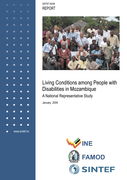
This research report provided results from the study of living conditions among people with functional limitation in Mozambique. Two comparative studies of different indicators of living conditions were carried out. These studies include: (i) a comparative study of households with and without family
...
member(s) with functional limitation and (ii) a comparative study of individuals with and without functional limitation. In addition, a detailed study that specifically addresses the situation of individuals with functional limitation was also conducted. The Mozambique study was undertaken in 2007 – 2008.
more
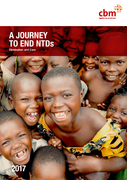
LEAVING NO-ONE BEHIND | “A Journey to End NTDs – Elimination and Care” records what we have achieved over the last year and where we are now. It presents our plan of action for the coming years, bringing our ‘traditional’ NTD work together with ‘Disease Management Disability and Inclusio
...
n’ (DMDI), Community Based Inclusive Development (CBID) and Livelihoods. We care for those affected and we’re working to enhance community and government ownership through national
health system strengthening, community engagement and cross-sectoral action. Ultimately, we are working to free future generations from these menacing diseases, improving prevention and treatment, without forgetting those for whom prevention and treatment are too late because they already have a disability.
more
Disability at a Glance 2015 focuses on barriers to the employment of persons with disabilities in the Asia-Pacific region, and offers solutions to strengthen their employment prospects. Employment is not only the primary means of livelihood generation; it also provides individuals with the purpose a
...
nd meaning of playing a productive role in society. Equal access to employment is therefore vital, and barriers to work faced by persons with disabilities must be removed.
more

This article describes a Community-Based Participatory Approach (CBPA) for children with intellectual disability in Endosulfan affected areas of Kasaragod district in Kerala state of India. The CBPA strategy evolved from Community Based Rehabilitation (CBR) and was led by Local Self-Government (LSG)
...
members. It involves a four-pronged approach encompassing family, community, service centres and LSG, with a focus on income generation activities and creation of employment opportunities. The CBPA model considers the cultural
uniqueness and limited resources in areas where the unscientific and extensive use of pesticides has led to high prevalence of multiple deformities including intellectual disabilities.
more

Effect of Music Intervention on the Behaviour Disorders of Children with Intellectual Disability using Strategies from Applied Behaviour Analysis
Ritu Kalgotra, Jaspal Singh Warwal
Disability, CBR & Inclusive Development Journal (DCIDJ)
(2017)
CC
The effect of music intervention on mild and moderate Intellectually
disabled children was studied in non-randomized pre-test post-test control
group design at an Indian state (Jammu) J&K

The State of the World’s Children 2013: Children with Disabilities examines the barriers – from inaccessible buildings to dismissive attitudes, from invisibility in official statistics to vicious discrimination – that deprive children with disabilities of their rights and keep them from partic
...
ipating fully in society. The report also lays out some of the key elements of inclusive societies that respect and protect the rights of all children, regardless of disability, and progress in helping all children to flourish and make their contribution to the world.
more
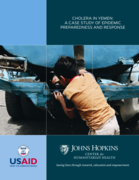
The report offers 20 top recommendations for getting ahead of future outbreaks in Yemen and similarly complex humanitarian settings.
In 2015, Yemen was declared a Level 3 emergency by the UN, kicking into gear the highest level of humanitarian support. A massive cholera outbreak followed, leading t
...
o 1 million suspected cases in 2 waves from September 2016-July 2018.
“We largely know ‘what to do’ to control cholera, but context-specific practices on ‘how to do it’ in order to surmount challenges to coordination, logistics, insecurity, access and politics remain needed,” the report states.
While the response improved between the 2 waves, there were gaps. For one, Yemen’s history of cholera should have triggered a heavy focus on pre-planning for an epidemic, such as stockpiling supplies and doubling down on community-based surveillance, the report fou
more
