
Filter
700
Text search:
zika
Featured
67
353
Language
Document type
387
94
92
37
33
18
14
9
7
5
1
1
1
1
Countries
43
41
30
11
10
10
6
5
5
5
5
5
4
4
4
3
3
3
3
2
2
2
2
2
2
2
2
2
2
2
2
2
2
1
1
1
1
1
1
1
1
1
1
1
1
1
1
1
1
1
1
1
1
1
1
1
1
1
1
1
1
1
1
Authors & Publishers
Publication Years
Category
95
43
43
22
21
16
3
2
Toolboxes
327
58
58
47
31
24
20
18
9
9
8
8
7
5
3
2
2
2
2
2
1
1
1
1
1
Recognizing the extent to which the COVID-19 outbreaks affects women and men differently is hugely important. Some preliminary data suggested that more men than women are dying, potentially due to sex-based immunological differences, higher rates of cardiovascular disease for men and lifestyle choic
...
Recognizing the extent to which the COVID-19 outbreaks affects women and men differently is hugely important. Some preliminary data suggested that more men than women are dying, potentially due to sex-based immunological differences, higher rates of cardiovascular disease for men and lifestyle choic
...
Recognizing the extent to which the COVID-19 outbreaks affects women and men differently is hugely important. Some preliminary data suggested that more men than women are dying, potentially due to sex-based immunological differences, higher rates of cardiovascular disease for men and lifestyle choic
...

To support countries in adapting their response to different COVID-19 scenarios, the World Health Organization (WHO) Department of Maternal, Newborn, Child and Adolescent Health and Ageing commissioned this scoping review of published and grey literature. The objective was to identify interventions
...
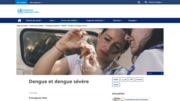
La dengue est une maladie virale transmise par les moustiques qui s’est rapidement propagée dans toutes les Régions de l’OMS ces dernières années. Le virus de la dengue est transmis par des moustiques femelles, principalement de l’espèce Aedes aegypti, mais aussi dans une moindre mesure A
...
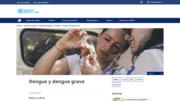
El dengue es una enfermedad vírica transmitida por mosquitos que en los últimos años se ha propagado rápidamente a todas las regiones de la OMS. El virus del dengue se transmite a través de mosquitos hembra principalmente de la especie Aedes aegypti y, en menor grado, de la especie Ae. albopict
...
Pregnant travelers face numerous risks, notably increased susceptibility to or severity of multiple infections, including malaria. Because pregnant women residing in areas non-endemic for malaria are unlikely to have protective immunity, travel to endemic areas poses risk of severe illness and pregn
...

The Western Pacific Region, being the most diverse region in the World, is beset by unique public health challenges and is considered a hotspot for outbreaks and emerging and re-emerging infectious diseases, such as SARS, MERS, avian influenza, Zika
...

Arbovirus (arthropod-borne virus) is defined as any virus that is transmitted to humans and/or other vertebrates by certain species of blood-feeding arthropods, mostly insects (flies and mosquitoes) and arachnids (ticks). Arbovirus is a descriptive term based on transmission by vectors with particul
...

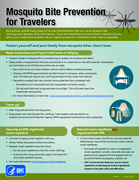
Fact sheet for travelers
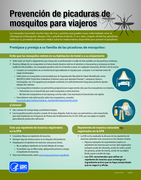
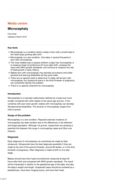
WHO Factsheet. Updated 02 March 2016

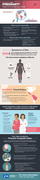
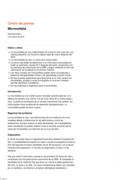
WHO Factsheet (Spanish version). Updated 02 March 2016
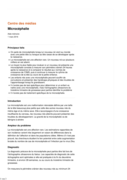
WHO Factsheet (French version). Updated 01 March 2016
WHO Factsheet. 14 March 2016
WHO Factsheet (Spanish version). March 2016
