
Filter
1502
Text search:
stakeholder
collaboration
Featured
120
462
Language
Document type
707
295
200
143
119
13
13
7
2
2
1
Countries
95
68
52
38
36
35
35
34
32
31
31
30
26
25
24
24
23
17
17
17
13
13
13
12
12
12
11
11
10
10
10
9
9
8
8
8
8
7
7
7
7
6
5
5
4
4
4
4
4
3
3
3
3
3
3
3
3
2
2
2
2
2
2
2
2
2
2
2
2
2
2
1
1
1
1
1
1
1
1
1
1
1
1
1
1
1
1
1
1
1
1
1
1
1
1
1
1
1
1
1
1
1
1
1
1
1
1
1
Authors & Publishers
Publication Years
Category
612
143
114
78
74
24
10
Toolboxes
107
84
74
71
64
61
53
51
45
45
36
29
29
27
25
24
23
17
12
12
11
9
7
5
1
1
The extensive use of natural resources threatens to exceed the carrying capacity of the Earth. The concept of a
circular economy offers an avenue to sustainable growth, good health and decent jobs, while saving the environment
and its natural resources. Further, the change from a linear economy (t
...
GGGI Technical Guideline No. 2
The Government recognizes the critical role of the built environment in addressing climate change and environmental degradation. To this end, it has identified and empowered the Kenya Building Research Centre to champion and coordinate the government’s green building agenda in relation to climate
...
The Kenya Climate Smart Agriculture Implementation Framework 2018-2027 (KCSAIF) has been developed to provide a guide to various innovative and transformative initiatives and best practices that will strive to address challenges brought about by climate change. It is envisioned to ensure increased a
...
Injection Safety and Safe Disposal of Medical Waste National Communication Strategy and Health Care Waste Management Standard
Operating Procedures (SOPs).
The overall objective of the consultancy was to review and align the three national technical and communication guiding documents on HCWM to th
...

The Global Task Force on Cholera Control (GTFCC) launched Ending Cholera: A Global
Roadmap to 2030 (Global Roadmap) (1), a strategy that aims to reduce global cholera
deaths by 90% and eliminate the disease in at least 20 countries by 2030. It is
organized according to three main axes:
• E
...
This Guidance Note is meant to help protection cluster coordinators apply nexus approaches in a practical way by, providing concrete steps and means to address prevalent or longstanding protection issues, risk patterns, trends and chronic vulnerabilities. The guidance calls for a practical, problem-
...
This strategy defines the World Health Organization (WHO) vision and framework for supporting Member States to accelerate the development, implementation and monitoring of their National Action Plan for Health Security (NAPHS) from 2022 to 2026. The National Action Plan for Health Security (NAPHS)
...

States have committed and assumed obligations to address multiple and intersecting forms of discrimination against refugees, internally displaced persons, asylum seekers, returnees and stateless persons. The Global Compact on Refugees places ending discrimination of any kind based on the grounds of
...
The Food and Agriculture Organization of the United Nations (FAO) launched a new Framework for Environmental and Social Management (FESM) to ensure that both people and the environment are protected from any potential impacts of FAO programmes and projects.
“This Framework ensures that our proj
...
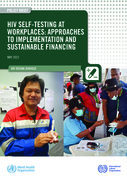
Countries are making progress toward the global goal of 95% of people living with HIV knowing their status by 2025. However, considerable gaps remain in achieving these goals globally. Men in high HIV burden settings and men from key populations in all settings are consistently less likely to know t
...

The Pandemic Influenza Pandemic (PIP) Framework's Partnership Contribution (PC) High-Level Implementation Plan III (HLIP III) outlines the strategy for strengthening global pandemic influenza preparedness from 2024 to 2030. HLIP III takes into consideration the lessons learned from the response to t
...

The Quadripartite organizations have developed the One Health Priority Research Agenda for AMR report, this is a joint initiative to assist in directing and catalysing scientific interest and financial investments for the priority research agenda across sectors for countries and funding bodies. The
...
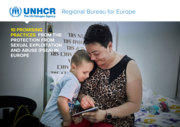
UNHCR invested significantly in risk mitigation, prevention and response to sexual exploitation and abuse (SEA) in the Europe region in 2022-2023, in particular in connection with the Ukraine emergency, where the risks were considered high due to the unprecedented scale and speed of displacement, mo
...

Japan has been implementing projects of global extension of medical technologies under an official development assistance policy to improve public health and medicine by promoting Japanese medical technologies worldwide. The current work examines the impact and goals of implementing this new scheme.
...
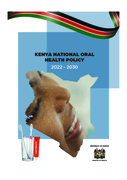
Oral health is defined as the absence of disease and a status that ensures optimal functioning of the mouth and its tissues in a manner preserving the highest level of function and self-esteem. Oral health enables an individual to eat, speak and socialise having no active disease, discomfort or disc
...
The Mexico Declaration for Circulatory Health brings together global health
organizations committed to improving circulatory health and reducing deaths and disability from heart disease and stroke around the world. These diseases presently represent the biggest health burden world-wide, accounting
...
The 2019-2023 Strategy for UNU-IIGH, developed in
2018, built on UNU-IIGH’s strategic advantage and
position vis-à-vis the UN and global health ecosystem.
The Strategy set a goal to advance evidencebased policy on key issues related to sustainable
development and health and shifted the Instit
...

The Infection Prevention and Control (IPC) Guidelines aim to support healthcare workers improve quality and safety health care. The Guidelines further aim to promote and facilitate the overall goal of IPC by providing evidence-based recommendations on the critical aspects of IPC, focusing on the fun
...
The World Health Organization (WHO) Global Diabetes Compact (GDC) was created as a global initiative to improve diabetes prevention and care, and to contribute to the global targets to reduce premature mortality due to noncommunicable diseases by one-third by 2030.
