
Filter
737
Text search:
optimizing
Featured
Recommendations
70
New Publications
174
Language
Document type
No document type
314
Guidelines
153
Studies & Reports
139
Manuals
47
Strategic & Response Plan
38
Training Material
21
Fact sheets
10
Resource Platforms
5
Infographics
4
Situation Updates
3
Online Courses
2
Brochures
1
Countries / Regions
Global
45
India
33
Kenya
17
Western and Central Europe
17
Latin America and the Carribbean
15
South Africa
12
Ukraine
11
Africa
11
Sierra Leone
10
Nigeria
10
Nepal
10
South–East Asia Region
10
Tanzania
9
Ethiopia
8
Myanmar / Burma
8
Liberia
7
Ghana
7
Zambia
7
Syria
6
Rwanda
6
Indonesia
6
Malawi
6
Philippines
5
Eastern Europe
5
Uganda
4
Lebanon
4
Cambodia
4
Bangladesh
4
Middle East and North Africa
4
Asia
4
Zimbabwe
3
Pakistan
3
South Sudan
3
Afghanistan
3
Brazil
3
Botswana
3
Lesotho
3
Yemen
3
Russia
3
Senegal
2
Congo, Democratic Republic of
2
USA
2
Cameroon
2
Jordan
2
Mozambique
2
Sudan
2
Benin
2
Namibia
2
Burundi
2
Ecuador
2
Western Pacific Region
2
Eastern Europe and Central Asia
2
Laos
2
Estonia
2
Vietnam
2
Guinea
1
Côte d’Ivoire / Ivory Coast
1
Togo
1
Haiti
1
Iraq
1
Germany
1
Turkey
1
Egypt
1
Chad
1
Thailand
1
Gambia
1
Central African Republic
1
Argentina
1
Colombia
1
Madagascar
1
Mexico
1
Sri Lanka
1
Chile
1
East and Southern Africa
1
West and Central Africa
1
Other region
1
Italy
1
Albania
1
Armenia
1
Southern Africa
1
Tajikistan
1
Qatar
1
Iran
1
Georgia
1
Mauritius
1
Authors & Publishers
Publication Years
Category
Countries
193
Public Health
67
Clinical Guidelines
57
Women & Child Health
47
Key Resources
30
Capacity Building
5
Pharmacy & Technologies
1
Toolboxes
HIV
112
COVID-19
66
AMR
58
TB
43
Caregiver
36
Mental Health
33
Planetary Health
32
Malaria
21
Pharmacy
17
NCDs
16
Disability
13
NTDs
13
Conflict
11
Global Health Education
11
Health Financing Toolbox
9
Natural Hazards
7
Rapid Response
7
Refugee
7
Ebola & Marburg
6
Polio
4
2.0 Rapid Response
4
Cholera
3
Zika
3
Specific Hazards
1
Regional situation analysis, practices, experiences, lessons learned and ways forward.
As a public good, antimicrobial medicines require rational use if their effectiveness is to be preserved. However, up to 50% of antibiotic use is inappropriate, adding considerable costs to patient care, and increasing morbidity and mortality. In addition, there is compelling evidence that antimicro
...
This guidance document is based on research of social media activity related to antibiotic use at EU level, as well as on a survey of the social media activities of EAAD partner organisations, mostly EU umbrella organisations of patients and health professionals. The research showed that there is al
...
Member States have requested WHO policy guidance on how to facilitate the implementation of national AMS activities in an integrated and programmatic approach. This policy guidance responds to that demand from Member States and is anchored in public health guiding principles in the human health sect
...
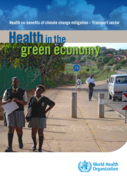
WHO's Health in the Green Economy sector briefings examine the health impacts of climate change mitigation strategies considered by the Intergovernmental Panel on Climate Change in their Fourth Assessment Report (Climate Change, 2007). Large, immediate health benefits from some climate change strate
...

In recent decades, India has witnessed a rapidly exploding epidemic of diabetes.
Indeed, India today has the second largest number of people with diabetes in the
world. The International Diabetes Federation (IDF) estimates that there are 72.9 million people with diabetes in India in 2017, which is
...

The coronavirus disease (COVID-19) pandemic exacerbated pre-existing inequalities in the treatment and care of noncommunicable diseases (NCDs). This report examines the effect of the COVID-19 pandemic on access to NCD medicines, and the policies and strategies implemented by countries and health sys
...
How to address the global crisis in antibiotic research and development.
The report includes a comprehensive summary and critical evaluation of recent initiatives to overcome the barriers to achieve sustainable access to antibiotics. As antibiotic resistance will continue to develop as long as we
...
Evaluation report
September 2014
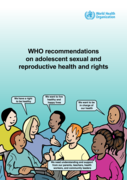
This document provides an overview of sexual and reproductive health and rights issues that may be important for the human rights, health and well-being of adolescents (aged 10–19 years) and the relevant World Health Organization (WHO) guidelines on how to address them in an easilyaccessible, user
...
Developed by the HHS Panel on Treatment of Pregnant Women with HIV Infection and Prevention of Perinatal Transmission—
A Working Group of the Office of AIDS Research Advisory Council (OARAC)
Accessed: 12.02.2020
13 May 2021
To avoid a reversal of progress from the adverse impacts of the COVID-19 pandemic, new knowledge and lessons from successful programmatic innovations are urgently needed to improve TB prevention and care. Experience can provide evidence for innovative approaches and strategies to mainta
...
Journal of the International AIDS Society, vol. 21 Issue no. 6 e 25142
Weaknesses in care programmes providing anti‐retroviral therapy (ART) persist and are often instigated by late HIV diagnosis and poor linkage to care. We investigated the potential for a home‐based counselling and testin ...
Weaknesses in care programmes providing anti‐retroviral therapy (ART) persist and are often instigated by late HIV diagnosis and poor linkage to care. We investigated the potential for a home‐based counselling and testin ...
Technical guidance.
This technical guidance aims to inform policy and practice development specifically related to improving the health of older refugees and migrants within the European Union and the larger WHO European Region. Both ageing and migration are in themselves complex multidimensional p
...

The WHO Toolkit for the care and support of people affected by complications associated with Zika virus has been developed to serve as a model guide, with the goal of enhancing country preparedness for Zika virus outbreaks. The toolkit is intended to provide a systems approach involving public heal
...

This is the ninth paper in our series, “Community Health Workers at the Dawn of a New Era”. Community health workers (CHWs) are in an intermediary position between the health system and the community. While this position provides CHWs with a good platform to improve community health, a major cha
...
Buku Pegangan -Panduan penilaian dan alur layanan berbasis individu di layanan kesehatan primer
recommended
Indonesian Version of: Integrated care for older people (ICOPE): guidance for person-centred assessment and pathways in primary care. The ICOPE guidance for person-centred assessment and pathways in primary care (ICOPE Handbook) helps community health and care workers put the recommendations o
...
The Federal Ministry of Health (FMOH) has been coordinating sector wide reforms that aim to improve equity and quality of health services. It is widely known that; the sector is growing in line the overall growth and transformation plan of the country and the sector is bein
...

As a result of Russia’s invasion of Ukraine, the people of Ukraine, especially the most vulnerable, are paying an enormous price. Lives and livelihoods are being lost, with more than ten million people forced from their homes— and their country—in search of safety. The war has unleashed catast
...
The State of the world’s nursing 2020 report provides the latest, most up-to-date evidence on and policy options for the global nursing workforce. It also presents a compelling case for considerable – yet feasible – investment in nursing education, jobs, and leadership.
The primary chapters
...
