
Filter
2645
Text search:
medicines
safety
Featured
330
730
Language
2560
57
51
48
35
23
21
16
9
8
6
5
4
3
3
3
3
3
3
2
2
2
2
2
2
2
2
2
2
2
1
1
1
1
1
1
1
1
1
1
1
1
1
1
1
1
1
1
1
1
1
1
1
1
1
Document type
1164
499
460
200
153
60
49
31
10
10
4
3
2
Countries
119
104
86
75
66
62
58
55
51
50
44
43
42
41
41
40
35
33
32
29
28
26
25
24
23
20
17
17
16
14
13
13
12
12
12
12
12
11
10
9
9
9
9
9
8
8
8
8
7
7
7
6
6
6
6
6
6
6
6
5
4
4
4
4
4
4
3
3
3
3
3
3
3
3
3
3
2
2
2
2
2
2
2
2
2
2
2
2
2
2
2
2
2
2
2
2
2
1
1
1
1
1
1
1
1
1
1
1
1
1
1
1
1
1
1
1
1
1
1
1
1
1
1
1
1
1
Authors & Publishers
499
128
75
69
59
46
30
28
26
24
23
22
20
17
17
16
14
13
13
13
12
12
11
11
10
10
9
8
8
8
8
8
8
8
7
7
7
7
7
7
7
7
7
7
7
6
6
6
6
6
6
6
6
6
6
6
6
6
6
5
5
5
5
5
5
5
5
5
5
5
5
5
5
5
5
5
5
5
5
4
4
4
4
4
4
4
4
4
4
4
4
4
4
4
4
4
4
4
4
4
4
4
4
4
4
4
4
4
4
3
3
3
3
3
3
3
3
3
3
3
3
3
3
3
3
3
3
3
3
3
3
3
3
3
3
3
3
3
3
3
3
3
3
3
3
3
3
3
3
3
3
3
3
3
3
3
3
3
3
3
3
3
3
3
3
2
2
2
2
2
2
2
2
2
2
2
2
2
2
2
2
2
2
2
2
2
2
2
2
2
2
2
2
2
2
2
2
2
2
2
2
2
2
2
2
2
2
2
2
2
2
2
2
2
2
2
2
2
2
2
2
2
2
2
2
2
2
2
2
2
2
2
2
2
2
2
2
2
2
2
2
2
2
2
2
2
2
2
2
2
2
2
2
2
2
2
2
2
2
2
2
2
2
2
2
2
2
2
2
2
2
2
2
2
2
2
2
2
2
2
2
2
2
2
2
2
2
2
2
2
2
2
2
2
2
2
2
2
2
2
2
2
2
2
2
2
2
2
2
2
2
2
2
2
1
1
1
1
1
1
1
1
1
1
1
1
1
1
1
1
1
1
1
1
1
1
1
1
1
1
1
1
1
1
1
1
1
1
1
1
1
1
1
1
1
1
1
1
1
1
1
1
1
1
1
1
1
1
1
1
1
1
1
1
1
1
1
1
1
1
1
1
1
1
1
1
1
1
1
1
1
1
1
1
1
1
1
1
1
1
1
1
1
1
1
1
1
1
1
1
1
1
1
1
1
1
1
1
1
1
1
1
1
1
1
1
1
1
1
1
1
1
1
1
1
1
1
1
1
1
1
1
1
1
1
1
1
1
1
1
1
1
1
1
1
1
1
1
1
1
1
1
1
1
1
1
1
1
1
1
1
1
1
1
1
1
1
1
1
1
1
1
1
1
1
1
1
1
1
1
1
1
1
1
1
1
1
1
1
1
1
1
1
1
1
1
1
1
1
1
1
1
1
1
1
1
1
1
1
1
1
1
1
1
1
1
1
1
1
1
1
1
1
1
1
1
1
1
1
1
1
1
1
1
1
1
1
1
1
1
1
1
1
1
1
1
1
1
1
1
1
1
1
1
1
1
1
1
1
1
1
1
1
1
1
1
1
1
1
1
1
1
1
1
1
1
1
1
1
1
1
1
1
1
1
1
1
1
1
1
1
1
1
1
1
1
1
1
1
1
1
1
1
1
1
1
1
1
1
1
1
1
1
1
1
1
1
1
1
1
1
1
1
1
1
1
1
1
1
1
1
1
1
1
1
1
1
1
1
1
1
1
1
1
1
1
1
1
1
1
1
1
1
1
1
1
1
1
1
1
1
1
1
1
1
1
1
1
1
1
1
1
1
1
1
1
1
1
1
1
1
1
1
1
1
1
1
1
1
1
1
1
1
1
1
1
1
1
1
1
1
1
1
1
1
1
1
1
1
1
1
1
1
1
1
1
1
1
1
1
1
1
1
1
1
1
1
1
1
1
1
1
1
1
1
1
1
1
1
1
1
1
1
1
1
1
1
1
1
1
1
1
1
1
1
1
1
1
1
1
1
1
1
1
1
1
1
1
1
1
1
1
1
1
1
1
1
1
1
1
1
1
1
1
1
1
1
1
1
1
1
1
1
1
1
1
1
1
1
1
1
1
1
1
1
1
1
1
1
1
1
1
1
1
1
1
1
1
1
1
1
1
1
1
1
1
1
1
1
1
1
1
1
1
1
1
1
1
1
1
1
1
1
1
1
1
1
1
1
1
1
1
1
1
1
1
1
1
1
1
1
1
1
1
1
1
1
1
1
1
1
1
1
1
1
1
1
1
1
1
1
1
1
1
1
1
1
1
1
1
1
1
1
1
1
1
1
1
1
1
1
1
1
1
1
1
1
1
1
1
1
1
1
1
1
1
1
1
1
1
1
1
1
1
1
1
1
1
1
1
1
1
1
1
1
1
1
1
1
1
1
1
1
1
1
1
1
1
1
1
1
1
1
1
1
1
1
1
1
1
1
1
1
1
1
1
1
1
1
1
1
1
1
1
1
1
1
1
1
1
1
1
1
1
1
1
1
1
1
1
1
1
1
1
1
1
1
1
1
1
1
1
1
1
1
1
1
1
1
1
1
1
1
1
1
1
1
1
1
1
1
1
1
1
1
1
1
1
1
1
1
1
1
1
1
1
1
1
1
1
1
1
1
1
1
1
1
1
1
1
1
1
1
1
1
1
1
1
1
1
1
1
1
1
1
1
1
1
1
1
1
1
1
1
1
1
1
1
1
1
1
1
1
1
1
1
1
1
1
1
1
1
1
1
1
1
1
1
1
1
1
1
1
1
1
1
1
1
1
1
1
1
1
1
1
1
1
1
1
1
1
1
1
1
1
1
1
1
1
1
1
1
1
1
1
1
1
1
1
1
1
1
1
1
1
1
1
1
1
1
1
1
1
1
1
1
1
1
1
1
1
1
1
1
1
1
1
1
1
1
1
1
1
1
1
1
1
1
1
1
1
1
1
1
1
1
1
1
1
1
1
1
1
1
1
1
1
1
1
1
1
1
1
1
1
1
1
1
1
1
1
1
1
1
1
1
1
1
1
1
1
1
1
1
1
1
1
1
1
1
1
1
1
1
1
1
1
1
1
1
1
1
1
1
1
1
1
1
1
1
1
1
1
1
1
1
1
1
1
1
1
1
1
1
1
1
1
1
1
1
1
1
1
1
1
1
1
1
1
1
1
1
1
1
1
1
1
1
1
1
1
1
1
1
1
1
1
1
1
1
1
1
1
1
1
1
1
1
1
1
1
1
1
1
1
1
1
1
1
1
1
1
1
1
1
1
1
1
1
1
1
1
1
1
1
1
1
1
1
1
1
1
1
1
1
1
1
1
1
1
1
1
1
1
1
1
1
1
1
1
1
1
1
1
1
1
1
1
1
1
1
1
1
1
1
1
1
1
1
1
1
1
1
1
1
1
1
1
1
1
1
1
1
1
1
1
1
1
1
1
1
1
1
1
1
1
1
1
1
1
1
1
1
1
1
1
1
1
1
1
1
1
1
1
1
1
1
1
1
1
1
1
1
1
1
1
1
1
1
1
1
1
1
1
1
1
1
1
1
1
1
1
1
1
1
1
1
1
1
1
1
1
1
1
1
1
1
1
1
1
1
1
1
1
1
1
1
1
1
1
1
1
1
1
1
1
1
1
1
1
1
1
1
1
1
1
1
1
1
1
1
1
1
1
1
1
1
1
1
1
1
1
1
1
1
1
1
1
1
1
1
1
1
1
1
1
1
1
1
1
1
1
1
1
1
1
1
1
1
1
1
1
1
1
1
1
1
1
1
1
1
1
1
1
1
1
1
1
1
1
1
1
1
1
1
1
1
1
1
1
1
1
1
1
1
1
1
1
1
1
1
1
1
1
1
1
1
1
1
1
1
1
1
1
1
1
1
1
1
1
1
1
1
1
1
1
1
1
1
1
1
1
1
1
1
1
1
1
1
1
1
1
1
1
1
1
1
1
1
1
1
1
1
1
1
1
1
1
1
1
1
1
1
1
1
1
1
1
1
1
1
1
1
1
1
1
1
1
1
1
1
1
1
1
1
1
1
1
1
1
1
1
1
1
1
1
1
1
1
1
1
1
1
1
1
1
1
1
1
1
1
1
1
1
1
1
1
1
1
1
1
1
1
1
1
1
1
1
1
1
1
1
1
1
1
1
1
1
1
1
1
1
1
1
1
1
1
1
1
1
1
1
1
1
1
1
1
1
1
1
1
1
1
1
1
1
1
1
1
1
1
1
1
1
1
1
1
1
1
1
1
1
1
1
1
1
1
1
1
1
1
1
1
1
1
1
1
1
1
1
1
1
1
1
1
1
1
1
1
1
1
1
1
1
1
1
1
1
1
1
1
1
1
1
1
1
1
1
1
1
1
1
1
1
1
1
1
1
1
1
1
1
1
1
1
1
1
1
1
1
1
1
1
1
1
1
1
1
1
1
1
1
1
1
1
1
1
1
1
1
1
1
1
1
1
1
1
1
1
1
1
1
1
1
1
1
1
1
1
1
1
Publication Years
919
1518
192
15
1
Category
1048
263
169
133
131
40
38
Toolboxes
246
190
163
152
143
91
83
78
76
71
59
57
57
47
45
44
38
36
32
18
13
7
7
5
3

Forests and Trees for Human Health: Pathways, Impacts, Challenges and Response Options
Cecil Konijnendijk, Dikshya Devkota, Stephanie Mansourian & Christoph Wildburger (eds.)
International Union of Forest Research Organizations (IUFRO)
(2023)
C2
Forests, trees and green spaces, hereinafter ‘forests and trees’ for short, provide multiple goods and services that contribute to human health. These include medicines, nutritious foods and other non-wood forest products (NWFPs). Globally, at l
...
east 3.5 billion people use NWFPs, including medicinal plants, which are particularly important for vulnerable groups and Indigenous Peoples and local communities (IPLCs).
During periods of crises, such as the COVID-19 pandemic, demand for forest products typically increases amongst these groups. Forests and trees also contribute to better health by playing a role in climate change
mitigation and adaptation, contributing to regulating the carbon cycle, but also moderating the micro-climate, filtering pollutants from the air and protecting settlements against the effects of extreme events such as droughts and flash floods.
more
The document, "Sustainable Management of Radiotherapy Facilities and Equipment," by WHO and IAEA, provides guidelines for managing radiotherapy equipment and facilities to ensure effective and safe cancer treatment. It covers essential aspects like preventive and corrective maintenance, funding, inf
...
rastructure, and staffing requirements for sustainable operation. The document aims to support radiotherapy departments, especially in low-resource settings, by outlining strategies for equipment procurement, maintenance, and replacement, emphasizing safety, quality assurance, and optimal patient care.
more
WHO published guidance for clinicians and health care decision-makers on the use of corticosteroids in patients with COVID-19.
We recommend systemic corticosteroids for the treatment of patients with severe and critical COVID-19. We suggest not to use corticosteroids in the treatment of patients
...
with non-severe COVID-19 as the treatment brought no benefits, and could even prove harmful. Treatment should be under supervision of a clinician.
Corticosteroids are listed in the WHO model list of essential medicines, readily available globally at a low cost. WHO encourages countries to maintain sufficient stocks of corticosteroids to treat COVID-19 and the other disease for which they are effective, while not maintaining excessive stocks which could deny other countries access.
more
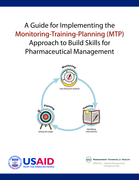
In the mid-1980s, recognizing the limitations of traditional training and that the knowledge and skills acquired are not necessarily applied back in the workplace, MSH developed the Monitoring‐Training-Planning (MTP) approach to assist the Ecuadorian Ministry of Health to implement its Child Survi
...
val Program. Using the MTP approach, staff me
mbers learn to mobilize their own resources and to improve, incrementally, the management of medicines and other pharmaceuticals at their own facility.
more
Volume 1 covers emergency triage assessment and treatment, and acute care for a severely ill or acutely injured patient for approximately the first 24 hours of care. It describes the clinical procedures commonly used in emergency and acute care, and gives a summary of the
...
medicines used and the steps necessary for infection control.
more
The document provides detailed guidelines for the production, formulation, and implementation of oral rehydration salts (ORS) to combat dehydration caused by diarrhoea, particularly in children. It focuses on the composition, quality standards, and packaging requirements of ORS, aiming to support na
...
tional authorities and healthcare providers in ensuring effective and accessible treatment. It also highlights strategies for manufacturing ORS locally while adhering to international health and safety standards.
more
The objectives of these WHO guidelines are to provide updated evidence- based recommendations for the treatment of persons with hepatitis C infection using, where possible, all DAA-only combinations. The guidelines also provide recommendations on the preferred regimens based on a patient’s HCV gen
...
otype and clinical history, and assess the appropriateness of continued use of certain medicines. This document also includes existing recommendations on screening for HCV infection and care of persons infected with HCV that were first issued in 2014
more

WHO guidelines on the pharmacological treatment of persisting pain in children with medical illnesses
World Health Organization
(2012)
The Access to Controlled Medications Programme identified the development of treatment guidelines that cover the treatment of all types of pain as one of the core areas of focus for improving access to opioid analgesics. Such guidelines are interesting both for health-care professionals and policy-
...
makers. They are also important in improving access to controlled medicines for determining when those opioid medicines and when non-opioid medicines are preferred.
Based on a Delphi study, WHO planned the development of three treatment guidelines, covering chronic pain in children, chronic pain in adults and acute pain.
more
Clinical guideline, Methods, Evidence and Recommendations
In this guideline the following is covered: information needs of people with chronic hep
titis B and their carers; where children, young people and adults with chronic hepatitis B a-
should be assessed; assessment of liver disease, includi
...
ng the use of non-invasive tests and genotype testing; criteria for offering antiviral treatment; the efficacy, safety and cost effectiveness of currently available treatments; selection of first-line therapy; management of treatment failure or drug resistance; prophylactic treatment during im-
munosuppressive therapy; and monitoring for treatment response
more
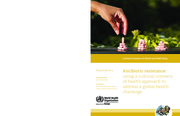
This policy brief has been developed in response to the contemporary challenge of antibiotic resistance (ABR). ABR poses a formidable threat to global health and sustainable development. It is now increasingly recognized that the systematic neglect of cultural factors is one of the biggest obs
...
tacles to achieving better health outcomes and better standards of living worldwide. Using a cultural contexts of health approach, the policy brief explores the centrality of culture to the challenge of ABR. The brief examines how the prescription and use of antibacterial medicines, the transmission of resistance, and the regulation and funding of research are influenced by cultural, social and commercial, as well as biological and technological factors. The brief moves beyond the ready equation of culture with individual behaviours and demonstrates how culture serve as an enabler of health and provide new possibilities for change.
more
Conceived as part of the CWS-A/P project on regional security and risk management, this book presents a
collection of testimonies from aid workers in some of the most insecure and volatile environments in the world.
The participants recount a broad array of security incidents, such as kidnappings,
...
suicide bombings, mob
violence, road ambushes, and point-blank range shootings. Their narrative provides valuable information on
how organizations can manage security risks and streamline safety policies.
more
VADEMECUM | This Vademecum is intended to provide a benchmark for aid workers—whether working in the field or at a strategic level—in particular concerning the formulation and implementation of programmes of prevention or response to humanitarian crises. It is not solely a theoretical document b
...
ecause, in addition to guiding principles, it also provides concrete examples of how to ensure protection of the rights of people with disabilities, including in terms of humanitarian aid. This Vademecum has been drafted in adherence to the UN Convention on the Rights of Persons with Disabilities, which has been in force since 2006 and which reaffirms the importance of protecting the safety of people with disabilities in dangerous situations.
more

The aim of these Guidelines is to provide a framework for the conservation and sustainable use of plants in medicine. To do this, the Guidelines describe the various tasks that should be carried out to ensure that where medicinal plants are taken from the wild, they are taken on a basis that is sust
...
ainable.
The Guidelines conform to the principles of Caring for the Earth, prepared in partnership by IUCN, UNEP and WWF. Caring for the Earth extends the message and scope of the World Conservation Strategy to an ethic of sustainable living, and explains how to integrate conservation with development. Its message is particularly relevant to the issue of medicinal plants, which in many parts of the world are being seriously depleted due to over-exploitation and loss of habitats, resulting in a lack of essential medicines and so reducing options for the future. more
The Guidelines conform to the principles of Caring for the Earth, prepared in partnership by IUCN, UNEP and WWF. Caring for the Earth extends the message and scope of the World Conservation Strategy to an ethic of sustainable living, and explains how to integrate conservation with development. Its message is particularly relevant to the issue of medicinal plants, which in many parts of the world are being seriously depleted due to over-exploitation and loss of habitats, resulting in a lack of essential medicines and so reducing options for the future. more
Commissioned by Plan International the report draws on data from research conducted in Bangladesh in April 2018. It explores how adolescent girls within two age brackets (10-14 and 15-19) understand the unique impact the crisis has upon them, and how they have responded to the challenges they face.
... Despite the numbers of adolescent girls affected so profoundly by the ongoing Rohingya crisis, and of course, by many crises around the world, it is rare that either their own communities or the humanitarian sector at large pay much attention to them. This research is an attempt to rectify that: to acknowledge that girls and young women do have rights and that their ideas are worth listening to and acting upon.
Among the many learnings, we discovered that girls feel isolated. They have settled among strangers, and parents worry about their safety, keeping them even more trapped inside their new, makeshift homes.
75% of girls interviewed said they have no ability to make decisions about their own lives. more
... Despite the numbers of adolescent girls affected so profoundly by the ongoing Rohingya crisis, and of course, by many crises around the world, it is rare that either their own communities or the humanitarian sector at large pay much attention to them. This research is an attempt to rectify that: to acknowledge that girls and young women do have rights and that their ideas are worth listening to and acting upon.
Among the many learnings, we discovered that girls feel isolated. They have settled among strangers, and parents worry about their safety, keeping them even more trapped inside their new, makeshift homes.
75% of girls interviewed said they have no ability to make decisions about their own lives. more
Guideline
Iron deficiency is one of the most common forms of nutritional deficiencies, particularly among vulnerable groups such as women, children and low-income populations. Iron deficiency often precedes anaemia, and anaemia during pregnancy is one of the strongest predictors of anaemia duri ... ng the postpartum period, beginning just after childbirth throughout the subsequent 6 weeks. The consequences of iron deficiency and anaemia during the postpartum period can be serious and have long-term health implications for the mother and her infant.
This guideline reviews the evidence on the safety and effectiveness of iron supplementation in postpartum women. more
Iron deficiency is one of the most common forms of nutritional deficiencies, particularly among vulnerable groups such as women, children and low-income populations. Iron deficiency often precedes anaemia, and anaemia during pregnancy is one of the strongest predictors of anaemia duri ... ng the postpartum period, beginning just after childbirth throughout the subsequent 6 weeks. The consequences of iron deficiency and anaemia during the postpartum period can be serious and have long-term health implications for the mother and her infant.
This guideline reviews the evidence on the safety and effectiveness of iron supplementation in postpartum women. more
An estimated 59 000 people die from rabies each year. That’s one person every nine minutes of every day, 40% of whom are children living in Asia and Africa. As dog bites cause almost all human cases, we can prevent rabies deaths by increasing awareness, vaccinating dogs to prevent the disease at i
...
ts source and administering life-saving treatment after people have been bitten. We have the vaccines, medicines, tools and technologies to prevent people from dying from dog-mediated rabies. For a relatively low cost it is possible to break the disease cycle and save lives
more
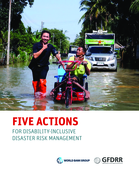
A recent survey of the literature and experience identified five broad actions that development institutions and governments, as well as their partners and stakeholders, can take to improve disability-inclusive disaster risk management. Those five actions are:
- Include persons with disabilitie ... s as valued stakeholders in disaster risk management activities
- Help remove barriers to the full participation of persons with disabilities
- Increase awareness among governments and their partners of the safety and security needs of persons with disabilities
- Collect data that is disaggregated by disability
- Ensure that new construction, rehabilitation and reconstruction are accessible to persons with disabilities more
- Include persons with disabilitie ... s as valued stakeholders in disaster risk management activities
- Help remove barriers to the full participation of persons with disabilities
- Increase awareness among governments and their partners of the safety and security needs of persons with disabilities
- Collect data that is disaggregated by disability
- Ensure that new construction, rehabilitation and reconstruction are accessible to persons with disabilities more

Inequality of access to palliative care and symptom relief is one of the greatest disparities in global health care (1). Currently, there is avoidable suffering on a massive scale due to lack of access to palliative care and symptom relief in low- and middle-income countries (LMICs) (1). Yet basic p
...
alliative care that can prevent or relieve most suffering due to serious or life-threatening health conditions can be taught easily to generalist clinicians, can be provided in the community and requires only simple, inexpensive medicines and equipment. For these reasons, the World Health Assembly (WHA) resolved that palliative care is "an ethical responsibility of health systems"(2). Further, most patients who need palliative care are at home and prefer to remain there. Thus, it is imperative that palliative care be provided in the community as part of primary care. This document was written to assist ministries of health and health care planners, implementers and managers to integrate palliative care and symptom control into primary health care (PHC).
more
Version 1.1. The WHO protocol has been adapted to resource-limited settings and builds on existing methodologies from the European Centre for Disease Prevention and Control (ECDC), the Global PPS project from University of Antwerp, the US Centers for Disease Control and Prevention (CDC), and the
...
Medicines Utilisation Research in Africa (MURIA).
Point Prevalence Surveys collects information on prescribing practices of antibiotics and other information relevant to treatment and management of infectious diseases in hospitalized patients, and complements surveillance of antimicrobial consumption.
more
To understand the national situation, Ethiopia did a situation assessment, launched its first strategy in 2011, and took action to contain AMR, as detailed in the blue boxes found throughout this strategy. This updated version of the strategy was in response to the revised health and
...
medicines policies, health sector transformation plan, and the resolutions of the 68th World Health Assembly
of May 2015 and so that Ethiopia’s efforts could be coordinated with global initiatives in the prevention and containment of AMR.
more
