Filter
1531
Text search:
data
profiles
Featured
159
390
Language
Document type
704
311
278
83
82
25
17
12
11
4
2
2
Countries
90
47
37
27
27
27
27
26
26
25
24
24
23
19
17
16
16
15
14
14
14
14
14
13
12
12
11
11
10
10
10
10
9
9
9
8
8
8
8
8
7
6
6
6
6
6
5
5
5
5
5
5
4
4
4
4
3
3
3
3
3
3
3
3
3
3
2
2
2
2
2
2
2
2
2
2
2
2
2
2
2
2
2
2
1
1
1
1
1
1
1
1
1
1
1
1
1
1
1
1
1
1
1
1
1
1
1
1
1
1
1
1
1
Authors & Publishers
Publication Years
Category
527
160
111
103
94
23
14
Toolboxes
121
102
93
62
59
57
49
44
42
42
37
36
35
34
32
23
21
20
17
12
9
8
6
6
1
The report is based on in-depth qualitative research in countries along the Eastern and Central Mediterranean routes. It focuses on Iraqi and Nigerian migrants as case studies, as Nigeria is the number one country of origin for migrants travelling along the Central Mediterranean route. Iraqis repres
...
Summary of current WHO recommendations and guidance on programmatic approaches
The modules (1-12) are based on materials originally developed by FIND, KNCV and Cepheid, and are in PowerPoint format for country customization. Depending on the audience, modules may be selected and adapted according to need (e.g. basic users, supervisors, clinicians). Topics covered include: Over
...
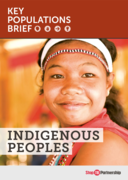
Key populations brief.
Further Analysis of the 2000, 2005, and 2011 Demographic and Health Surveys. DHS Further Analysis Reports No. 83
The World Health Organization Disability Assessment Schedule (WHODAS 2.0) is a generic assessment instrument developed by WHO to provide a standardized method for measuring health and disability across cultures. It was developed from a comprehensive set of International Classification of Functioning
...
This manual summarizes the methodology used to develop WHODAS 2.0 and the findings obtained when the schedule was applied to certain areas of general health, including mental and neurological disorders.
The manual will be useful to any researcher or clinician wishing to use WHODAS 2.0 in their prac
...

Census Report Volume 4-K
The results of the 2014 Census collected only relates to four of the six types of disability domains recommended by the Washington Group on Disability Statistics, namely: seeing, hearing, walking, and remembering or concentrating.
Out of a total of 50.3 million pe ...
The results of the 2014 Census collected only relates to four of the six types of disability domains recommended by the Washington Group on Disability Statistics, namely: seeing, hearing, walking, and remembering or concentrating.
Out of a total of 50.3 million pe ...
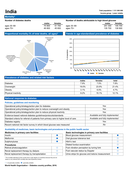
Accessed 12/12/2018
Guide to access the National AMR Surveillance Dashboard
Much remains unknown about displaced communities in out-of-camp areas as identification constraints hinder knowledge on the overall situation and preeminent needs of an area. When compared to regularly monitored in-camp populations, less is known about the health, sanitation, livelihoods, food secur
...
A summary of the national drug situation
Working Document Nov. 2020
The COVAX Supply and Logistics workstream lead by UNICEF, Gavi and WHO have released a working copy of the COVID-19 Vaccination, Country Readiness & Delivery: Supply and Logistics Guidance. Countries might find this Guide useful when developing and strengthening their sup
...

Soil-transmitted helminths are a group of intestinal worms that include Ascaris lumbricoides (giant roundworm), Trichuris trichiura (whipworm), and Ancylostoma spp. (A. duodenale, A. ceylanicum) and Necator americanus (hookworms). Despite the clear biological differences among the different species,
...