
Filter
370
Text search:
International
Pharmaceutical
Federation
Featured
Recommendations
35
New Publications
84
Language
Document type
No document type
189
Studies & Reports
76
Guidelines
54
Manuals
19
Strategic & Response Plan
16
Training Material
9
Fact sheets
3
Situation Updates
2
Resource Platforms
2
Countries / Regions
Global
24
Nigeria
16
India
16
Western and Central Europe
13
Ukraine
11
Kenya
8
South Africa
8
Eastern Europe
6
Sierra Leone
4
Ethiopia
4
Eastern Europe and Central Asia
4
Africa
4
Russia
4
Liberia
3
Uganda
3
Syria
3
Asia
3
Senegal
2
Cameroon
2
Zimbabwe
2
Philippines
2
Nepal
2
Tanzania
2
Rwanda
2
Brazil
2
Lesotho
2
Myanmar / Burma
2
Latin America and the Carribbean
2
Moldova
2
Kyrgyzstan
2
Guinea
1
Congo, Democratic Republic of
1
Mali
1
Ghana
1
Niger
1
South Sudan
1
Iraq
1
Jordan
1
Germany
1
Chad
1
Bangladesh
1
Namibia
1
North Macedonia
1
Serbia
1
Botswana
1
Venezuela
1
Albania
1
Armenia
1
Laos
1
Tajikistan
1
Bulgaria
1
Uzbekistan
1
Kazakhstan
1
Georgia
1
Turkmenistan
1
Portugal
1
Authors & Publishers
Publication Years
Category
Countries
92
Clinical Guidelines
35
Key Resources
25
Public Health
21
Women & Child Health
11
Pharmacy & Technologies
8
Capacity Building
7
Toolboxes
Pharmacy
33
Mental Health
32
HIV
30
TB
30
AMR
28
COVID-19
23
NCDs
20
Conflict
14
Rapid Response
12
Global Health Education
9
Planetary Health
8
Caregiver
7
Ebola & Marburg
5
Refugee
5
Specific Hazards
4
NTDs
4
Health Financing Toolbox
3
2.0 Rapid Response
3
Disability
2
Polio
2
Natural Hazards
2
Zika
1
23 Dec 2020. The aim of this document is to provide an update on the knowledge surrounding the role of children in the transmission of SARS-CoV-2 and the role of schools in the COVID-19 pandemic, based on the experience in the EU from August–December, 2020. This document also addresses transmissio
...
Health Systems in Transition. Vol. 5 No.3 2015
Amphetamine-type stimulants, new psychoactive substances
-4-
World Drug Report 2017
Accessed: 14.03.2019
FOLLOW-UP TO THE 2011 POLITICAL DECLARATION ON HIV/AIDS: INTENSIFYING EFFORTS TO ELIMINATE HIV/AIDS | Reporting Period: January – December 2014
A regional consultation report and draft transition framework
A review of available evidence (2016).
28-29 June 2016; Geneva, Switzerland
The END TB strategy.
Strategy for Increasing the use of Modern Contraceptives in Nigeria
The knowledge guide is the second publication in the Self-care competency framework to support health and care workers.
This describes how health and care workers can apply each of the 10 competency standards in their work, detailing the necessary knowledge, skills and attitudes that underpin the
...
This curricula guide builds on several existing products of WHO and partners, aimed at supporting countries in their effort to address the first objective of the GAP-AMR (to improve awareness and understanding of AMR). It is targeted specifically at health educators and policy planners, and applies
...
Annals of Global Health,Vol.81,No.2, 239-247
At the 2008 inaugural meeting of the Consortium of Universities for Global Health (CUGH),participants discussed the rapid expansion of global health programs and the lack of standardized competencies and curricula to guide these programs. In 2013, CUGH a
...
Spanish version of "Developing Pharmacy Practice" - WHO/FIP Joint handbook -
Este manual de introducción marca un nuevo paradigma en la práctica de farmacia. Intenta guiar a los formadores en atención farmacéutica para educar a los estudiantes de farmacia y a los farmacéuticos ya estableci
...
The framework is to be used as a reference guide, applied according to local priorities and needs, and targeted at academic institutions, educators, accreditation bodies, regulatory agencies and other users. The ultimate aim is to ensure that all health workers are equipped with the requisite compet
...

The standards define 10 key competencies for health and care workers to support self-care in their clinical practice as well as the specific, measurable behaviours that demonstrate those competencies, focusing on people-centredness; decision-making; effective communication; collaboration; evidence-i
...
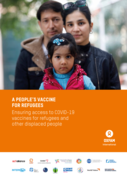
For most people in displacement contexts, there are simply not enough vaccines available in the places where they are hosted: 85% of refugees are hosted in lower- and middle-income countries, while in the first six months of this year 85% of vaccines went to wealthy countries; lower- and middle inco
...

As the Americas undergo profound demographic change and there are more persons aged 65 years or older than children younger than 5 years, it is crucial to recognize that national immunization programs must be redesigned to ensure comprehensive protection for individuals across the lifespan. By adopt
...
The revised guidelines present two major changes to existing guidelines: (A) there are now just 2 categories of pneumonia instead of 3 (“pneumonia” which is treated at home with oral amoxicillin and “severe pneumonia” which requires injectable antibiotics) and (B) oral amoxicillin replaces o
...
Skin and mucosal conditions are extremely common in all children and adults in particular in HIV-infected adults and children and are one of the commonest daily management problems faced by health care workers caring for patients with HIV infection
