
Filter
1486
Text search:
Antenatal
care
coverage
Featured
94
613
Language
Document type
1009
209
132
49
43
16
13
8
6
1
Countries
103
83
67
61
56
56
55
51
48
47
45
42
39
39
38
37
36
21
20
20
19
17
16
15
12
11
10
10
9
9
9
9
9
9
9
8
6
6
5
5
4
4
4
4
4
4
3
3
3
3
3
2
2
2
2
2
2
2
2
2
2
2
1
1
1
1
1
1
1
1
1
1
1
1
1
1
1
1
Authors & Publishers
Publication Years
Category
990
134
78
71
39
16
3
Toolboxes
80
51
44
33
31
26
22
21
18
14
11
9
9
9
8
5
5
4
3
3
2
2
2
1
The checklist and reference list has two parts: high-level cross-cutting content (Part A) and specific programme content (Part B). Part A applies to all countries and contains situation and response analysis, the NSP development process, the goal, targets and priority-setting of the NSP and the prin
...
Bangladesh has been going through incremental trend of GDP growth rates for a long time. The GDP is the key aspect to measure the economic growth of a country. But the current world wide pandemic due to the COVID-19 hardly affects the world’s economy as well as Bangladesh. The present
...

July 2021. This publication brings together important clinical and programmatic updates produced by WHO since 2016 and provides comprehensive, evidence-informed recommendations and good practice statements within a public health, rights-based and person-centred approach.
These guidelines bring in
...
The Updated guidelines on Management of tuberculosis in children and adolescents include new recommendations that cover diagnostic approaches for TB, shorter treatment for children with non-severe drug-susceptible TB, a new option for the treatment of TB meningitis, the use of bedaquiline and delama
...

This document is an output of a WHO cross-programme initiative aiming to improve the prevention, diagnosis and management of anaemia and thereby accelerate reduction in its prevalence. It comes at an important time, midway through the era of the Sustainable Development Goals, when progress in reduci
...

Strategic communication is at the heart of public health and more important than ever in the digital age. Using communication strategically requires expertise, skills and resources to plan, implement and evaluate interventions that encourage governments to implement policies that improve people’s
...

The National Strategic Plan for Malaria Elimination 2021–2025 outlines Bangladesh’s roadmap to achieve zero indigenous malaria cases by 2030, with an interim goal to reduce transmission to near-zero levels by 2025. The strategy builds upon earlier successes in malaria control and shifts focus to
...

This document consolidates, for the first time, WHO recommendations on the prevention, testing, treatment and monitoring of hepatitis B and C, and includes testing strategies for hepatitis D. Drawing on a decade of evidence-based guidance issued between 2015 and 2025, it provides a single, practical
...
The European Mental Health Action Plan 2013–2020
recommended
Mental disorders are one of the top public health challenges in the WHO European Region, affecting about 25% of the population every year. In all countries, mental health problems are much more prevalent among the people who are most deprived. The WHO European Region therefore faces diverse challeng
...

Mental disorders impose an enormous burden on society, accounting for almost one in three years lived with disability globally. •In addition to their health impact, mental disorders cause a significant economic burden due to lost economic output and the link between mental disorders and costly, po
...

UNHCR’s Public Health Strategy 2021-2025 is based on the lessons learnt, and builds on the achievements, of the Global Strategy for Public Health 2014-2018.
Progress was made on policies favouring inclusion and integration into national systems3 with 92% of 48 operations surveyed reporting refuge
...

The article focuses on "The State of the World’s Children 2023" report published by UNICEF. It highlights the critical role of vaccines in saving lives and the challenges in global immunization efforts, especially for marginalized and underserved children. The report emphasizes the impact of COVID
...

The overall goal of the programme, to reduce the malaria morbidity and mortality by 75% (using 2012 as baseline) by the year 2020, continued to be pursued in 2014. The following areas were identified as some of the priorities for the year: Malaria Case Management under which we have Malaria in Pregn
...
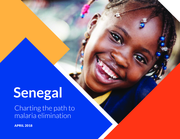
Senegal’s substantial and sustained progress against malaria is an inspiring public health success story, and a source of potential lessons for other countries on the path to elimination. This case study describes three major success factors—(1) outstanding leadership and partner engagement, (2)
...

Antibiotics and other antimicrobial agents are invaluable life savers, particularly in resource-limited countries where infectious diseases are abundant. Both uncomplicated and severe infections are potentially curable as long as the aetiological agents are susceptible to the
...

Updated version – September 2020
The COVID-19 pandemic is affecting everyone. Globally, millions of people have been infected with the virus, while hundreds of thousands have lost their lives. In Moldova, the pandemic is placing an ever-increasing pressure on the health
...
These guidelines provide a framework for effective action to facilitate access to safe and ethical
testing services for different population groups. The implementation of the a comprehensive
approach, known as HIV Testing Services (HTS) is cardinal as an effective package of services
that diminis
...

The COVID-19 pandemic is having a major impact on the mental health of populations in the Americas. Studies
show high rates of depression and anxiety, among other psychological symptoms, particularly among women, young
people, those with pre-existing mental health conditions, health workers, and p
...
The pandemic has emphasized the high risk of avoidable harm to patients, health workers, and the general public, and has identified a range of safety gaps across all core components of health systems at all levels.
The rapid review ‘Implications of the COVID-19 pandemic for patient safety’ ex
...

In 2015, the United Nations set important targets to reduce premature
cardiovascular disease (CVD) deaths by 33% by 2030. Africa disproportionately
bears the brunt of CVD burden and has one of the highest risks of dying
from non-communicable diseases (NCDs) worldwide. There is currently
an epide
...
