
Filter
424
Text search:
unhealthy
diet
Featured
28
120
Language
Document type
192
134
47
22
16
5
4
1
1
1
1
Countries
44
42
16
14
11
10
9
9
9
8
8
7
7
6
6
5
5
4
4
4
4
3
3
3
3
3
3
2
2
2
2
2
2
2
2
2
2
2
2
2
1
1
1
1
1
1
1
1
1
1
1
1
1
1
1
1
1
1
1
1
1
1
1
1
1
Authors & Publishers
Publication Years
Category
189
74
40
18
17
16
Toolboxes
75
39
30
21
11
9
5
5
4
4
3
3
3
1
1
1
1

Drawing on the World Health Organization’s package of NCD best buys, the report demonstrates how these evidence-based measures can help countries reduce premature deaths, strengthen health systems, and advance progress towards the Sustainable Development Goals. It provides policymakers, donors, ad
...

WHO, as the coordinating authority on international health, supports countries in protecting public health through evidence-based policies and actions. Considering the significant health burden and the multiple potential benefits of interventions, the WHO Air Quality, Energy and Health Unit aims to
...

This plan, approved by the Organization’s 62nd Directing Council, was shaped by extensive consultations with countries and stakeholders, and commits to transformative health outcomes over the next six years, tackling noncommunicable diseases (NCDs), mental health, health security, fragmented healt
...
The standards of care for HIV define the expected or desired quality of prevention, treatment, and care for people at risk of HIV acquisition or living with HIV.
The standards are based on a scientific rationale, as well as the responsibilities of each stakeholder, to ensure that people receive app
...
The power relations around global decisions which shape population health can be changed through new alliances and information flows. The Democratising Global Health Governance Initiative, of which WHO Watch is a project, is designed to contribute to improved population health (and health equity) th
...

Refugee Health
recommended
An approach to emergency situations. Relief workers face rapidly changing and complex environments, new disease patterns, enormous humanitarian needs and relatively limited resources. The authors of this book use their experience in the area to produce an operational manual of the issues involved in
...
A Global Perspective
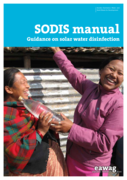
SODIS manual - updated version
The SODIS manual contains detailed information about technical and promotional aspects of the SODIS method.
Former version also available in French, Portuguese, Spanish, Uzbek, Russian

A manual intended for medical and other personnel responsible for humanitarian activities in armed conflicts. It covers the following topics: setting up a health-care system that meets the essential needs of war victims, particularly of displaced persons; public health tools most frequently used for
...
Available in: English, French, Chinese, Spanish, Russian, Arabic, Thai, Korean, Tajik, Vietnamese, Uzbek
http://www.who.int/disabilities/cbr/guidelines/en/
This Technical Brief focuses on current principles and approaches to Moderate Acute Malnutrition (MAM) management, highlighting key constraints, gaps in knowledge and areas still lacking consensus. It is intended to inform ongoing debates among practitioners, national partners, donors and analysts o
...
The curriculum, which complements the national pediatric ART training, was finalized in 2011 and was subsequently implemented nationally. The training curriculum includes a 15-module Trainer Manual, a Participant Manual, and accompanying PowerPoint slides.


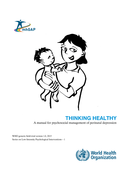
The Thinking Health manual outlines an evidence-based approach describing how community health workers can reduce prenatal depression through evidence-based cognitive-behavioural techniques recommended by the mhGAP programme.
This manual is the first volume of WHO’s new series on low-intensity p
...
