
Filter
535
Text search:
planetary
health
Featured
18
13
Language
Document type
327
47
26
25
20
19
16
14
14
11
8
5
2
Countries
58
8
6
5
4
4
3
3
3
2
2
2
2
2
2
2
1
1
1
1
1
1
1
1
1
1
1
1
1
1
1
1
1
1
1
1
Authors & Publishers
Publication Years
Category
41
32
17
4
2
2
Toolboxes
443
35
22
10
9
5
5
5
3
2
2
2
2
1
1
1
1
dades infecciosas. Los antimicrobianos eficaces son imprescindibles para las medidas preventivas y curativas, para proteger a los pacientes frente a enfermedades potencialmente mortales y para garantizar que se puedan llevar a cabo procedimientos complejos, como la cirugía y la quimioterapia, con e
...
Contains tools and resources for countries to develop clean household energy policies and programmes.

This guideline covers indoor air quality in residential buildings. It aims to raise awareness of the importance of good air quality in people's homes and how to achieve this.
New WHO Global Air Quality Guidelines (AQGs) provide clear evidence of the damage air pollution inflicts on human health, at even lower concentrations than previously understood. The guidelines recommend new air quality levels to protect the
...
En esta obra se presentan mensajes básicos para pasar a la acción, resumidos
en una serie de capítulos sobre diversos temas ligados a la salud ambiental,
consultables en línea en: http://www.who.int/ceh/publications/hehc_booklet/en/
index.html
Energy use in the home is a vital and ubiquitous feature of human society. Energy
is used for a wide variety of purposes, including cooking, space heating, light-
ing, small-scale income generation, various household tasks, and entertainment.
Road safety is an issue that does not receive anywhere near the attention it deserves – and it really is one
of our great opportunities to save lives around the world

Globalization and Health (2021) 17:74 https://doi.org/10.1186/s12992-021-00722-3
Promoting health and well-being throughout Europe
This guide outlines a practical approach to estimating greenhouse gas emissions avoided by diverting waste from landfills through reverse logistics and reuse/recycling. It provides step-by-step guidance, emission factors, and a scenario tailored to humanitarian operations, along with suggestions on
...
Unhealthy diets and excess body weight are leading risk factors for death and disability in the WHO European Region. Addressing malnutrition in all its forms is essential to ensure health and well-being for all and, consequently, sustainable develop
...
In the spirit of the Sustainable Development Goals, WHO and the International Labour Organization (ILO) produce the WHO/ILO Joint Estimates of the Work-related Burden of Disease and Injury (WHO/ILO Joint Estimates). The WHO/ILO Joint Estimates quantify the population exposed to occupational risk fac
...
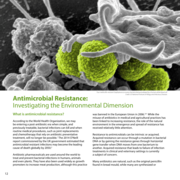
In this edition, the Antimicrobial Resistance chapter discusses the growing, dangerous trend of antimicrobial resistance and the potential catastrophic consequences on global health.
Chapter 1 of Frontier 2017: Emerging Issues of Environmental Conc
...
The main message emerging from this new comprehensive global assessment is that premature death and disease can be prevented through healthier environments – and to a significant degree. Analysing the latest data on the environment-disease nexus and the devastating impact of environmental hazards
...

En 2015, 26 % des décès de 5,9 millions d'enfants de moins de cinq ans auraient pu être évités si les facteurs de risque
environnementaux avaient été pris en compte – cette possibilité manquée de sauver des vies est révoltante. La période prénatale
et de la petite enfance constitue u
...
In this edition, the Antimicrobial Resistance chapter discusses the growing, dangerous trend of antimicrobial resistance and the potential catastrophic consequences on global health.
The Nanomaterials chapter talks about this relatively new techno
...

En 2015, el 26% de los decesos de 5,9 millones de niños que murieron antes de cumplir los cinco años podría haberse prevenido
abordando los riesgos medioambientales; una impactante oportunidad perdida. El período prenatal y de la primera infancia
representa un escenario de particular vulnerabi
...
Establecimientos de salud resilientes al clima y ambientalmente sostenibles: orientaciones de la OMS
La finalidad de estas orientaciones es aumentar la capacidad de los establecimientos de salud para proteger y mejorar la salud de las comunidades destinatarias ante un clima inestable y cambiante;
y habilitarlos para que sean ambientalmente sostenibles, optimizando el uso de los recursos y reducien
...
