
Filter
288
Text search:
foodborne
diseases
Featured
32
53
Language
Document type
80
73
55
29
18
13
6
6
4
3
1
Countries
22
8
7
5
5
4
4
3
3
3
3
3
3
3
2
2
2
2
2
2
2
2
1
1
1
1
1
1
1
1
1
1
1
1
1
1
1
1
1
1
Authors & Publishers
Publication Years
Category
55
37
25
14
8
8
7
Toolboxes
58
51
31
18
16
11
11
10
8
7
6
4
3
3
3
2
2
2
1

This toolkit lays out a framework for a waterborne disease investigation and consolidates resources to assist investigation activities.
The Waterborne Disease Outbreak Investigation Toolkit was designed to assist state and local health departments in conducting waterborne disease outbreak invest
...

Fascioliasis is an animal parasitic disease (in cattle and sheep, but also pigs, donkeys, Llamas and alpacas that can be transmitted to humans. The infection is caught when aquatic or semi-aquatic plants with the larvae of the worm attached to their stem or leaves are ingested raw or poorly cooked.
...
The trematodes Fasciola hepatica (also known as the common liver fluke or the sheep liver fluke) and Fasciola gigantica are large liver flukes (F. hepatica: up to 30 mm by 15 mm; F. gigantica: up to 75 mm by 15 mm), which are primarily found in domestic and wild ruminants (their main definitive host
...
Accessed 14 July 2015
Website last accessed on 14.04.2023
Les trématodes d'origine alimentaire sont des zoonoses et leurs agents pathogènes ne peuvent être transmis à l'homme qu'après avoir accompli un cycle de vie complexe, dont certaines étapes se déroulent dans un hôte animal intermédiaire. Les premiers h
...
Website last accessed ob 14.04.2023
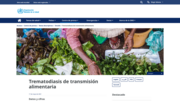
Los trematodos transmitidos por los alimentos son zoonosis y sus patógenos sólo pueden transmitirse al ser humano tras completar un complejo ciclo vital, algunas de cuyas etapas tienen lugar en un hospedador animal intermediario. El primer hospedador interme
...

Website last accessed on 14.04.2023
Трематодозы пищевого происхождения являются зоонозами, и их возбудители могут передаваться человеку только после завершения сложного жизне
...
