Filter
307
Text search:
World
Health
Organization
(
WHO),
Regional
Office
for
South-East-Asia
Featured
Recommendations
45
New Publications
84
Language
Document type
No document type
141
Studies & Reports
62
Guidelines
57
Manuals
20
Strategic & Response Plan
12
Training Material
4
Situation Updates
3
Fact sheets
3
Resource Platforms
2
Infographics
2
Online Courses
1
Countries / Regions
South–East Asia Region
28
Global
21
India
14
Asia
13
Myanmar / Burma
9
Bangladesh
6
Nepal
4
Western and Central Europe
4
Philippines
3
Western Pacific Region
3
Uganda
2
Cambodia
2
Thailand
2
Congo, Democratic Republic of
1
Syria
1
Tanzania
1
Rwanda
1
Indonesia
1
Sudan
1
Eswatini/ Swaziland
1
Brazil
1
Yemen
1
Middle East and North Africa
1
Eastern Europe and Central Asia
1
Other region
1
Africa
1
Venezuela
1
Eastern Europe
1
Tajikistan
1
Russia
1
Kazakhstan
1
Authors & Publishers
Publication Years
Category
Countries
56
Clinical Guidelines
52
Women & Child Health
29
Public Health
25
Key Resources
19
Capacity Building
9
Pharmacy & Technologies
4
Toolboxes
HIV
36
TB
25
Mental Health
21
COVID-19
18
NTDs
17
Planetary Health
16
AMR
15
Caregiver
15
Rapid Response
12
Global Health Education
7
Disability
6
Pharmacy
6
2.0 Rapid Response
6
Zika
4
NCDs
4
Conflict
3
Natural Hazards
3
Malaria
3
Ebola & Marburg
2
Polio
2
Specific Hazards
2
Cholera
1
Typhoon
1
Refugee
1
International Journal of Infectious Diseases 80 (2019) 10–15
journal homepage: www.elsevier.com/locate/ijid
Table of contents:
- Preface
- Introductory note and acknowledgements
- Commentary
- Chapter 1: Drug supply and the market
- Chapter 2: Drug use prevalence and trends
- Chapter 3: Drug-related harms and responses
- Annex: National data tables
Available in 24 languages on:
http://www.emcdd
...

Report on Main Findings
The review encompasses three complementary components: 1) a review of published literature 2000-2015 on NCDs and their risk factors; 2) qualitative interviews with key actors engaged in NCD research in Myanmar; and 3) additional reviews of Myanmar ethical committee inqui ...
The review encompasses three complementary components: 1) a review of published literature 2000-2015 on NCDs and their risk factors; 2) qualitative interviews with key actors engaged in NCD research in Myanmar; and 3) additional reviews of Myanmar ethical committee inqui ...
National Tuberculosis Control Program; Mycobacterial Disease Control National AIDS/STD Program

Access to medical personal protective equipment (PPE) is essential for routine healthcare delivery, and a critical tool for containing outbreaks, as well as preventing and responding to pandemics. I
...
Public Health Action
vol 5 no 3 published 21 september 2015
Program Report for Collaborative Agreement: DFD-A-00-08-00309-00 September 30, 2008 -December 31, 2015
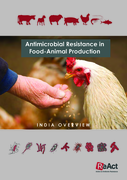
Indian markets caused a stir across the country.1
According to the Centre for Science and the Environment (CSE), a respected New Delhi-based NGO, most honey brands
sold in India contained varying amounts of antibiotics. Their consumption over time
...
For practitioners in humanitarian and development contexts

This report makes clear that there is a path to end AIDS. Taking that path will help ensure preparedness to address other pandemic challenges, and advance progress across the Sustainable Development Goals. The data and real-world examples in the rep
...
This study aims to analyze national and international stakeholders and their initiatives in Early Warning Systems in Myanmar, to identify priority gaps that need to be addressed by all stakeholders. It is presented as a first step towards supporting GoUM in information-gathering under the Myanmar Ac
...

In recent years Terre des Hommes Netherlands observed the steady rise of a new form of child sexual exploitation. One that is enabled and fuelled by rapid technological advances, increasing global connectivity, persisting poverty rates, and growing disparity in the global distribution of resources.
...

AN ANALYSIS OF UNICEF MICS 3 SURVEY DATA FROM BANGLADESH, LAO PDR, MONGOLIA AND THAILAND
China and Eurasia Forum Quarterly, Volume 6, No. 3 (2008) p. 101-128 © Central Asia-Caucasus Institute & Silk Road Studies Program
ISSN: 1653-4212