Filter
304
Filtered Results: 304
Text search:
R.d
M.
Rapee
Featured
Recommendations
27
New Publications
55
Language
Document type
No document type
207
Studies & Reports
40
Guidelines
25
Manuals
18
Strategic & Response Plan
4
Fact sheets
4
Training Material
2
Situation Updates
2
Brochures
1
Infographics
1
Countries / Regions
India
18
South Africa
11
Global
8
Syria
7
Nigeria
7
Kenya
6
Western and Central Europe
6
Philippines
5
Latin America and the Carribbean
5
Congo, Democratic Republic of
5
Uganda
5
Myanmar / Burma
5
Ukraine
4
Bangladesh
4
Nepal
3
Malawi
3
Russia
3
Zambia
3
South Sudan
3
Indonesia
3
Eswatini/ Swaziland
3
Sierra Leone
2
Senegal
2
Africa
2
Asia
2
Germany
2
Eastern Europe
2
Namibia
2
Yemen
2
Botswana
2
Liberia
2
Tajikistan
1
Colombia
1
Mexico
1
El Salvador
1
Lesotho
1
Rwanda
1
Cameroon
1
Laos
1
Burkina Faso
1
Peru
1
Zimbabwe
1
Mozambique
1
Italy
1
USA
1
Haiti
1
Cambodia
1
Venezuela
1
Tanzania
1
Middle East and North Africa
1
Eastern Europe and Central Asia
1
Southern Africa
1
Vietnam
1
Sri Lanka
1
Libya
1
Iraq
1
Pakistan
1
Authors & Publishers
Publication Years
Category
Countries
107
Women & Child Health
28
Public Health
20
Clinical Guidelines
17
Key Resources
16
Capacity Building
8
Pharmacy & Technologies
1
Toolboxes
Mental Health
59
HIV
33
COVID-19
18
Disability
13
Refugee
10
NCDs
8
Conflict
6
NTDs
5
TB
4
Planetary Health
4
Pharmacy
3
Global Health Education
3
Natural Hazards
2
Ebola & Marburg
2
Caregiver
2
Polio
2
AMR
2
Specific Hazards
1
Social Ethics
1
Health Financing Toolbox
1
2.0 Rapid Response
1
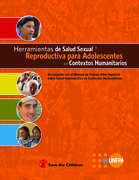
This Toolkit is intended to guide humanitarian programme managers and healthcare providers to ensure that sexual and reproductive health interventions put into place both during and after a crisis are responsive to the unique needs of adolescents.
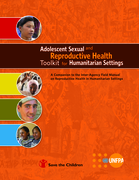
This Toolkit is intended to guide humanitarian programme managers and healthcare providers to ensure that sexual and reproductive health interventions put into place both during and after a crisis are responsive to the unique needs of adolescents.
The well-being of children in sub-Saharan Africa is under siege from all directions since the advent of the COVID-19 pandemic. The region is now suffering its first-ever economic recession, pushing about 50 million people into extreme poverty, a majority of whom are children.

This report explores the extent to which evidence, policy, normative guidance and commitments on HIV and gender-based violence, and their interlinkages, is being translated into action on the ground in fragile settings. These issues are explored through the lens of training of peace support operatio...
Experience from Save the Children and partners globally
demonstrates that improvements in education quality go hand-in-hand
with inclusion and access, Flexible, quality, responsive learning
environments will benefit all children and are fundamental to including
marginalised groups like disabled ...
This publication makes the case for working with men and women, boys and girls, together in an intentional and mutually reinforcing way that challenges gender norms in the pursuit of improved health and gender equality. In addition to providing a definition for the new concept of gender synchronizat...
The present report is based on a longitudinal analysis of assessments on mixed migration routes and dynamics, conducted over the course of 2018. It is based on six rapid thematic studies, conducted over the course of 2018, as well as a longitudinal analysis of changes in mixed migration routes and d...
Mental Health Toolkit
recommended
While working with survivors and victims of domestic abuse, we have learned that
many people who have experienced abuse or trauma in their lives also experience mental health issues as a direct effect of what they have been through. This is why Chayn has created a Mental Health Toolkit available fo...
For the Assesor's Guide Vol 1 and 2 see: nrhm.gov.in/images/pdf/programmes/maternal-health/guidelines/Operational_Guidelines_for_Quality_Assurance_in_Public_Health_Facilities_and_checklists-3_books.zip
This is a case-ascertained prospective investigation of all identified health care contacts working in a health care facility in which a laboratory confirmed 2019-nCoV infected patient (see 2.2 Study population) receives care. Note that this study can be done in health care facilities at all 3 level...
HIV Testing and Counselling Guidelines