
Filter
1074
Text search:
Europa
Featured
96
134
Language
Document type
477
180
163
54
46
34
33
32
17
15
14
5
2
1
Countries
369
204
154
148
122
55
53
36
35
20
15
13
12
10
10
9
9
8
8
7
6
6
6
6
6
6
6
4
4
4
4
4
3
3
3
3
3
3
3
3
2
2
2
2
2
2
2
2
2
2
2
2
2
2
2
2
2
2
1
1
1
1
1
1
1
1
1
1
1
1
1
1
1
1
1
1
1
1
1
1
1
1
1
1
1
1
1
1
Authors & Publishers
Publication Years
Category
308
46
36
28
24
9
5
Toolboxes
229
212
156
153
37
31
22
22
17
16
15
13
13
12
11
10
8
8
7
4
4
4
3
2

The extensive use of antimicrobials in human and veterinary medicine in recent years has accelerated the emergence and spread of resistant microorganisms. This situation has been worsened by the lack of investment in developing new effective antibiotics. The severity of the consequences is clear to
...
Each year, 33000 people die from an infection due to bacteria resistant to antibiotics. The burden of infections with bacteria resistant to antibiotics on the European population is comparable to that of influenza, tuberculosis and HIV/AIDS combined.
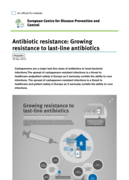
Carbapenems are a major last-line class of antibiotics to treat bacterial infections.The spread of carbapenem-resistant infections is a threat to healthcare andpatient safety in Europe as it seriously curtails the ability to cure infections. The spread of carbapenem-resistant infections is a threat
...
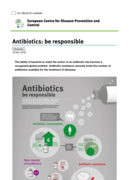
The ability of bacteria to resist the action of an antibiotic has become a recognised global problem. Antibiotic resistance severely limits the number of antibiotics available for the treatment of diseases.
This document provides guidance on the application of non-pharmaceutical countermeasures to minimise the spread of the 2019 novel coronavirus (2019-nCoV) in the population. Some of the measures proposed refer specifically to certain phases of the epidemic (containment or mitigation phases), and can
...

The aim of this document is to support public health preparedness planning with regard to personal protective equipment (PPE) needs in healthcare settings where patients suspected or confirmed to have been infected with the novel coronavirus 2019-nCoV are being treated.
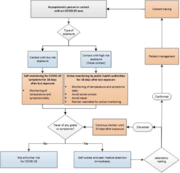
This algorithm shows the main actions for contacts of probable or confirmed 2019-nCoV cases. Implementation may be modified depending on the risk assessment for individual cases and their contacts by public health authorities.
Checklist for hospitals preparing for the reception and care of coronavirus 2019 (COVID-19) patients
recommended
This checklist has been developed to support hospital preparedness for the management of COVID-19 patients.
Elements to be assessed have been divided into the following areas:
Establishment of a core team and key internal and external contact points
Human, material and facility capacit
...
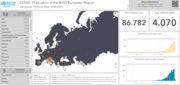
Daily interactive Dashboard
Общие цели
1. Распространить информацию о ходе подготовки, в том числе о потенциале в области реагирования и планах и процедурах реагирования в целях выявления заÐ
...

Проект от 3 февраля 2020 г.
Эпидемиологические данные свидетельствуют о том, что 2019-нКоВ может передаваться от человека к человеку. Во время предшествующих вспышек,
...
Временное руководство в.2 26 января 2020 г. WHO/2019-nCoV/RCCE/v2020.2
В настоящем документе представлены контрольные перечни, разработанные ВОЗ для обеспечения готовности и прÐ
...
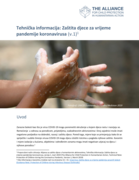
Zarazne bolesti kao što je virus COVID-19 mogu poremetiti okruženje u kojem djeca rastu i razvijaju se. Remećenje u odnosu sa porodicom, prijateljima, svakodnevnim aktivnostima i široj zajednici može imati negativne posljedice na dobrobit, razvoj i zaštitu djece. Pored toga, mjere koje se pri
...
Cloth masks and mask sterilisation as options in case of shortage of surgical masks and respirators
recommended
This document aims to provide advice on the use of cloth face masks and sterilisation of respirators and surgical masks as an alternative in healthcare settings with suspected or confirmed COVID-19 cases if there is a shortage of specialised surgical masks and respirators.
This document provides guidance to EU/EEA Member States on environmental cleaning in healthcare and non-healthcare settings during the COVID-19 pandemic.
This document provides guidance on infection prevention and control (IPC) measures for people with suspected or confirmed coronavirus disease (COVID-19) who are experiencing mild symptoms that do not require hospitalisation, therefore self-isolating at home.

The Suicide Prevention Resource Center (SPRC) has compiled a selection of web pages and information sheets
on mental health and coping with the effects of COVID-19. These resources are a selection from key organizations
in the field. We will continue to update this list as new resources become ava
...
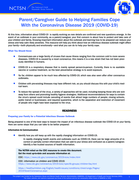
At this time, information about COVID-19 is rapidly evolving as new details are confirmed and new questions emerge. In the
event of an outbreak in your community, as a parent/caregiver, your first concern is about how to protect and take care of
your children and family. Knowing important informat
...
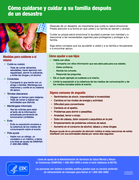
Después de un desastre, es importante que cuide su salud emocional.
Preste atención a la forma en que usted y su familia se sienten y actúan.
Cuidar su propia salud emocional lo ayudará a pensar con claridad y a
reaccionar a las necesidades urgentes para protegerse y proteger a su
familia. S
...
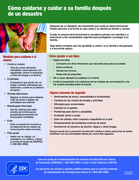
After a disaster, it is important to take care of your emotional health.
Pay attention to how you and your family members are feeling and
acting.
Taking care of your emotional health will help you think clearly and
react to urgent needs to protect yourself and your loved ones.
Follow these tips
...
