
Filter
5930
Text search:
World
Health
Organization
WHO,
et
al.
Featured
Recommendations
535
New Publications
1165
Language
Document type
No document type
2885
Studies & Reports
1319
Guidelines
879
Manuals
320
Strategic & Response Plan
169
Fact sheets
169
Training Material
113
Situation Updates
27
Resource Platforms
18
Infographics
17
Brochures
10
Online Courses
2
App
1
Countries / Regions
Global
293
India
138
Kenya
131
Latin America and the Carribbean
131
Western and Central Europe
114
Africa
107
South Africa
105
Ethiopia
100
Russia
90
Sierra Leone
86
Nigeria
79
Malawi
78
Uganda
75
Ukraine
74
Liberia
73
Zambia
70
Tanzania
70
Syria
68
Bangladesh
66
Nepal
64
Eastern Europe
60
Brazil
55
Myanmar / Burma
54
Ghana
50
Rwanda
47
Mozambique
47
Middle East and North Africa
46
Namibia
43
South–East Asia Region
42
Asia
42
Congo, Democratic Republic of
38
Senegal
36
Philippines
35
Yemen
34
Guinea
32
Indonesia
30
Colombia
30
Zimbabwe
29
Haiti
29
West and Central Africa
28
Burkina Faso
27
Germany
27
Eastern Europe and Central Asia
27
Cambodia
26
South Sudan
25
East and Southern Africa
24
Cameroon
21
Lesotho
21
Venezuela
20
Pakistan
19
Angola
18
Sudan
17
Botswana
17
Benin
16
Paraguay
15
China
14
Western Pacific Region
13
Mali
12
Lebanon
12
Thailand
12
Guinea-Bissau
11
Somalia
11
Argentina
11
Peru
11
Afghanistan
10
Chile
10
Vietnam
10
Tajikistan
9
Côte d’Ivoire / Ivory Coast
8
Jordan
8
Chad
8
Sri Lanka
8
Albania
8
Spain
8
Iraq
7
Eswatini/ Swaziland
7
Ecuador
7
Madagascar
7
Mexico
7
Georgia
7
USA
6
Saudi Arabia
6
Kyrgyzstan
6
North America
6
Niger
5
Egypt
5
Central African Republic
5
Libya
5
Palestine
5
Laos
5
Iran
5
Turkey
4
Honduras
4
Armenia
4
Southern Africa
4
Timor Leste/ East Timor
4
Moldova
4
Kazakhstan
4
Portugal
4
Belarus
4
Morocco
3
Burundi
3
El Salvador
3
Bolivia
3
Guatemala
3
Canada
3
Uruguay
3
Tunisia
3
Togo
2
Malaysia
2
Papua New Guinea
2
North Macedonia
2
Nicaragua
2
Fiji
2
Italy
2
Djibouti
2
Qatar
2
Estonia
2
Romania
2
Gabon
2
Turkmenistan
2
Jamaica
2
Japan
2
Denmark
2
France
2
United Kingdom
2
Bosnia and Herzegovina
2
Singapore
1
Dominican Republic
1
Switzerland
1
Hungary
1
Croatia
1
Greece
1
Bhutan
1
Poland
1
North Korea
1
Mongolia
1
Congo-Brazzaville
1
Bulgaria
1
Lithuania
1
Slovakia
1
Belgium
1
Mauritius
1
Morocco
1
Israel
1
Latvia
1
Belize
1
Costa Rica
1
Panama
1
Authors & Publishers
Publication Years
Category
Countries
1747
Clinical Guidelines
523
Public Health
357
Women & Child Health
347
Key Resources
309
Capacity Building
98
Pharmacy & Technologies
58
Toolboxes
COVID-19
611
HIV
588
Mental Health
551
TB
423
Planetary Health
291
NTDs
250
Disability
187
Caregiver
173
AMR
170
NCDs
137
Ebola & Marburg
128
Global Health Education
117
Conflict
116
Health Financing Toolbox
98
Rapid Response
92
Refugee
80
Pharmacy
80
Malaria
76
Zika
56
Natural Hazards
49
2.0 Rapid Response
45
Cholera
30
Polio
28
Specific Hazards
28
Social Ethics
20
South Sudan
1
Typhoon
1
Under-diagnosis of asthma in ‘under-fives’ may be alleviated by improved inquiry into disease history. We assessed a questionnaire-based screening tool for asthma among 614 ‘under-fives’ with severe respiratory illness in Uganda. The questionnaire responses were compared to post hoc consensu
...
A case study from Bosnia and Herzegovina Eurasian Harm Reduction Network
The case study was prepared by Samir Ibisevic, President of PROI between March and June 2016 and edited by Graham Shaw.
EHRN is grateful to all who contributed to this doc
...
COVID-19 vaccine hesitancy is currently one of the main obstacles to worldwide herd immunity and socioeconomic recovery. Because vaccine coverage can vary between and within countries, it is important
to identify sources of variation so that policies can be tailored to different population groups.
...
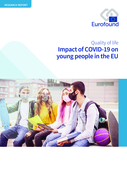
Following a long recovery from the economic crisis (2007–2013), young people in the EU proved to be more vulnerable to the effects of the restrictions put in place to slow the spread of the COVID-19 pandemic. Young people were more likely than older groups to experience job loss, financial insecur
...

This codebook outlines the set of TUFF procedures that have been developed, tested, refined, and implemented by AidData staff and affiliated faculty at the College of William & Mary. We initially employed these methods to achieve a specific objective: documenting the known universe of officially fin
...
The report examines financing in the battle against malaria, focusing on the role of foreign aid. It analyzes whether or not a disease such as malaria can be controlled or eliminated in Africa without health aid. It also presents a theoretical model
...
European Journal of Biomedical and Pharmaceutical Sciences, vol.3 (2016) 1, 192-206
This review shows that if all sub areas of pharmaceutical waste management can efficiently work back to back environmental pollution and dangers to human health ca
...
https://doi.org/10.1371/journal.pntd.0002439
South Sudan has a high burden – among the highest in sub-Saharan Africa – of neglected tropical diseases (NTDs). This adversely affects the health and social and economic well-being of people in the
...
The uneven distribution of HIV risks and burdens across populations is a well-substantiated fact, though seldom publicly acknowledged. Gay men and other men who have sex with men, people who inject
...
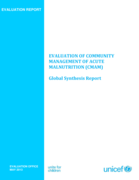
This evaluation is the first systematic effort by UNICEF to generate evidence on how well its global as well as country level Community Management of Acute Malnutrition (CMAM) strategies have worked, including their acceptance and ownership in various contexts and appropriateness of investments in c
...
European Journal of Biomedical and Pharmaceutical Sciences, vol.3 (2016) 1, 192-206
This review shows that if all sub areas of pharmaceutical waste management can efficiently work back to back environmental pollution and dangers to human health ca
...
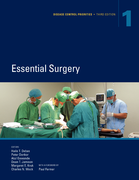
The volume presents data on the surgical burden of disease, disability, congenital anomalies, and trauma, along with health impact and economic analyses of procedures, platforms, and packages to improve care in settings with severe budget limitation
...
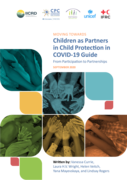
From Participation to Partnerships (September 2020)
Despite the COVID-19 challenges, children around the world have found meaningful ways to support and protect their peers, families, and communities. Children are on the frontlines of innovative re
...

In 2015, the United Nations set important targets to reduce premature
cardiovascular disease (CVD) deaths by 33% by 2030. Africa disproportionately
bears the brunt of CVD burden and has one of the highest risks of dying
from non-communicable diseases (NCDs) worldwide. There is currently
an epide
...
7. Rev Panam Salud Publica. 2020;44:e13
Haiti faces a double burden of disease. Infectious diseases continue to be an issue, while non-communicable diseases have become a significant burden of disease. More attention must also be focused on the increase in worrying public
...
this Service Delivery brief provides evidence-based strategies that can help support drug shops and pharmacies in providing a wider variety of family planning methods and information. Evidence shows that with training and support, pharmacy and drug shop staff can facilitate the use of a broad range
...
This literature review summarizes the link between psychological well-being and entrepreneurial outcomes for small and medium-size enterprises in fragile, conflict, and violence–affected contexts. It identifies potentially promising, scalable psychosocial training interventions, based on cognitive
...
This guidance provides an overview of interventions to improve early diagnosis of TB and treatment completion in these populations, as well as factors to consider when developing programmes for health communication, awareness and education, and prog
...
Approximately 80% of the 463 million adults worldwide with diabetes live in low-income and middle-income countries (LMICs). A major obstacle to designing evidence-based policies to improve diabetes outcomes in LMICs is the scarce availability of nationally representative data on the current patterns
...
The article "Time to Align: Development Cooperation for the Prevention and Control of Non-Communicable Diseases" argues for greater international cooperation and investment in addressing non-communicable diseases (NCDs), especially in low- and middle-income countries. Traditionally, global
...
