
Filter
4838
Filtered Results: 4838
Text search:
wasting
Featured
Recommendations
501
New Publications
1326
Language
Document type
No document type
2738
Studies & Reports
637
Guidelines
630
Manuals
306
Strategic & Response Plan
131
Training Material
127
Fact sheets
117
Infographics
54
Situation Updates
52
Brochures
20
Videos
13
Resource Platforms
10
Online Courses
3
Countries / Regions
India
256
Kenya
156
Global
156
Sierra Leone
137
South Africa
131
Ethiopia
126
Liberia
125
Nepal
111
Uganda
111
Nigeria
105
Western and Central Europe
86
Bangladesh
86
Myanmar / Burma
84
Malawi
74
Rwanda
73
Zambia
72
Tanzania
71
Ghana
64
Syria
58
Namibia
55
Africa
49
Congo, Democratic Republic of
49
South Sudan
43
Latin America and the Carribbean
42
Ukraine
40
Philippines
40
Guinea
39
Senegal
38
Haiti
32
Cambodia
32
Lesotho
31
Zimbabwe
31
Burkina Faso
29
South–East Asia Region
29
Yemen
29
West and Central Africa
28
Germany
27
Mozambique
26
East and Southern Africa
26
Venezuela
25
Eastern Europe
25
Indonesia
24
Middle East and North Africa
23
Pakistan
20
Mali
19
Asia
18
Afghanistan
17
Côte d’Ivoire / Ivory Coast
17
Botswana
17
Eswatini/ Swaziland
16
Sudan
14
Jordan
13
Vietnam
13
Somalia
13
Tajikistan
12
Colombia
12
Brazil
12
Lebanon
11
Sri Lanka
11
Central African Republic
11
Laos
10
Eastern Europe and Central Asia
10
Russia
9
Cameroon
8
Western Pacific Region
8
Paraguay
8
Benin
7
Niger
7
Guinea-Bissau
7
Iraq
7
Madagascar
7
Greece
6
Palestine
6
China
5
Burundi
5
Timor Leste/ East Timor
4
Thailand
4
Gambia
4
Chile
4
Peru
4
Malaysia
4
USA
4
Southern Africa
4
Papua New Guinea
4
Moldova
4
Egypt
4
Chad
4
Libya
4
El Salvador
3
Togo
3
Kazakhstan
3
Ireland
3
Saudi Arabia
3
United Kingdom
3
Bolivia
3
Poland
3
Angola
3
North Macedonia
2
Singapore
2
Kyrgyzstan
2
Italy
2
Hungary
2
Lithuania
2
North America
2
Turkmenistan
2
Tunisia
2
South Korea
2
Guyana
2
Argentina
2
Nicaragua
2
Djibouti
2
Georgia
2
Honduras
2
Ecuador
2
Guatemala
2
Switzerland
1
Mexico
1
Serbia
1
Turkey
1
Iran
1
Albania
1
Canada
1
Fiji
1
Estonia
1
Congo-Brazzaville
1
Uzbekistan
1
Vanuatu
1
Morocco
1
Qatar
1
Bulgaria
1
Mauritania
1
Croatia
1
Gabon
1
Jamaica
1
Japan
1
Denmark
1
Mauritius
1
Spain
1
Algeria
1
Belarus
1
French Guyana
1
Romania
1
Bhutan
1
Authors & Publishers
Publication Years
Category
Countries
1978
Key Resources
396
Clinical Guidelines
334
Women & Child Health
303
Public Health
199
Capacity Building
163
Pharmacy & Technologies
44
Annual Report MEDBOX
2
Toolboxes
COVID-19
555
Mental Health
281
HIV
272
Ebola & Marburg
235
TB
201
Disability
179
Caregiver
154
Refugee
129
Conflict
129
NTDs
127
Planetary Health
119
AMR
90
Cholera
83
Rapid Response
79
Natural Hazards
69
Global Health Education
65
Pharmacy
51
NCDs
45
2.0 Rapid Response
36
Malaria
34
Social Ethics
29
Specific Hazards
28
Health Financing Toolbox
23
Polio
20
Zika
16
Typhoon
5

Tuberculosis (TB) is an infectious disease that usually affects the lungs, though it can affect any organ in the body. It can develop when bacteria spread through droplets in the air. TB can be fatal, but in many cases, TB is preventable and treatable. This report examines the human rights impact of...
People with disabilities experience significant health inequalities. In Malawi, where most individuals live in low-income rural settings, many of these inequalities are exacerbated by restricted access to health care services. This qualitative study explores the barriers to health care access experi...
The WHO Disability-Inclusive Health Services Training Package is a companion to the “WHO Disability-Inclusive Health Services Toolkit: A resource for health facilities in the Western Pacific Region” published by WHO in 2020. This package offers a range of additional training materials including ...
The semi-structured guided interviewing on ICU nurses in a medical center of southern Taiwan wasapproved by the IRB at the research department of the hospital and data collection was carried out from January toJune 2012. The investigator repeatedly read the transcribed text, and found statements rel...
Non-Communicable Diseases (NCDs) are a worldwide epidemic. Particularly, the most common diseases - Cardiovascular diseases, Chronic Obstructive Pulmonary Diseases (COPD), Chronic Kidney Diseases, Cancer, Diabetes, injuries and disabilities, EMT, oral, eye g...
This study has two broad objectives. Thefirst objective was to assess the financialsustainability of CBHI schemes, focusing on schemes that have been operational for more than twoyears. The first componentprovidesquantitative descriptions of enrollment, utilization, and financial solvency of CBHI sc...
Poor sanitary conditions in disaster-stricken areas result in higher risk for diarrheal illness in vulnerable populations, especially children. This disease negatively impacts the nutritional status of affected children and causes significant morbidity and mortality. Early di...
Interim guidance 2 February 2021 . Available in Arabic, Chinese, English, French, Ukranian, Russian
Health workers are at the front line of the COVID-19 outbreak response and as such are exposed to different hazards that put them at risk. Occupational hazards include exposure to SARS-CoV-2 and othe...
Contact tracing is a key element of WHO’s recommended approach to control the spread of COVID-19 by breaking the chains of human-to-human transmission.
This document provides guidance to health authorities at all levels to improve the success rate of contact tracing by informing efforts with RCCE...

A Situational Assessment and Five-YearAction Plan for the Africa CDC Strengthening Regional Public Health Institutions and Capacity for Surveillance and Response Program

Modern healthcare has given rise to extremely complex and multifaceted ethical dilemmas. All too often physicians are unprepared to manage these competently. This publication is specifically structured to reinforce and strengthen the ethical mindset and prac...
Background: Cervical cancer accounts for 23% of cancer incidence and 22% of cancer mortality among women in Burkina Faso. These proportions are more than 2 and 5 times higher than those of developed countries, respectively. Before 2010, cervical cancer prevention (CECAP) services in Burkina Faso wer...
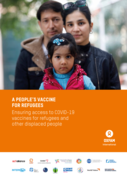
For most people in displacement contexts, there are simply not enough vaccines available in the places where they are hosted: 85% of refugees are hosted in lower- and middle-income countries, while in the first six months of this year 85% of vaccines went to wealthy countries; lower- and middle inco...
A national faecal examination of 27 729 schoolchildren from 395 schools carried out in
2008 indicated that intestinal parasitic worms affected an estimated five million (56.8%)
children in Kenya. Existing evidence shows that worm infections lead to reduced literacy
levels due to impaired growth a...
