
Filter
3913
Text search:
security
measures
Featured
343
1081
Language
3828
103
74
58
53
36
26
16
7
7
6
6
6
5
5
5
5
4
4
4
4
4
3
3
3
3
3
3
3
3
3
3
3
3
2
2
2
2
2
2
2
2
2
2
2
2
2
2
1
1
1
1
1
1
1
1
1
1
1
Document type
1912
805
495
246
231
93
61
54
5
5
3
1
1
Countries
211
118
116
107
106
102
95
94
86
71
70
63
62
60
58
58
53
51
47
46
45
45
40
39
32
32
32
31
31
30
29
29
28
28
26
26
26
25
23
22
21
21
20
20
20
19
17
17
17
15
15
15
14
14
13
13
13
13
12
12
11
10
10
10
10
9
9
7
7
6
6
5
5
5
5
5
5
4
4
4
4
4
4
4
4
4
3
3
3
3
3
3
3
3
3
3
2
2
2
2
2
2
2
2
2
2
2
2
2
2
2
2
2
2
2
2
2
2
1
1
1
1
1
1
1
1
1
1
1
1
1
1
1
1
1
1
1
1
1
1
1
1
1
1
1
1
1
1
1
Authors & Publishers
502
126
100
86
85
73
69
44
40
37
34
29
28
26
26
26
25
24
23
22
22
20
20
20
20
19
19
18
17
17
17
17
15
15
14
13
13
13
13
13
13
12
12
11
11
11
11
11
11
11
10
10
10
10
10
10
9
9
9
9
9
9
9
9
9
9
8
8
8
8
8
8
8
8
8
8
7
7
7
7
7
7
7
7
7
7
7
7
6
6
6
6
6
6
6
6
6
6
6
6
6
6
6
6
6
5
5
5
5
5
5
5
5
5
5
5
5
5
5
5
5
5
5
5
5
5
5
5
4
4
4
4
4
4
4
4
4
4
4
4
4
4
4
4
4
4
4
4
4
4
4
4
4
4
4
4
4
4
4
4
4
4
4
4
4
4
4
4
3
3
3
3
3
3
3
3
3
3
3
3
3
3
3
3
3
3
3
3
3
3
3
3
3
3
3
3
3
3
3
3
3
3
3
3
3
3
3
3
3
3
3
3
3
3
3
3
3
3
3
3
3
3
3
3
3
3
3
3
3
3
3
3
3
3
3
3
3
3
3
3
3
3
3
3
3
3
3
3
3
3
3
3
3
3
3
3
3
3
3
3
3
2
2
2
2
2
2
2
2
2
2
2
2
2
2
2
2
2
2
2
2
2
2
2
2
2
2
2
2
2
2
2
2
2
2
2
2
2
2
2
2
2
2
2
2
2
2
2
2
2
2
2
2
2
2
2
2
2
2
2
2
2
2
2
2
2
2
2
2
2
2
2
2
2
2
2
2
2
2
2
2
2
2
2
2
2
2
2
2
2
2
2
2
2
2
2
2
2
2
2
2
2
2
2
2
2
2
2
2
2
2
2
2
2
2
2
2
2
2
2
2
2
2
2
2
2
2
2
2
2
2
2
2
2
2
2
2
2
2
2
2
2
2
2
2
2
2
2
2
2
2
2
2
2
2
2
2
2
2
2
2
2
2
2
2
2
2
2
2
2
2
2
2
2
2
2
2
2
2
2
2
2
2
2
2
2
2
2
2
2
2
2
2
2
2
2
2
2
2
2
2
2
2
2
2
2
2
2
2
2
1
1
1
1
1
1
1
1
1
1
1
1
1
1
1
1
1
1
1
1
1
1
1
1
1
1
1
1
1
1
1
1
1
1
1
1
1
1
1
1
1
1
1
1
1
1
1
1
1
1
1
1
1
1
1
1
1
1
1
1
1
1
1
1
1
1
1
1
1
1
1
1
1
1
1
1
1
1
1
1
1
1
1
1
1
1
1
1
1
1
1
1
1
1
1
1
1
1
1
1
1
1
1
1
1
1
1
1
1
1
1
1
1
1
1
1
1
1
1
1
1
1
1
1
1
1
1
1
1
1
1
1
1
1
1
1
1
1
1
1
1
1
1
1
1
1
1
1
1
1
1
1
1
1
1
1
1
1
1
1
1
1
1
1
1
1
1
1
1
1
1
1
1
1
1
1
1
1
1
1
1
1
1
1
1
1
1
1
1
1
1
1
1
1
1
1
1
1
1
1
1
1
1
1
1
1
1
1
1
1
1
1
1
1
1
1
1
1
1
1
1
1
1
1
1
1
1
1
1
1
1
1
1
1
1
1
1
1
1
1
1
1
1
1
1
1
1
1
1
1
1
1
1
1
1
1
1
1
1
1
1
1
1
1
1
1
1
1
1
1
1
1
1
1
1
1
1
1
1
1
1
1
1
1
1
1
1
1
1
1
1
1
1
1
1
1
1
1
1
1
1
1
1
1
1
1
1
1
1
1
1
1
1
1
1
1
1
1
1
1
1
1
1
1
1
1
1
1
1
1
1
1
1
1
1
1
1
1
1
1
1
1
1
1
1
1
1
1
1
1
1
1
1
1
1
1
1
1
1
1
1
1
1
1
1
1
1
1
1
1
1
1
1
1
1
1
1
1
1
1
1
1
1
1
1
1
1
1
1
1
1
1
1
1
1
1
1
1
1
1
1
1
1
1
1
1
1
1
1
1
1
1
1
1
1
1
1
1
1
1
1
1
1
1
1
1
1
1
1
1
1
1
1
1
1
1
1
1
1
1
1
1
1
1
1
1
1
1
1
1
1
1
1
1
1
1
1
1
1
1
1
1
1
1
1
1
1
1
1
1
1
1
1
1
1
1
1
1
1
1
1
1
1
1
1
1
1
1
1
1
1
1
1
1
1
1
1
1
1
1
1
1
1
1
1
1
1
1
1
1
1
1
1
1
1
1
1
1
1
1
1
1
1
1
1
1
1
1
1
1
1
1
1
1
1
1
1
1
1
1
1
1
1
1
1
1
1
1
1
1
1
1
1
1
1
1
1
1
1
1
1
1
1
1
1
1
1
1
1
1
1
1
1
1
1
1
1
1
1
1
1
1
1
1
1
1
1
1
1
1
1
1
1
1
1
1
1
1
1
1
1
1
1
1
1
1
1
1
1
1
1
1
1
1
1
1
1
1
1
1
1
1
1
1
1
1
1
1
1
1
1
1
1
1
1
1
1
1
1
1
1
1
1
1
1
1
1
1
1
1
1
1
1
1
1
1
1
1
1
1
1
1
1
1
1
1
1
1
1
1
1
1
1
1
1
1
1
1
1
1
1
1
1
1
1
1
1
1
1
1
1
1
1
1
1
1
1
1
1
1
1
1
1
1
1
1
1
1
1
1
1
1
1
1
1
1
1
1
1
1
1
1
1
1
1
1
1
1
1
1
1
1
1
1
1
1
1
1
1
1
1
1
1
1
1
1
1
1
1
1
1
1
1
1
1
1
1
1
1
1
1
1
1
1
1
1
1
1
1
1
1
1
1
1
1
1
1
1
1
1
1
1
1
1
1
1
1
1
1
1
1
1
1
1
1
1
1
1
1
1
1
1
1
1
1
1
1
1
1
1
1
1
1
1
1
1
1
1
1
1
1
1
1
1
1
1
1
1
1
1
1
1
1
1
1
1
1
1
1
1
1
1
1
1
1
1
1
1
1
1
1
1
1
1
1
1
1
1
1
1
1
1
1
1
1
1
1
1
1
1
1
1
1
1
1
1
1
1
1
1
1
1
1
1
1
1
1
1
1
1
1
1
1
1
1
1
1
1
1
1
1
1
1
1
1
1
1
1
1
1
1
1
1
1
1
1
1
1
1
1
1
1
1
1
1
1
1
1
1
1
1
1
1
1
1
1
1
1
1
1
1
1
1
1
1
1
1
1
1
1
1
1
1
1
1
1
1
1
1
1
1
1
1
1
1
1
1
1
1
1
1
1
1
1
1
1
1
1
1
1
1
1
1
1
1
1
1
1
1
1
1
1
1
1
1
1
1
1
1
1
1
1
1
1
1
1
1
1
1
1
1
1
1
1
1
1
1
1
1
1
1
1
1
1
1
1
1
1
1
1
1
1
1
1
1
1
1
1
1
1
1
1
1
1
1
1
1
1
1
1
1
1
1
1
1
1
1
1
1
1
1
1
1
1
1
1
1
1
1
1
1
1
1
1
1
1
1
1
1
1
1
1
1
1
1
1
1
1
1
1
1
1
1
1
1
1
1
1
1
1
1
1
1
1
1
1
1
1
1
1
1
1
1
1
1
1
1
1
1
1
1
1
1
1
1
1
1
1
1
1
1
1
1
1
1
1
1
1
1
1
1
1
1
1
1
1
1
1
1
1
1
1
1
1
1
1
1
1
1
1
1
1
1
1
1
1
1
1
1
1
1
1
1
1
1
1
1
1
1
1
1
1
1
1
1
1
1
1
1
1
1
1
1
1
1
1
1
1
1
1
1
1
1
1
1
1
1
1
1
1
1
1
1
1
1
1
1
1
1
1
1
1
1
1
1
1
1
1
1
1
1
1
1
1
1
1
1
1
1
1
1
1
1
1
1
1
1
1
1
1
1
1
1
1
1
1
1
1
1
1
1
1
1
1
1
1
1
1
1
1
1
1
1
1
1
1
1
1
1
1
1
1
1
1
1
1
1
1
1
1
1
1
1
1
1
1
1
1
1
1
1
1
1
1
1
1
1
1
1
1
1
1
1
1
1
1
1
1
1
1
1
1
1
1
1
1
1
1
1
1
1
1
1
1
1
1
1
1
1
1
1
1
1
1
1
1
1
1
1
1
1
1
1
1
1
1
1
1
1
1
1
1
1
1
1
1
1
1
1
1
1
1
1
1
1
1
1
1
1
1
1
1
1
1
1
1
1
1
1
1
1
1
1
1
1
1
1
1
1
1
1
1
1
1
1
1
1
1
1
1
1
1
1
1
1
1
1
1
1
1
1
1
1
1
1
1
1
1
1
1
1
1
1
1
1
1
1
1
1
1
1
1
1
1
1
1
1
1
1
1
1
1
1
1
1
1
1
1
1
1
1
1
1
1
1
1
1
1
1
1
1
1
1
1
1
1
1
1
1
1
1
1
1
1
1
1
1
1
1
1
1
1
1
1
1
1
1
1
1
1
1
1
1
1
1
1
1
1
1
1
1
1
1
1
1
1
1
1
1
1
1
1
1
1
1
1
1
1
1
1
1
1
1
1
1
1
1
1
1
1
1
1
1
1
1
1
1
1
1
1
1
1
1
1
1
1
1
1
1
1
1
1
1
1
1
1
1
1
1
1
1
1
1
1
1
1
1
1
1
1
1
1
1
1
1
1
1
1
1
1
1
1
1
1
1
1
1
1
1
1
1
1
1
1
1
1
1
1
1
1
1
1
1
1
1
1
1
1
1
1
1
1
1
1
1
1
1
1
1
1
1
1
1
1
1
1
1
1
1
1
1
1
1
1
1
1
1
1
1
1
1
1
1
1
1
1
1
1
1
1
1
1
1
1
1
1
1
1
1
1
1
1
1
1
1
1
1
1
1
1
1
1
1
1
1
1
1
1
1
1
1
1
1
1
1
1
1
1
1
1
1
1
1
1
1
1
1
1
1
1
1
1
1
1
1
1
1
1
1
1
1
1
1
1
1
1
1
1
1
1
1
1
1
1
1
1
1
1
1
1
1
1
1
1
1
1
1
1
1
1
1
1
1
1
1
1
1
1
1
1
1
1
1
1
1
1
1
1
1
1
1
1
1
1
1
1
1
1
1
1
1
1
1
1
1
1
1
1
1
1
1
1
1
1
1
1
1
1
1
1
1
1
1
1
1
1
1
1
1
1
1
1
1
1
1
1
1
1
1
1
1
1
1
1
1
1
1
1
1
1
1
1
1
1
1
1
1
1
1
1
1
1
1
1
1
1
1
1
1
1
1
1
1
1
1
1
1
1
1
1
1
1
1
1
1
1
1
1
1
1
1
1
1
1
1
1
1
1
1
1
1
1
1
1
1
1
1
1
1
1
1
1
1
1
1
1
1
1
1
1
1
1
1
1
1
1
1
1
1
1
1
1
1
1
1
1
1
1
1
1
1
1
1
1
1
1
1
1
1
1
1
1
1
1
1
1
1
1
1
1
1
1
1
1
1
1
1
1
1
1
1
1
1
1
1
1
1
1
1
1
1
1
1
1
1
1
1
1
1
1
1
1
1
1
1
1
1
1
1
1
1
1
1
1
1
1
1
1
1
1
1
1
1
1
1
1
1
1
1
1
1
1
1
1
1
1
1
1
1
1
1
1
1
1
1
1
1
1
1
1
1
1
1
1
1
1
1
1
1
1
1
1
1
1
1
1
1
1
1
1
1
1
1
1
1
1
1
1
1
1
1
1
1
1
1
1
1
1
1
1
1
1
1
1
1
1
1
1
1
1
1
1
1
1
1
1
1
1
1
1
1
1
1
1
1
1
1
1
1
1
1
1
1
1
1
1
1
1
1
1
1
1
1
1
1
1
1
1
1
1
1
1
1
1
1
1
1
1
1
1
1
1
1
1
1
1
1
1
1
1
1
1
1
1
1
1
1
1
1
1
1
1
1
1
1
1
1
1
1
1
1
1
1
1
1
1
1
1
1
1
1
1
1
1
1
1
1
1
1
1
1
1
1
1
1
1
1
1
1
1
1
1
1
1
1
1
1
1
1
1
1
1
1
1
1
1
1
1
1
1
1
1
1
1
1
1
1
1
1
1
1
1
1
1
1
1
1
1
1
1
1
1
1
1
1
1
1
1
1
1
1
1
1
1
1
1
1
1
1
1
1
1
1
1
1
1
1
1
1
1
1
1
1
1
1
1
1
1
1
1
1
1
1
1
1
1
1
1
1
1
1
1
1
1
1
1
1
1
1
1
1
1
1
1
1
1
1
1
1
1
1
1
1
1
1
1
1
1
1
1
1
1
1
1
1
1
1
1
1
1
1
1
1
1
1
1
1
1
1
1
1
1
1
1
1
1
1
1
1
1
1
1
1
1
1
1
1
1
1
1
1
1
1
1
1
1
1
1
1
1
1
1
1
1
1
1
1
1
1
1
1
1
1
1
1
1
1
1
1
1
1
1
1
1
1
1
1
1
1
1
1
1
1
1
1
1
1
1
1
1
1
1
1
1
1
1
1
1
1
1
1
1
1
1
1
1
1
1
1
1
1
1
1
1
1
1
1
1
1
1
1
1
1
1
1
1
1
1
1
1
1
1
1
1
1
1
1
1
1
1
1
1
1
1
1
1
1
1
Publication Years
1
1425
2177
286
20
1
1
2
Category
1444
411
177
174
120
48
22
Toolboxes
466
253
247
237
188
156
134
123
123
118
104
94
80
78
71
67
57
42
39
32
31
30
28
20
10
6
2
Hands-on information and practical advice for everyday life and work in the field as well as background information on crisis management structures in international organizations lie at the heart of the new handbook. It has been developed in the realm of Europe’s New Training Initiative for Civili
...
an Crisis Management (ENTRi) by the project coordination team at ZIF.
The handbook is designed to accompany civilian experts on their way to crisis management missions. In addition to providing a general overview of the institutional landscape of crisis management as well as relevant concepts, the handbook also provides practical information on a variety of issues that are common to working in a mission. From dealing with health and security challenges to technical information on radio operation, map reading, four-wheel driving – the ENTRi handbook is a valuable companion for work in a mission.
more
COVID-19 has heavily emphasized how contact tracing is crucial for managing outbreaks, and as part of the strategy for adjusting, and eventually lifting, lockdowns and other stringent public health and social measures. As the pandemic develops furth
...
er, it will be a core measure to manage further waves of infection. In early June 2020, the World Health Organization (WHO) convened an online global consultation on contact tracing in the context of COVID-19, looking at the lessons of the pandemic to date; known and emerging best practices; and the measures necessary for urgent implementation, scale-up, maintenance and enhancement of contact tracing activities.
more
VOX Sanguinis, 2021:
The coronavirus disease 2019 (COVID-19) affected millions of people worldwide and caused disruptions at the global level including in healthcare provision. Countries of the WHO African region have put in place measures for the
...
COVID-19 pandemic containment that may adversely affect blood system activities and subsequently reduce the supply and demand of blood and blood components. This study aims to assess the impact of the COVID-19 pandemic on blood supply and demand in the WHO African Region and propose measures to address the challenges faced by countries.
more
This protocol establishes the principles and definitions of a surveillance system devised by the WHO Health in Prisons Programme (HIPP) to monitor the evolution of COVID-19-related epidemiological data in prisons and other places of detention and to report the main
...
measures adopted to prevent, control and manage the spread of the disease.
more
Many African countries were amongst the most rapid to respond to the emerging threat of COVID-19, implementing large-scale interventions at very early stages of their epidemic. As demonstrated in this document using very simple models, this rapid mobilization and timeliness of implementing control
...
measures is likely to be an important determinant of their success. Indeed, as these measures were relaxed, subsequent waves of disease have been observed in many countries including South Africa, Kenya, Tunisia, Morocco, Sudan and the Democratic Republic of Congo (DRC) where such waves have severely impacted the health system by straining the supply of oxygen and ICU beds and inflicting a heavy toll on healthcare workers, often necessitating the re-imposition of control measures.
more
Has the world worked together to tackle the coronavirus? July 2021. This research paper assesses how the global community has responded to calls for greater solidarity in tackling the COVID-19 pandemic, and presents the insights of key stakeholders and experts in global health governance, health
...
security, and pandemic preparedness and response. The authors examine the state of solidarity at global, regional and national levels, and present case studies on COVAX and on the EU’s turbulent journey through solidarity.
more
This 400 page guide, created by PHI’s Center for Climate Change and Health and the American Public Health Association (APHA), with support from the California Department of Public Health helps local health departments prepare for and mitigate climate change effects—from drought and heat to flood
...
ing and food security—with concrete, implementable suggestions.
The guide: Provides a basic summary of climate change and climate impacts on health; Prioritizes health equity, explains the disproportionate impacts of climate change on vulnerable communities, and targets solutions first to the communities where they are most needed, including low-income, elderly and people of color communities; Connects what we know about climate impacts and climate solutions with the work of local health departments; and Offers specific examples of how local health departments can address and ameliorate the impacts of climate change in every area of public health practice.
more
Almost two years after the signing of the Political Accord for Peace and Reconciliation (APPR), the Central African population is still hostage to an unstable and unpredictable security environment. Continuing conflicts in several areas of the count
...
ry, structural weaknesses combined with the socio-economic effects of the COVID-19 pandemic, and the devastating effects of natural disasters have plunged 2.6 million people into dire needs. Of this total, 1.6 million have severe humanitarian needs, a figure unmatched for five years, reflecting a deterioration in the physical and mental well-being and living conditions of populations across the country.
more
This guidance document is meant to support practitioners working in disaster prone contexts to develop and implement more effective integrated resilience programming. It promotes programming that cuts across different fields of work like rights awareness, food
...
security, emergency preparedness, livelihoods, education, health etc. whilst at the same time encouraging us to work simultaneously at the individual, household, community and national level. It includes specific recommendations for developing resilience programming for communities prone to floods, cyclone, drought and earthquakes. It also includes recommendations to develop safe school programming to help reduce the impact of disasters on school infrastructure, ensure education continuity and build the resilience of students, teachers and their families.
more
Healthy communities rely on well-functioning ecosystems. They provide clean air, fresh water, medicines and food security. They also limit disease and stabilize the climate. But biodiversity loss is happening at unprecedented rates, impacting human
...
health worldwide, according to a new state of knowledge review of the Convention on Biological Diversity (CBD) and WHO.
The report synthesizes the available information on the most important inter-linkages between biodiversity, ecosystem stability, and epidemic infectious diseases such as the Ebola virus; and the connection between biodiversity, nutritional diversity and health. It also covers the potential benefits of closer partnerships between conservation and health, from improved surveillance of infectious diseases in wildlife and human populations, to promoting access to green spaces to promote physical activity and mental health. It also highlights the many areas in which further research is needed.
The Joint report hopes to provide a useful reference for the Sustainable Development Goals and post-2015 development agenda, which represents an unique opportunity to promote integrated approaches to biodiversity and health by highlighting that biodiversity contributes to human well-being, and highlighting that biodiversity needs protection for development to be sustainable.
more
Urbanization, land use, global trade and industrialization have led to profound and negative impacts on nature, biodiversity and ecosystems across the world. The ongoing depletion of natural resources not only afects environmental conditions but also has an enormous impact on the well-being and
...
security of societies.
This report provides an overview of the impacts of the natural environment on human health. It presents the ways nature and ecosystems can support and protect health and well-being, and describes how nature degradation and loss of biodiversity can threaten human health.
more
This South-East Asia Regional Strategy for Primary Health Care: 2022-2030 aims to accelerate progress in all countries of the Region towards universal health coverage (UHC), health security and the health-related Sustainable Development Goals (SDGs)
...
. It is intended to provide Member States with guidance on facilitating PHC-orientation through the identification of seven values and 12 strategic actions that collectively embody the philosophy and practice of PHC, enunciated in the 1978 Declaration of Alma-Ata and reaffirmed in the 2018 Declaration of Astana.
more

3rd edition. In 2001, Uganda adapted the Integrated Disease Surveillance and Response (IDSR) developed by World Health Organization (WHO) for member states in African region. The Ministry of Health has been implementing the IDSR strategy since then with success across the country. This strategy prov
...
ides the opportunity for rational use of resources and maximises investments in health surveillance systems. The 3rd edition IDSR guidelines incorporates lessons learnt from previous
epidemics, new frameworks like the Global Health Security Agenda (GHSA), One Health, Disaster Risk Management (DRM), the WHO regional strategy for health security and emergencies, and the rising non-communicable diseases, and aims to strengthen implementation of IHR (2005) core surveillance and response capacities. These guidelines have been adapted to reflect national priorities, policies and public health structures; and shall be used in conjunction with other similar
guidelines/strategies or initiatives.
Overall, the 3rd edition technical guidelines will incorporate the following:
• Strengthening Indicator Based Surveillance
• Strengthening Event Based Surveillance
• Improving community-based disease surveillance
• Improving Cross Border Surveillance and response
• Scaling up e-IDSR implementation
• Improving reporting and information sharing platforms
• Improved data sharing across sectors
• Tailoring IDSR to Emergency or Disaster contexts
The 3rd edition guidelines are intended for use as:
• A general reference for surveillance activities across all levels
• A set of definitions for thresholds that trigger some action for response
• A stand-alone reference for level-specific guidelines on surveillance and response
• A resource for developing training, supervision and evaluation of surveillance activities
• A guide for improving early detection and preparedness for outbreak response.
more
Job satisfaction among healthcare workers in Ghana and Kenya during the COVID-19 pandemic: Role of perceived preparedness, stress, and burnout
Afulani PA, Nutor JJ, Agbadi P, Gyamerah AO, Musana J, Aborigo RA, et al.
PLOS Global Public Health
(2021)
CC
The COVID-19 pandemic has affected job satisfaction among healthcare workers; yet this has not been empirically examined in sub-Saharan Africa (SSA). We addressed this gap by examining job satisfaction and associated factors among healthcare workers in Ghana and Kenya during the COVID-19 pandemic. W
...
e conducted a cross-sectional study with healthcare workers (N = 1012). The two phased data collection included: (1) survey data collected in Ghana from April 17 to May 31, 2020, and (2) survey data collected in Ghana and Kenya from November 9, 2020, to March 8, 2021. We utilized a quantitative measure of job satisfaction, as well as validated psychosocial measures of perceived preparedness, stress, and burnout; and conducted descriptive, bivariable, and multivariable analysis using ordered logistic regression. We found high levels of job dissatisfaction (38.1%), low perceived preparedness (62.2%), stress (70.5%), and burnout (69.4%) among providers. High perceived preparedness was positively associated with higher job satisfaction (adjusted proportional odds ratio (APOR) = 2.83, CI [1.66,4.84]); while high stress and burnout were associated with lower job satisfaction (APOR = 0.18, CI [0.09,0.37] and APOR = 0.38, CI [0.252,0.583] for high stress and burnout respectively). Other factors positively associated with job satisfaction included prior job satisfaction, perceived appreciation from management, and perceived communication from management. Fear of infection was negatively associated with job satisfaction. The COVID-19 pandemic has negatively impacted job satisfaction among healthcare workers. Inadequate preparedness, stress, and burnout are significant contributing factors. Given the already strained healthcare system and low morale among healthcare workers in SSA, efforts are needed to increase preparedness, better manage stress and burnout, and improve job satisfaction, especially during the pandemic.
more
Climate change is a verified, global phenomenon, but its consequences will not be evenly distributed. Developing countries and small island nations will be the most affected. Countries will experience more frequent extreme weather events and resulting changes in water quality and availability, incre
...
ased contamination of air, and food security problems. Health impact due to climate change include diarrhoeal diseases, vector-borne diseases, heat stress, malnutrition, deaths and injuries due to extreme weather events and mental stress.
more
It summarizes guidance on how to manage – and when to refer – children and adolescents presenting with common complaints and conditions. It includes information to enable primary health care providers to coordinate the continued care of children and adolescents with long-term conditions and dise
...
ases managed by specialists. Preventive and promotive measures from the newborn period to adolescence include advice on the timing and content of well-child visits, the promotion of early childhood development and health messages for adolescents.
This Pocket Book aims to improve the diagnosis and management of common conditions in children and adolescents that can be managed at the outpatient level. It helps to improve the use of laboratory and other diagnostic measures and the rational use of essential drugs and equipment.
more
The Strategy aims to protect and improve the well-being
of society and of the individual, to protect and promote
public health, to offer a high level of security and well-being
for the general public and to increase health literacy. The
Strategy
...
takes an evidence-based, integrated, balanced and
multidisciplinary approach to the drugs phenomenon at
national, EU and international level. It also incorporates a
gender equality and health equity perspective.
more
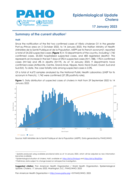
The report provides an epidemiological update on cholera outbreaks in Haiti as of January 17, 2023. Since the first confirmed cases in October 2022, Haiti has reported 24,232 suspected cases, including 1,742 confirmed cases and 483 deaths. The most affected areas are in the Ouest Department, particu
...
larly Port-au-Prince. Children aged 1 to 4 years are the most affected group. The ongoing humanitarian crisis, security issues, and limited access to healthcare have worsened the outbreak, hindering epidemiological surveillance and case reporting. The PAHO/WHO is working with Haitian authorities to respond to the outbreak and mitigate its spread.
more
In May the Sixty-sixth World Health Assembly adopted resolution WHA66.12 (1) on 17 neglected tropical diseases (NTDs). Among other measures, the resolution urges Member States to:
• ensure country ownership of prevention, control, elimination an
...
d eradication programmes;
• expand and implement interventions and advocate for predictable, long-term international financing for activities related to control and capacity strengthening;
• integrate control programmes into primary health-care services and existing programmes;
• ensure optimal programme management and implementation;
• achieve and maintain universal access to interventions and reach the targets of the roadmap.
more

Nearly 260 000 people died in parts of Somalia between October 2010 and April 2012, including
133 000 children under five during the famine and food crisis in Somalia making it the worst famine in history.
A study commissioned and funded by the Food and Agriculture Organization of the United Natio
...
n’s food security and nutrition analysis unit for Somalia stated that the famine early warning systems clearly identified the risk of famine in South Central Somalia in 2010–2011 but timely action to prevent the onset of famine was not taken. The result was large scale
mortality, morbidity and population displacement.
more
