Filter
903
Text search:
guided
version
Featured
Recommendations
107
New Publications
219
Language
Document type
No document type
438
Guidelines
169
Studies & Reports
140
Manuals
74
Strategic & Response Plan
48
Training Material
20
Fact sheets
5
Situation Updates
3
Videos
3
Resource Platforms
2
Infographics
1
Countries / Regions
Global
49
Kenya
31
India
28
Uganda
23
Nigeria
18
Ethiopia
18
Nepal
18
South Africa
16
Rwanda
14
Africa
14
Bangladesh
13
Latin America and the Carribbean
12
Tanzania
11
Myanmar / Burma
11
Liberia
10
Sierra Leone
9
Philippines
9
Malawi
9
Western and Central Europe
9
Zimbabwe
8
Namibia
8
Zambia
7
Ghana
6
Haiti
6
Cambodia
6
Indonesia
5
Ukraine
5
South–East Asia Region
5
Syria
4
Thailand
4
Mozambique
4
East and Southern Africa
4
Asia
4
Eastern Europe
4
Guinea
3
Congo, Democratic Republic of
3
West and Central Africa
3
Vietnam
3
Burkina Faso
2
Pakistan
2
South Sudan
2
Papua New Guinea
2
Eswatini/ Swaziland
2
Botswana
2
Lesotho
2
Middle East and North Africa
2
Western Pacific Region
2
Laos
2
Tajikistan
2
Georgia
2
North America
2
Senegal
1
USA
1
Afghanistan
1
Germany
1
China
1
Singapore
1
Sudan
1
Argentina
1
Brazil
1
Sri Lanka
1
Yemen
1
Albania
1
Bulgaria
1
Moldova
1
Iran
1
Authors & Publishers
Publication Years
Category
Countries
298
Clinical Guidelines
88
Women & Child Health
83
Key Resources
79
Public Health
69
Capacity Building
31
Pharmacy & Technologies
8
Toolboxes
HIV
65
Mental Health
65
COVID-19
61
TB
38
Disability
37
Caregiver
30
Planetary Health
30
Global Health Education
29
Malaria
25
NCDs
23
Conflict
21
NTDs
18
2.0 Rapid Response
17
Refugee
16
AMR
16
Ebola & Marburg
13
Natural Hazards
13
Rapid Response
13
Pharmacy
9
Cholera
7
Specific Hazards
5
Health Financing Toolbox
5
Polio
4
Social Ethics
4
Zika
2
Typhoon
1
Since 1996, trachoma has been targeted for elimination as a public health problem worldwide. The active trachoma criterion for national elimination as a public health problem is a TF1–9 < 5%, sustained for at least two years in the absence of antibiotic mass drug administration (MDA), in each formerly endemic EU. Usi
...
The objective of Critical Considerations and Actions for Achieving Universal Access to Sexual and Reproductive Health in the Context of Universal Health Coverage through a Primary Health Care Approach is to provide guidance to WHO Member States for ensuring progress towards universal access to compr
...
This document, Programme and curriculum development guide, presents a systematic approach to developing programmes and curricula for implementation of the family planning (FP) and comprehensive abortion care (CAC) competencies,and the theory behind the approach. Specifically, the aim is for effectiv
...
This Global Competency Standards sets the benchmark for the health workforce in providing equality of care to refugees and migrants. Refugee and migrant populations are highly diverse, with significant variation in life experiences, health needs and access to health care. The standards described out
...
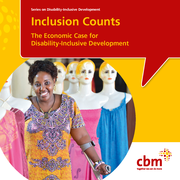
02 - Series on Disability-Inclusive Development
The package is designed to help address the WASH in Schools monitoring deficit at the national level.
The package consists of three modules:
The EMIS module: a set of basic monitoring questions on WASH in Schools to be incorporated into national Education Monitoring Information Syst ...
The package consists of three modules:
The EMIS module: a set of basic monitoring questions on WASH in Schools to be incorporated into national Education Monitoring Information Syst ...
The aim of this handbook is to provide network members and other laboratories involved in the diagnosis of tuberculosis, with an agreed list of key diagnostic methods and their protocols in various areas of TB diagnosis, ranging from microbiological diagnosis of active TB to the diagnosis of latent
...

Other disorders Chapter H.1
Recognition, Assessment and Treatment
National Clinical Guideline Number 159
Guidelines for the management of pregnant and breastfeeding women in the context of Ebola virus disease
recommended
To save the lives of mothers and their babies, mitigate complications, and limit the spread of disease, it is critical that recommendations are made on the prevention, treatment, and surveillance of women who are exposed to EVD, acquire EVD during pregnancy or breastfeeding, or survive EVD with ongo
...
Medical care for people caught up in armed conflict and other insecure environments saves lives and alleviates suffering. It is one of the most immediate and high priority needs of an affected population and is often the first type of response activated and/or requested by authorities and affected c
...
The African Region has been experiencing unprecedented health challenges due to the Coronavirus disease 2019 (COVID-19) pandemic, which have compounded the already difficult task the Region was facing in moving towards universal health coverage (UHC) attainment.
Interim Framework for the South-East Asia Region 28 October 2020
Unmet mental health needs in the Region of the Americas are a leading source of morbidity and mortality, which result in tremendous health, social, and economic consequences. The COVID-19 pandemic has exacerbated the mental health crisis in the Region, necessitating urgent action at the highest leve
...
Diets are changing everywhere, and the burden of disease associated with unhealthy diets is a worldwide concern. Measurement and monitoring of diets across countries and population groups is critical. However, there are no harmonized metrics for tracking how the healthfulness of diets around the wor
...
Challenges in achieving the MDG for maternal mortality. In-depth analysis of the EDHS 2000-2011