
Filter
1217
Text search:
eye
care
programme
Featured
168
349
Language
Document type
667
199
163
93
48
28
7
6
3
2
1
Countries
119
43
43
38
33
31
31
29
29
29
25
25
18
18
17
16
14
12
11
10
10
10
7
7
7
6
6
6
6
5
5
5
4
4
4
4
4
4
3
3
3
3
3
2
2
2
2
2
2
2
2
2
2
1
1
1
1
1
1
1
1
1
1
1
1
1
1
1
1
1
1
1
1
1
1
1
1
1
1
1
1
1
1
1
1
1
1
1
1
1
Authors & Publishers
Publication Years
Category
521
140
80
73
67
42
12
Toolboxes
105
75
64
61
59
34
31
28
27
27
24
21
21
19
18
18
14
11
9
8
8
5
3
2
1
1

To give you a better idea of when and how psychotherapy can help you, we have written this brochure titled Paths to Psychotherapy. While it is therefore primarily intended for people who have never been treated by a psychotherapist, the brochure can also enable those who have previously had psychoth
...

For many years, Community Health Care Workers (CHWs) in Tanzania and Africa in general have played significant role in community health promotion. Their specific roles have been changing from time to time. However, their key roles have over time inc
...
Coordinated Use of Anthelminthic Drugs in Control Interventions: a Manual for Health Professionals and Programme Managers
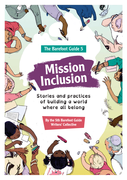
The Barefoot Guide 5: Mission Inclusion - Stories and practices of building a world where all belong
From 2011 until 2016, a multi-actor programme was run in five countries to improve the life chances and living conditions of people experiencing exclusion and marginalisation of various kinds. This program
...
15 January 2021
This Aide Memoire is for policy makers, immunization programme managers, infection prevention and control (IPC) focal points at national, sub-national, and facility level, as well as for health workers involved in COVID-19 vaccinati
...
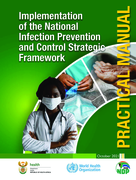
The strategic framework gives guidance to public and private health facilities and health workers on compliance with standards relating to IPC practices. To further assist health facilities to implement the IPC strategic framework, this practical implementation manual has been developed in parallel
...
Childhood cancer is curable for the vast majority of children when essential diagnostic, therapeutic and supportive care services are accessible. However, profound inequalities in outcomes exist within and between countries with as few as 20% or 30%
...

No publication year indicated
The specific objectives of the plan are to:
- Scale up evidence-based, cost effective interventions through effective strategies within a HSS approach and provide equitable coverage with quality.
- Reduce neonatal mortality by improved home-based newborn ...
The specific objectives of the plan are to:
- Scale up evidence-based, cost effective interventions through effective strategies within a HSS approach and provide equitable coverage with quality.
- Reduce neonatal mortality by improved home-based newborn ...
The WHO estimates that 19 million children aged 15 years or younger are visually impaired. Of these, 1.4 million are irreversibly blind and need visual rehabilitation interventions for full psychological and personal development. The remainder have visual problems that could be prevented or treated.
...
This report describes the work done by WHO from January 2015 up to the end of December 2016 to address the long-term issues of survivor care, health-systems strengthening and research.

This operational guidance on MHPSS provides a practical orientation and tools for UNHCR country operations. It covers specific points of good practice to consider when developing MHPSS programming and offers advice on priority issues and practical difficulties, while also providing some background i
...
This document provides technical guidance on concepts, definitions, indicators, criteria, milestones and tools to assist leprosy programmes in their journey towards the goals of interruption of transmission and elimination of leprosy disease and through the post-elimination period. Importantly, it p
...
The Thinking Health manual outlines an evidence-based approach describing how community health workers can reduce prenatal depression through evidence-based cognitive-behavioural techniques recommended by the mhGAP programme.
This manual is the fi
...
The current guidelines on Integrated Management of Acute Malnutrition (IMAM), addresses the issue of improved management of severe acute malnutrition (SAM), particularly in children under 5 years of age. In the absence of standard protocols, mortality in children admitted to hospital with SAM can ra
...
The skin of a patient is the first and most visible structure of the body that any health-care worker encounters during the course of an examination. To the patient, it is also highly visible, and any disease that affects it is noticeable and will h
...
Water, sanitation and hygiene (WASH) are critical in the prevention and care for all of the 17 neglected tropical diseases (NTDs) scheduled for intensified control or elimination by 2020.
Provision of safe water, sanitation and hygiene is one o ...
Provision of safe water, sanitation and hygiene is one o ...

This paper aims to understand the agency that caregivers who participated in a CBR empowerment component programme exercised, in order to promote the rights of their children with disabilities to a basic education.
Guidelines for Good Clinical Laboratory Practices (GCLP) outlines the principles and procedures to be followed by medical laboratories involved in clinical research and/or patient care so as to provide quality data which can be used for health resea
...
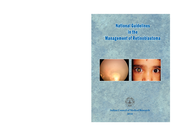
These Guidelines are intended to provide knowledge to the treating ophthalmologists, pediatricians, ocular oncologists, pediatric oncologists, and general physicians to arrive at an early diagnosis of retinoblastoma in the settings of district hospital, in private clinics and hospitals. The guidelin
...
This module should always be used together with the
mhGAP Intervention Guide for Mental, Neurological
and Substance Use Disorders in Non-specialized Health
Settings (WHO, 2010), which outlines relevant general
principles of care and management o
...
