
Filter
1319
Text search:
World
Health
Organization
(Thailand)
Featured
Recommendations
117
New Publications
310
Language
Document type
No document type
727
Studies & Reports
249
Guidelines
180
Manuals
73
Fact sheets
25
Training Material
23
Strategic & Response Plan
19
Situation Updates
9
Infographics
6
Brochures
3
Resource Platforms
3
Countries / Regions
Global
80
Myanmar / Burma
59
South–East Asia Region
44
Asia
38
India
35
Thailand
23
Philippines
21
Bangladesh
21
Nepal
18
Indonesia
17
Cambodia
16
Kenya
15
Ethiopia
14
Syria
12
South Africa
12
Nigeria
10
Africa
10
Latin America and the Carribbean
8
Vietnam
8
Uganda
7
Tanzania
7
Western and Central Europe
7
Russia
7
China
6
Liberia
5
Senegal
5
Congo, Democratic Republic of
5
Ghana
5
Mozambique
5
Afghanistan
4
Rwanda
4
Laos
4
Guinea
3
Burkina Faso
3
Cameroon
3
Haiti
3
Pakistan
3
Brazil
3
Ukraine
3
Colombia
3
Mexico
3
Sri Lanka
3
Yemen
3
East and Southern Africa
3
West and Central Africa
3
Middle East and North Africa
3
Eastern Europe
3
Sierra Leone
2
Zimbabwe
2
South Sudan
2
Lebanon
2
Zambia
2
Papua New Guinea
2
Benin
2
Argentina
2
Namibia
2
North Macedonia
2
Lesotho
2
Western Pacific Region
2
Eastern Europe and Central Asia
2
Bhutan
2
Iran
2
Georgia
2
Mali
1
Côte d’Ivoire / Ivory Coast
1
Morocco
1
USA
1
Niger
1
Somalia
1
Iraq
1
Jordan
1
Germany
1
Malaysia
1
Malawi
1
Sudan
1
Central African Republic
1
Peru
1
Switzerland
1
Hungary
1
Honduras
1
Ecuador
1
Botswana
1
El Salvador
1
Bolivia
1
Greece
1
Guatemala
1
Madagascar
1
Nicaragua
1
Other region
1
Venezuela
1
Palestine
1
North Korea
1
Armenia
1
Mongolia
1
Congo-Brazzaville
1
Timor Leste/ East Timor
1
Estonia
1
Kyrgyzstan
1
North America
1
Uruguay
1
Turkmenistan
1
Jamaica
1
Japan
1
Belgium
1
France
1
Maldives
1
Norway
1
Portugal
1
Spain
1
Belarus
1
Bosnia and Herzegovina
1
Authors & Publishers
Publication Years
Category
Countries
258
Clinical Guidelines
142
Public Health
88
Key Resources
79
Women & Child Health
61
Pharmacy & Technologies
17
Capacity Building
16
Toolboxes
HIV
256
Mental Health
114
TB
94
Disability
66
COVID-19
59
Planetary Health
48
AMR
47
NTDs
42
Global Health Education
40
Caregiver
31
Malaria
30
Pharmacy
28
Rapid Response
23
Natural Hazards
17
Zika
17
NCDs
17
Refugee
16
Health Financing Toolbox
16
Conflict
15
2.0 Rapid Response
14
Specific Hazards
8
Ebola & Marburg
7
Polio
6
Cholera
3
Typhoon
1
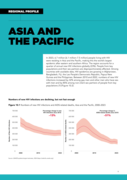
In 2023, 6.7 million [6.1 million–7.5 million] people living with HIV were residing in Asia and the Pacific, making this the world’s largest epidemic after eastern and southern Africa. The region accounts for a quarter of annual new HIV infectio
...
Skin and mucosal conditions are extremely common in all children and adults in particular in HIV-infected adults and children and are one of the commonest daily management problems faced by health care workers caring for patients with HIV infection
Antimicrobial resistance (AMR) has emerged as a major public health problem all over the world. Infections caused by resistant microbes fail to respond to treatment, resulting in prolonged illness a
...
3 March 2016
The WHO South-East Asia (SEA) Region bears a high burden of tuberculosis (TB) and MDR-TB. In 2015, the Region accounted for nearly 200 000 or 35% of the global estimated new RR/MDR-TB cases eligible for treatment. Extensively drug-resistant TB (XDRTB) has also been reported from s
...
Vaccins antirabiques: Note de synthèse de l’OMS – avril 2018
Weekly epidemiological record / Relevé épidémiologique hebdomadaire
20 APRIL 2018, 93th YEAR / 20 AVRIL 2018, 93e ANNÉE
Weekly epidemiological record / Relevé épidémiologique hebdomadaire
20 APRIL 2018, 93th YEAR / 20 AVRIL 2018, 93e ANNÉE
Laboratory biosafety guidance related to coronavirus disease (COVID-19): Interim guidance, 28 January 2021
recommended
The latest update (28 January 2021) includes the following addition and revision:
biosafety aspects for working with antigen-detecting rapid diagnostic test;
handling new variants of SARS-CoV-2 in the laboratory;
updated assay decontamination before disposal;
personal protectiv
...
WHO published the first COVID-19 Strategic Response and Preparedness Plan (SPRP) on 3 February, 2020. This report highlights the main points of progress that were made up to 30 June 2020 under the three objectives outlined in the SPRP: scaling up international coordination and support; scaling up co
...
Antimalarial drug resistance has emerged as a threat to global malaria control efforts, particularly in the Greater Mekong subregion. Drawing on data collected through more than 1000 therapeutic efficacy studies as well as molecular marker studies of Plasmodium falciparum drug resistance, the Report
...
9 June 2021
Since its launch, GLASS has expanded in scope and coverage and as of May 2021, 109 countries and territories worldwide have enrolled in GLASS. A key new component in GLASS is the inclusion of antimicrobial consumption (AMC) surveillance at the national level highlighted in this fourth G
...
Report of the WHO/Bill & Melinda Gates Foundation Consultation. The Consultation was organized back-to-back with the first annual meeting of the International Coordinating Group of the BMGF-funded project for human and dog rabies elimination in developing countries, held at WHO headquarters, Geneva,
...

Addressing comorbidities and risk factors for tuberculosis (TB) is a crucial component of the World Health Organization (WHO)’s End TB Strategy.
...
Globally, 311,000 women die of cervical cancer every year, 85 percent of them
in resource limited regions of the world. To address this grave threat to women,
the WHO made a call to action in 2018, resulting in accelerated plans to improve
cervic
...
Guidelines for national programmes and other stakeholders
世界卫生组织 结核菌/艾滋病病毒双 重感染防治政策指南
——适用于国家规划 和利益攸关方
An overview of validation structures and responsibilities at national, regional and global levels.
This governance document supplements the global guidance document. Validation of elimination requires rigorous assessment at the national, regional and global levels of the impact and process indicato
...
This guideline for the prevention and control of chikungunya fever
(CF) is intended for use by all peripheral health workers in the Region and
is based on the strategy outlined above. This document will focus mainly
on preventing, predicting and
...
second edition
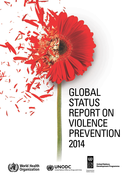
The Global status report on violence prevention 2014, which reflects data from 133 countries, is the first report of its kind to assess national efforts to address interpersonal violence, namely child maltreatment, youth violence, intimate partner and sexual violence, and elder abuse. Jointly publis
...
