Filter
318
Text search:
United
Nations
Children's
Fund
UNICEF
Featured
Recommendations
19
New Publications
85
Language
Document type
No document type
175
Studies & Reports
72
Guidelines
21
Fact sheets
14
Manuals
12
Infographics
9
Situation Updates
8
Strategic & Response Plan
4
Training Material
2
Videos
1
Countries / Regions
Global
25
Kenya
10
Syria
8
Namibia
8
Ethiopia
7
Myanmar / Burma
7
South Sudan
6
Tanzania
6
Lesotho
6
Rwanda
5
Bangladesh
5
South–East Asia Region
5
Senegal
4
Congo, Democratic Republic of
4
Lebanon
4
Zambia
4
Indonesia
4
Mali
3
Uganda
3
India
3
Somalia
3
Nepal
3
Mozambique
3
Yemen
3
West and Central Africa
3
Western and Central Europe
3
Nigeria
2
Philippines
2
Jordan
2
Egypt
2
Cambodia
2
South Africa
2
Central African Republic
2
Ukraine
2
East and Southern Africa
2
Middle East and North Africa
2
Latin America and the Carribbean
2
Eastern Europe
2
Guinea
1
Burkina Faso
1
Sierra Leone
1
Liberia
1
Guinea-Bissau
1
Ghana
1
Niger
1
Haiti
1
Pakistan
1
Iraq
1
Afghanistan
1
Germany
1
Turkey
1
Chad
1
Malaysia
1
Malawi
1
Argentina
1
Colombia
1
Greece
1
Libya
1
Mexico
1
Sri Lanka
1
Western Pacific Region
1
Eastern Europe and Central Asia
1
Africa
1
Venezuela
1
Albania
1
Laos
1
Vietnam
1
Authors & Publishers
Publication Years
Category
Countries
117
Women & Child Health
68
Key Resources
14
Clinical Guidelines
6
Capacity Building
3
Public Health
3
Pharmacy & Technologies
1
Toolboxes
Disability
56
Mental Health
33
COVID-19
21
Conflict
20
HIV
18
Planetary Health
18
Refugee
6
Pharmacy
5
Caregiver
4
Polio
3
Global Health Education
3
Natural Hazards
2
Specific Hazards
2
Cholera
1
Zika
1
TB
1
AMR
1
Malaria
1
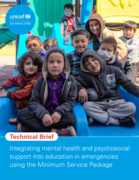
The aim of the Technical Brief is to offer guidance to education professionals on how to integrate Mental Health and Psychosocial Support into Education in Emergencies programming. An overview of Mental Health and Psychosocial Support activities that can be implemented in Education in Emergencies co
...
The report studied child poverty in nine dimensions – development/stunting, nutrition, health, water, sanitation, and housing. Other dimensions included education, health related knowledge, and information and participation.
An estimated 36 million of a total population of 41 million children und
...

Around the world, more than 2 billion people lack access to safely managed water, sanitation and hygiene services, with conflicts and climate change exacerbating the issue.
Unsafe and insufficient WASH facilities, especially in rural and remote areas, can lead to increased health complications fo
...
Tanzania is prone to refugee influxes, often of long duration. Despite facing its own economic challenges, for decades Tanzania has welcomed thousands of refugees fleeing conflicts in neighboring countries of Great Lakes Region. The counties geographic proximity to the strifetorn Congo Basin is resp
...
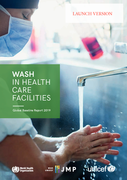
The WHO/UNICEF JMP report, WASH in Health Care Facilities, is the first comprehensive global assessment of water, sanitation and hygiene (WASH) in health care facilities. It also finds that 1 in 5 health care facilities has no sanitation service*, i
...
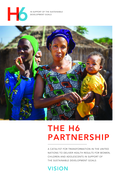
A catalyst for transformation in the United Nations to deliver health results for women, children and adolescents in support of the Sustainable Development Goals

The study analyses the current situation of children with disabilities in relation to realizing their rights and accessing basic services, as well as their life experiences in their communities. It also focuses on identifying the barriers created by society that prevent children with disabilities fr
...
Palm Oil and Children in Indonesia : Exploring the Sector's Impact on Children's Rights

Fragile Beginnings. The Fragile Beginnings series examines the growing body of research on the unique vulnerabilities of children: in utero and at birth, during infancy and childhood and throughout adolescence. Its purpose is to enable evidence-based advocacy and action on
...

Developmental disabilities are common. Yet, children with developmental disabilities have been neglected in health systems planning and policy provisions for health and continue to experience stigmatization, institutionalization, barriers to access health care and inequalities in health and educatio
...

Report on the symposium 26–28 May 2015, New Babylon Meeting Center, The Hague
The principle of “the best interest of the child” should guide decisions by politicians whenever
children are affected. This is one of the basic ideas in the UN Convention on the Rights
of the Child. Decision makers should assess the consequences for children before taking
action. Today, this
...
A Review of Evidence from Africa
Accessed: 21.08.2019
Conflict, climate crisis and COVID-19 pose great threats to the health of women and children.

Sexual abuse perpetrated against children is one of the most significant crises of our time. Child sexual abuse is a significant risk factor for children, in common with other forms of child maltreatment. Sexual abuse can have severe short- and long-term consequences on the physical, mental, social,
...