Filter
655
Text search:
USAID
from
the
American
People
Featured
Recommendations
42
New Publications
195
Language
Document type
No document type
427
Studies & Reports
73
Guidelines
65
Manuals
39
Training Material
20
Fact sheets
11
Strategic & Response Plan
9
Situation Updates
3
Infographics
3
Resource Platforms
2
Videos
2
App
1
Countries / Regions
Ethiopia
24
Global
24
Kenya
23
Malawi
21
Uganda
20
Tanzania
20
Nigeria
17
Latin America and the Carribbean
16
Nepal
15
Namibia
13
Liberia
12
Haiti
12
Rwanda
11
Africa
11
Sierra Leone
10
Zambia
10
South Africa
10
Zimbabwe
8
Guinea
7
India
7
Indonesia
7
Lesotho
7
Cambodia
6
Burkina Faso
5
Senegal
5
Cameroon
5
Ghana
5
Myanmar / Burma
5
Asia
5
Congo, Democratic Republic of
4
Syria
4
Bangladesh
4
Mozambique
4
Benin
4
Eswatini/ Swaziland
4
Yemen
4
Russia
4
Philippines
3
South Sudan
3
China
3
Middle East and North Africa
3
Georgia
3
Guyana
3
Somalia
2
Pakistan
2
Papua New Guinea
2
Burundi
2
Colombia
2
Bolivia
2
Madagascar
2
Sri Lanka
2
East and Southern Africa
2
South–East Asia Region
2
Venezuela
2
Tajikistan
2
Côte d’Ivoire / Ivory Coast
1
Togo
1
Jordan
1
Afghanistan
1
Chad
1
Thailand
1
Gambia
1
Central African Republic
1
Dominican Republic
1
Peru
1
Brazil
1
North Macedonia
1
Serbia
1
Croatia
1
Ukraine
1
Honduras
1
Botswana
1
El Salvador
1
Angola
1
Guatemala
1
Nicaragua
1
Chile
1
West and Central Africa
1
Western and Central Europe
1
Paraguay
1
Eastern Europe
1
Armenia
1
Southern Africa
1
Iran
1
Kyrgyzstan
1
Vietnam
1
North America
1
Turkmenistan
1
Japan
1
Belgium
1
Portugal
1
Spain
1
Azerbaijan
1
Belarus
1
Bosnia and Herzegovina
1
Belize
1
Costa Rica
1
Panama
1
Authors & Publishers
Publication Years
Category
Countries
238
Women & Child Health
76
Key Resources
64
Clinical Guidelines
49
Public Health
36
Capacity Building
26
Pharmacy & Technologies
5
Toolboxes
HIV
90
TB
56
Caregiver
30
COVID-19
28
Disability
25
Mental Health
16
Global Health Education
14
Ebola & Marburg
13
Rapid Response
13
Planetary Health
13
NTDs
12
Malaria
12
AMR
11
Pharmacy
11
Health Financing Toolbox
11
Natural Hazards
10
Conflict
9
2.0 Rapid Response
7
Cholera
4
Social Ethics
4
Refugee
3
Zika
3
Specific Hazards
1
NCDs
1
To understand the national situation, Ethiopia did a situation assessment, launched its first strategy in 2011, and took action to contain AMR, as detailed in the blue boxes found throughout this st
...
The accounting framework for health care financing is a key component of A System of Health Accounts 2011, published by OECD, Eurostat and WHO in October 2011.1 The framework makes health accounts m
...
Towards Universal Access to Prevention, Diagnosis and Treatment
A Trainings Curriculum
Further analysis of the 2011 Nepal Demographic and Health Survey
Promoting and protecting health is essential to human welfare and sustained economic and social development. This was recognized more than 30 years ago by the Alma-Ata Declaration signatories, who noted that Health for All would contribute
both to
...
Injection practices worldwide and especially in low- and middle-income countries (LMICs) include multiple, avoidable unsafe practices that ultimately lead to the large-scale transmission of bloodborne viruses among patients, health care providers an
...
This 2011 update of Guidelines for the programmatic management of drug-resistant tuberculosis is intended as a tool for use by public health professionals working in response
to the Sixty-second Wo
...
These guidelines are informed by evidence of ‘what works’ and lessons learned in the field. They are designed to accelerate UNICEF regional and country offices’ programming on social service workforce strengthening, and support work to better
...
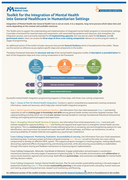
This Toolkit aims to support the understanding and implementation of integrated mental health programs in humanitarian settings. It provides a framework for essential steps and components, with associated key guidance and resources, that strengthen
...
The Atlas of Palliative Care in the Eastern Mediterranean Region is the first systematic attempt to assess
...

Education in emergencies is a young area; the evidence of its impact is often anecdotal, and although its status as a humanitarian concern has gained legitimacy in recent years, it has yet to be accepted across
...