
Filter
402
Text search:
Global
Handwashing
Day
Featured
Recommendations
49
New Publications
91
Language
Document type
No document type
119
Studies & Reports
91
Guidelines
88
Manuals
33
Strategic & Response Plan
33
Situation Updates
15
Training Material
10
Fact sheets
8
Infographics
5
Countries / Regions
Global
17
Sierra Leone
13
Kenya
12
Nigeria
11
India
11
Ethiopia
10
Bangladesh
10
Myanmar / Burma
9
Liberia
8
South Sudan
8
Syria
8
Ghana
7
Zimbabwe
6
Tanzania
6
East and Southern Africa
6
Latin America and the Carribbean
6
Rwanda
5
South Africa
5
Malawi
5
Ukraine
5
Western and Central Europe
5
Venezuela
5
Congo, Democratic Republic of
4
Nepal
4
Sudan
4
Yemen
4
West and Central Africa
4
Africa
4
Vietnam
4
Burkina Faso
3
Uganda
3
Jordan
3
Cambodia
3
Mozambique
3
Central African Republic
3
Middle East and North Africa
3
South–East Asia Region
3
Laos
3
Mali
2
Haiti
2
Philippines
2
Iraq
2
Lebanon
2
Zambia
2
Thailand
2
Indonesia
2
Papua New Guinea
2
Namibia
2
Colombia
2
Eastern Europe and Central Asia
2
Asia
2
Palestine
2
Guinea
1
Senegal
1
Cameroon
1
Niger
1
Pakistan
1
Afghanistan
1
Turkey
1
Egypt
1
China
1
Malaysia
1
Eswatini/ Swaziland
1
Greece
1
Lesotho
1
Western Pacific Region
1
Poland
1
Albania
1
Tajikistan
1
Romania
1
Moldova
1
Iran
1
Japan
1
Denmark
1
Spain
1
Authors & Publishers
Publication Years
Category
Countries
165
Key Resources
64
Women & Child Health
28
Capacity Building
18
Clinical Guidelines
17
Public Health
14
Pharmacy & Technologies
1
Toolboxes
COVID-19
117
Planetary Health
26
AMR
20
Caregiver
20
Ebola & Marburg
17
Conflict
16
Cholera
15
NTDs
9
Rapid Response
8
Global Health Education
8
Natural Hazards
6
2.0 Rapid Response
5
Refugee
4
HIV
2
Polio
1
Mental Health
1
TB
1
Pharmacy
1
NCDs
1
Malaria
1
The checklist is aligned with, and builds upon, existing COVID-19-related WHO guidelines and is structured around protective measures related to: 1) hand hygiene and respiratory etiquette; 2) physical distancing; 3) use of masks in schools; 4) environmental cleaning and ventilation; and 5) respectin
...

The following Emergency Response Plan for the COVID-19 pandemic seeks to set out activities that will be undertaken by humanitarian actors in Ukraine over the course of 2020 to respond to the public health impact of the epidemic – as well as the indirect, socio-economic impact on people’s well-b
...
This manual will contribute directly to the fourth focus area of the FAO Action Plan by promoting the prevention of infections and the prudent use of antibiotics in the pig and poultry sectors. The pig and poultry sectors are addressed together, as these sectors generally have the highest use of ant
...
School health programmes are the most cost-effective way to influence health behaviours in young people. The purpose of this two-part handbook is to support schools as they seek to implement interventions in order to reduce the main modifiable risk behaviours for noncommunicable disea
...
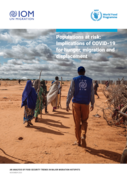
The report – the first of its kind – shows how the pandemic has driven up food insecurity and increased vulnerability among migrants, families reliant on remittances and communities forced from their homes by conflict, violence and disasters.
The two UN agencies warn the social and economic
...

Practical considerations
It provides more detailed and practical guidance for continuing services for each life stage across the life-course continuum. As such, both documents should be read and used together. The countries in South-East Asia and the Pacific regions would like to adapt the guidance
...
Event-based surveillance (EBS) is defined as the organized collection, monitoring, assessment and interpretation of mainly unstructured ad hoc information regarding health events or risks, which may represent an acute risk to health. Both indicator-based and event-based surveillance components serve
...
This new publication presents the continuing and emerging challenges to children’s environmental health.
A module from the suite of health service capacity assessments in the context of the COVID-19 pandemicINTERIM GUIDANCE5 February2021
The Community needs, perceptions and demand: community assessment toolcan be used by countries to conduct a rapid pulse survey of community health needs and perceptio
...
A GUIDE FOR HEALTH WORKERS AND AUTHORITIES IN NIGERIA

The purpose of this document is to present and promote the minimum requirements for IPC programmes at the national and health care facility level, identified by expert consensus according to available evidence and in the context of the WHO core components.
The minimum requirements are defined as: I
...
Almost two years after the signing of the Political Accord for Peace and Reconciliation (APPR), the Central African population is still hostage to an unstable and unpredictable security environment. Continuing conflicts in several areas of the country, structural weaknesses combined with the socio-e
...
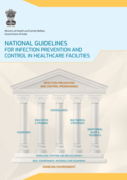
Infection Prevention and Control Programmes
January 2020
This guidance document sets out a methodology to identify and track financing to the WASH sector in a coherent and consistent manner across several countries. It is designed to help countries track financing to the WASH sector on a regular and comparable basis and analyse this information to support
...
A handbook for district and health facility staff

Buruli ulcer (BU), a neglected tropical disease (NTD), is an infection of the skin and subcutaneous tissue caused by Mycobacterium ulcerans. The disease has been documented in many South American, Asian, and Western Pacific countries and is widespread throughout much of Africa, especially in West
...
From Participation to Partnerships (September 2020)
Despite the COVID-19 challenges, children around the world have found meaningful ways to support and protect their peers, families, and communities. Children are on the frontlines of innovative responses and are working closely with their adult al
...
