
Filter
3505
Text search:
demographic
Featured
177
1203
Language
3334
115
59
29
17
17
13
11
7
2
1
1
1
1
1
1
1
1
1
1
1
Document type
2196
709
225
118
109
62
30
24
17
12
1
1
1
Countries
159
140
136
133
126
108
107
99
97
96
96
82
80
79
79
78
70
64
50
49
49
47
44
44
43
37
34
34
30
30
28
27
27
20
19
18
18
17
17
17
16
14
14
13
13
12
12
12
11
11
10
10
10
10
10
9
9
8
8
8
8
7
7
7
6
6
6
5
5
5
5
5
5
5
5
5
4
4
4
4
3
3
3
3
3
3
3
2
2
2
2
2
2
2
2
2
2
2
2
2
2
1
1
1
1
1
1
1
1
1
1
1
1
1
1
1
1
1
1
1
1
1
1
1
1
Authors & Publishers
311
100
97
89
76
69
62
55
45
37
32
29
24
24
21
19
18
18
16
16
16
15
14
13
13
13
13
13
12
12
12
12
12
11
11
10
10
10
9
9
9
9
9
9
9
9
8
8
8
8
8
8
7
7
7
7
7
7
7
7
7
7
7
7
7
6
6
6
6
6
6
6
6
6
6
6
6
6
6
5
5
5
5
5
5
5
5
5
5
5
5
5
5
5
5
5
5
5
5
5
5
5
5
5
5
5
5
4
4
4
4
4
4
4
4
4
4
4
4
4
4
4
4
4
4
4
4
4
4
4
4
4
4
4
4
4
4
4
4
4
4
4
4
4
4
4
4
4
4
3
3
3
3
3
3
3
3
3
3
3
3
3
3
3
3
3
3
3
3
3
3
3
3
3
3
3
3
3
3
3
3
3
3
3
3
3
3
3
3
3
3
3
3
3
3
3
3
3
3
3
3
3
3
3
3
3
3
3
3
3
3
3
3
3
3
3
3
3
3
3
3
3
3
3
3
3
3
3
2
2
2
2
2
2
2
2
2
2
2
2
2
2
2
2
2
2
2
2
2
2
2
2
2
2
2
2
2
2
2
2
2
2
2
2
2
2
2
2
2
2
2
2
2
2
2
2
2
2
2
2
2
2
2
2
2
2
2
2
2
2
2
2
2
2
2
2
2
2
2
2
2
2
2
2
2
2
2
2
2
2
2
2
2
2
2
2
2
2
2
2
2
2
2
2
2
2
2
2
2
2
2
2
2
2
2
2
2
2
2
2
2
2
2
2
2
2
2
2
2
2
2
2
2
2
2
2
2
2
2
2
2
2
2
2
2
2
2
2
2
2
2
2
2
2
2
2
2
2
2
2
2
2
2
2
2
2
2
2
2
2
2
2
2
2
2
2
2
2
2
2
2
2
2
2
2
2
2
2
2
2
2
2
2
2
2
2
2
2
2
2
2
2
2
2
2
2
2
2
2
2
2
2
2
2
2
2
2
2
2
2
2
2
2
2
2
2
2
2
2
2
2
1
1
1
1
1
1
1
1
1
1
1
1
1
1
1
1
1
1
1
1
1
1
1
1
1
1
1
1
1
1
1
1
1
1
1
1
1
1
1
1
1
1
1
1
1
1
1
1
1
1
1
1
1
1
1
1
1
1
1
1
1
1
1
1
1
1
1
1
1
1
1
1
1
1
1
1
1
1
1
1
1
1
1
1
1
1
1
1
1
1
1
1
1
1
1
1
1
1
1
1
1
1
1
1
1
1
1
1
1
1
1
1
1
1
1
1
1
1
1
1
1
1
1
1
1
1
1
1
1
1
1
1
1
1
1
1
1
1
1
1
1
1
1
1
1
1
1
1
1
1
1
1
1
1
1
1
1
1
1
1
1
1
1
1
1
1
1
1
1
1
1
1
1
1
1
1
1
1
1
1
1
1
1
1
1
1
1
1
1
1
1
1
1
1
1
1
1
1
1
1
1
1
1
1
1
1
1
1
1
1
1
1
1
1
1
1
1
1
1
1
1
1
1
1
1
1
1
1
1
1
1
1
1
1
1
1
1
1
1
1
1
1
1
1
1
1
1
1
1
1
1
1
1
1
1
1
1
1
1
1
1
1
1
1
1
1
1
1
1
1
1
1
1
1
1
1
1
1
1
1
1
1
1
1
1
1
1
1
1
1
1
1
1
1
1
1
1
1
1
1
1
1
1
1
1
1
1
1
1
1
1
1
1
1
1
1
1
1
1
1
1
1
1
1
1
1
1
1
1
1
1
1
1
1
1
1
1
1
1
1
1
1
1
1
1
1
1
1
1
1
1
1
1
1
1
1
1
1
1
1
1
1
1
1
1
1
1
1
1
1
1
1
1
1
1
1
1
1
1
1
1
1
1
1
1
1
1
1
1
1
1
1
1
1
1
1
1
1
1
1
1
1
1
1
1
1
1
1
1
1
1
1
1
1
1
1
1
1
1
1
1
1
1
1
1
1
1
1
1
1
1
1
1
1
1
1
1
1
1
1
1
1
1
1
1
1
1
1
1
1
1
1
1
1
1
1
1
1
1
1
1
1
1
1
1
1
1
1
1
1
1
1
1
1
1
1
1
1
1
1
1
1
1
1
1
1
1
1
1
1
1
1
1
1
1
1
1
1
1
1
1
1
1
1
1
1
1
1
1
1
1
1
1
1
1
1
1
1
1
1
1
1
1
1
1
1
1
1
1
1
1
1
1
1
1
1
1
1
1
1
1
1
1
1
1
1
1
1
1
1
1
1
1
1
1
1
1
1
1
1
1
1
1
1
1
1
1
1
1
1
1
1
1
1
1
1
1
1
1
1
1
1
1
1
1
1
1
1
1
1
1
1
1
1
1
1
1
1
1
1
1
1
1
1
1
1
1
1
1
1
1
1
1
1
1
1
1
1
1
1
1
1
1
1
1
1
1
1
1
1
1
1
1
1
1
1
1
1
1
1
1
1
1
1
1
1
1
1
1
1
1
1
1
1
1
1
1
1
1
1
1
1
1
1
1
1
1
1
1
1
1
1
1
1
1
1
1
1
1
1
1
1
1
1
1
1
1
1
1
1
1
1
1
1
1
1
1
1
1
1
1
1
1
1
1
1
1
1
1
1
1
1
1
1
1
1
1
1
1
1
1
1
1
1
1
1
1
1
1
1
1
1
1
1
1
1
1
1
1
1
1
1
1
1
1
1
1
1
1
1
1
1
1
1
1
1
1
1
1
1
1
1
1
1
1
1
1
1
1
1
1
1
1
1
1
1
1
1
1
1
1
1
1
1
1
1
1
1
1
1
1
1
1
1
1
1
1
1
1
1
1
1
1
1
1
1
1
1
1
1
1
1
1
1
1
1
1
1
1
1
1
1
1
1
1
1
1
1
1
1
1
1
1
1
1
1
1
1
1
1
1
1
1
1
1
1
1
1
1
1
1
1
1
1
1
1
1
1
1
1
1
1
1
1
1
1
1
1
1
1
1
1
1
1
1
1
1
1
1
1
1
1
1
1
1
1
1
1
1
1
1
1
1
1
1
1
1
1
1
1
1
1
1
1
1
1
1
1
1
1
1
1
1
1
1
1
1
1
1
1
1
1
1
1
1
1
1
1
1
1
1
1
1
1
1
1
1
1
1
1
1
1
1
1
1
1
1
1
1
1
1
1
1
1
1
1
1
1
1
1
1
1
1
1
1
1
1
1
1
1
1
1
1
1
1
1
1
1
1
1
1
1
1
1
1
1
1
1
1
1
1
1
1
1
1
1
1
1
1
1
1
1
1
1
1
1
1
1
1
1
1
1
1
1
1
1
1
1
1
1
1
1
1
1
1
1
1
1
1
1
1
1
1
1
1
1
1
1
1
1
1
1
1
1
1
1
1
1
1
1
1
1
1
1
1
1
1
1
1
1
1
1
1
1
1
1
1
1
1
1
1
1
1
1
1
1
1
1
1
1
1
1
1
1
1
1
1
1
1
1
1
1
1
1
1
1
1
1
1
1
1
1
1
1
1
1
1
1
1
1
1
1
1
1
1
1
1
1
1
1
1
1
1
1
1
1
1
1
1
1
1
1
1
1
1
1
1
1
1
1
1
1
1
1
1
1
1
1
1
1
1
1
1
1
1
1
1
1
1
1
1
1
1
1
1
1
1
1
1
1
1
1
1
1
1
1
1
1
1
1
1
1
1
1
1
1
1
1
1
1
1
1
1
1
1
1
1
1
1
1
1
1
1
1
1
1
1
1
1
1
1
1
1
1
1
1
1
1
1
1
1
1
1
1
1
1
1
1
1
1
1
1
1
1
1
1
1
1
1
1
1
1
1
1
1
1
1
1
1
1
1
1
1
1
1
1
1
1
1
1
1
1
1
1
1
1
1
1
1
1
1
1
1
1
1
1
1
1
1
1
1
1
1
1
1
1
1
1
1
1
1
1
1
1
1
1
1
1
1
1
1
1
1
1
1
1
1
1
1
1
1
1
1
1
1
1
1
1
1
1
1
1
1
1
1
1
1
1
1
1
1
1
1
1
1
1
1
1
1
1
1
1
1
1
1
1
1
1
1
1
1
1
1
1
1
1
1
1
1
1
1
1
1
1
1
1
1
1
1
1
1
1
1
1
1
1
1
1
1
1
1
1
1
1
1
1
1
1
1
1
1
1
1
1
1
1
1
1
1
1
1
1
1
1
1
1
1
1
1
1
1
1
1
1
1
1
1
1
1
1
1
1
1
1
1
1
1
1
1
1
1
1
1
1
1
1
1
1
1
1
1
1
1
1
1
1
1
1
1
1
1
1
1
1
1
1
1
1
1
1
1
1
1
1
1
1
1
1
1
1
1
1
1
1
1
1
1
1
1
1
1
1
1
1
1
1
1
1
1
1
1
1
1
1
1
1
1
1
1
1
1
1
1
1
1
1
1
1
1
1
1
1
1
1
1
1
1
1
1
1
1
1
1
1
1
1
1
1
1
1
1
1
1
1
1
1
1
1
1
1
1
1
1
1
1
1
1
1
1
1
1
1
1
1
1
1
1
1
1
1
1
1
1
1
1
1
1
1
1
1
1
1
1
1
1
1
1
1
1
1
1
1
1
1
1
1
1
1
1
1
1
1
1
1
1
1
1
1
1
1
1
1
1
1
1
1
1
1
1
1
1
1
1
1
1
1
1
1
1
1
1
1
1
1
1
1
1
1
1
1
1
1
1
1
1
1
1
1
1
1
1
1
1
1
1
1
1
1
1
1
1
1
1
1
1
1
1
1
1
1
1
1
1
1
1
1
1
1
1
1
1
1
1
1
1
1
1
1
1
1
1
1
1
1
1
1
1
1
1
1
1
1
1
1
1
1
1
1
1
1
1
1
1
1
1
1
1
1
1
1
1
1
1
1
1
1
1
1
1
1
1
1
1
1
1
1
1
1
1
1
1
1
1
1
1
1
1
1
1
1
1
1
1
1
1
1
1
1
1
1
1
1
1
1
1
1
1
1
1
1
1
1
1
1
1
1
1
1
1
1
1
1
1
1
1
1
1
1
1
1
1
1
1
1
1
1
1
1
1
1
1
1
1
1
1
1
1
1
1
1
1
1
1
1
1
1
1
1
1
1
1
1
1
1
1
1
1
1
1
1
1
1
1
1
1
1
1
1
1
1
1
1
1
1
1
1
1
1
1
1
1
1
1
1
1
1
1
1
1
1
1
1
1
1
1
1
1
1
1
1
1
1
1
1
1
1
1
1
1
1
1
1
1
1
1
1
1
1
1
1
1
1
1
1
1
1
1
1
1
1
1
1
1
1
1
1
1
1
1
1
1
1
1
1
1
1
1
1
1
1
1
1
1
1
1
1
1
1
1
1
1
1
1
1
1
1
1
1
1
1
1
1
1
1
1
1
1
1
1
1
1
1
1
1
1
1
1
1
1
1
1
1
1
1
1
1
1
1
1
1
1
1
1
1
1
1
1
1
1
1
1
1
1
1
1
1
1
1
1
1
1
1
1
1
1
1
1
1
1
1
1
1
1
1
1
1
1
1
1
1
1
1
1
1
1
1
1
1
1
1
1
1
1
1
1
1
1
1
1
1
1
1
1
1
1
1
1
1
1
1
1
1
1
1
1
1
1
1
1
1
1
1
1
1
1
1
1
1
1
1
1
1
1
1
1
1
1
1
1
1
1
1
1
1
1
1
1
1
1
1
1
1
1
1
1
1
1
1
1
1
1
1
1
1
1
1
1
1
1
1
1
1
1
1
1
1
1
1
1
1
1
1
1
1
1
1
1
1
1
1
1
1
1
1
1
1
1
1
1
1
1
1
1
1
1
1
1
1
1
1
1
1
1
1
1
1
1
1
1
1
1
1
1
1
1
1
1
1
1
1
1
1
1
1
1
1
1
1
1
1
1
1
1
1
1
1
1
1
1
1
1
1
1
1
1
1
1
1
1
1
1
1
1
1
1
1
1
1
1
1
1
1
1
1
1
1
1
1
1
1
1
1
1
1
1
1
1
1
1
1
1
1
1
1
1
1
1
1
1
1
1
1
1
1
1
1
1
1
1
1
1
1
1
1
1
1
1
1
1
1
1
1
1
1
1
1
1
1
1
1
1
1
1
1
1
1
1
1
1
1
1
1
1
1
1
1
1
1
1
1
1
1
1
1
1
1
1
1
1
1
1
1
1
1
1
1
1
1
1
1
1
1
1
1
1
1
1
1
1
1
1
1
1
1
1
1
1
1
1
1
1
1
1
1
1
1
1
1
1
1
1
1
1
1
1
1
1
1
1
1
1
1
1
1
1
1
1
1
1
1
1
1
1
1
1
1
1
1
1
1
1
1
1
1
1
1
1
1
1
1
1
1
1
1
1
1
1
1
1
1
1
1
1
1
1
1
1
1
1
1
1
1
1
1
1
1
1
1
1
1
1
1
1
1
1
1
1
1
1
1
1
1
1
1
1
1
1
1
1
1
1
1
1
1
1
1
1
1
1
1
1
1
1
1
1
1
1
1
1
1
1
1
1
1
1
1
1
1
1
1
1
1
1
1
1
1
1
1
1
1
1
1
1
1
1
1
1
1
1
1
1
1
1
1
1
1
1
1
1
1
1
1
1
1
1
1
1
1
1
1
1
1
1
1
1
1
1
1
1
1
1
1
1
1
1
1
1
1
1
1
1
1
1
1
1
1
1
1
1
1
1
1
1
1
1
1
1
1
1
1
1
1
1
1
1
1
1
1
1
1
1
1
1
1
1
1
1
1
1
1
1
1
1
1
1
1
1
1
1
1
1
1
1
1
1
1
1
1
1
1
1
1
1
1
1
1
1
1
1
1
1
1
1
1
1
1
1
1
1
1
1
1
1
1
1
1
1
1
1
1
1
1
1
1
1
1
1
1
1
1
1
1
1
1
1
1
1
1
1
1
1
1
1
1
1
1
1
1
1
1
1
1
1
1
1
1
1
1
1
1
1
1
1
1
1
1
1
1
1
Publication Years
826
2410
260
7
2
Category
2068
189
174
149
123
27
11
Toolboxes
220
159
126
117
105
74
73
72
69
67
57
52
52
51
45
37
32
27
25
22
15
11
7
6
5
The HEARTS technical package provides a strategic approach to improving cardiovascular health in countries. It comprises six modules and an implementation guide. This package supports Ministries of Health to strengthen CVD management in primary health care settings. The practical, step-by step modul
...
es are supported by an overarching technical document that provides a rationale and framework for this integrated approach to the management of NCDs.
more
Procurement and supply management activities are fundamental to consistent and reliable access to essential medicines and health products. To reduce the impact of CVD, action needs to be taken to improve prevention, diagnosis, care and management of CVD diseases. Affordable essential medicines and t
...
echnologies to manage CVD disease must be available where and when they are required. Medicines and technologies need to be managed appropriately to ensure that the correct medicines are selected, procured in the right quantities, distributed to facilities in a timely manner, and handled and stored in a way that maintains their quality. This needs to be backed up by policies that enable sufficient quantities to be procured in order to reduce cost inefficiencies, ensure the reliability and security of the distribution system, and encourage the appropriate use of these health products. In order to avoid stock-outs and the disruption of treatment, all related activities need to be conducted in a timely manner, with performance continually monitored, and prompt action taken in response to problems that may arise. Additionally, medication must be dispensed correctly and used rationally by the healthcare provider and patient alike. The purpose of this guide is to explain the necessary steps.
more
Monitoring is a crucial element in any successful programme. It is important to
know if health care facilities – and ultimately countries – are meeting the agreed
goals and objectives for preventing and managing cardiovascular diseases (CVD).
Monitoring is the on-going collection, management
...
and use of information to
assess whether an activity or programme is proceeding according to plan and/
or achieving defined targets. Not all outcomes of interest can be monitored. Clear
outcomes must be identified that relate to the most important changes expected to result from the project and to what is realistic and measurable within the timescale of the project. Once these outcomes have been articulated, indicators can be chosen that best measure whether the desired outcomes are being met.
To allow progress to be monitored, this module provides a set of indicators on
CVD management. Agreeing on a set of indicators allows countries to compare
progress in CVD management and treatment across different districts or
subnational jurisdictions, as well as at a facility level, identify where performance
can be improved, and track trends in implementation over time. Monitoring
these indicators also helps identify problems that may be encountered so that
implementation efforts can be redirected.
This module starts from the collection of data at facility level, which is then
“transferred up” the system: facility-level data are aggregated at subnational level
to produce reports that allow tracking of facility and subnational performance over time and allow for comparison among facilities. National-level data are obtained through population-based surveys.
Implementing a monitoring system requires action at many levels. At national and
subnational levels, staff can determine how best to integrate data elements into
existing data collection systems – such as the routine service-delivery data that are collected through facility-level Health Management Information Systems (HMIS).
In the facility setting, personnel must be aware of what data are needed. Sample
data-collection tools are included, recognizing that countries use different datamanagement systems for HMIS, so the CVD monitoring tools will be adapted to work with the HMIS system being used by the country, such that the indicators can be collected with minimal disruption/work to existing systems and tools
more
Ce rapport présente les principaux résultats de la quatrième édition de Enquête Démographique et de Santé du Bénin
(EDSB-IV), réalisée de décembre 2011 à mars 2012 par l’Institut National de la Statistique et de l’Analyse
Économique (INSAE) sous la tutelle du Ministère du Dévelo
...
ppement, de l’Analyse Économique et de la
Prospective, en collaboration avec les services techniques du ministère de la Santé, le Programme National de Lutte
contre le Sida (PNLS), le Laboratoire de Parasitologie du Centre National Hospitalier et Universitaire Hubert Maga
(CNHU) et le Laboratoire de référence du Programme National de Lutte contre le Sida et les IST (PNLS).
more
Cinquième Enquête Démographique et de Santé au Bénin (EDSB-V) 2017-2018
The aim of the people-centred framework is to help countries to develop fully prioritized and budgeted NSPs based on a culture of making full use of the available data, which are aligned with national planning cycles and which provide the basis for a robust national response that can accelerate prog
...
ress towards the goal of ending TB. In addition, applying the framework for other possible applications according to the country’s planning and policy cycle encourages the culture of data utilization and evidence translation into decision making and planning.
more
Biobehavioural Survey Guidelines
A. Abdul-Quader, M. Berry, T. Bingham; et al.
UNAIDS; World Health Organization; fhi360; et al.
(2017)
C_WHO
Global HIV Strategic Information Working Group
For Populations At Risk For HIV
The report is geared towards mayors, local government officials and city policy planners.It highlights key areas where city leaders can tackle the drivers of NCDs, including tobacco use, air pollution, poor diets and lack of exercise, and improve road safety.
From anti-tobacco actions in Beijing a
...
nd Bogor, to road safety initiatives in Accra and Bangkok, a bike sharing scheme in Fortaleza, and actions to create walkable streets for seniors that have reduced elderly pedestrian deaths by 16% in New York City, the report aims to share knowledge between urban policy planners.
Of the 19 case studies cited, 15 are from developing countries, where 85% of premature adult deaths through NCDs take place, and over 90% of road traffic fatalities are recorded. You can download the case studieson the website https://www.who.int/ncds/publications/tackling-ncds-in-cities/en/.
Over 90% of future urban population growth will be in low or middle-income countries, and seven of the world’s 10 largest cities are in developing countries.
more

This publication integrates human rights principles into measuring HIV service effectiveness, ensuring accountability for equity and health. It focuses on reducing stigma, removing punitive laws, and ensuring access to care for key populations, aiming to achieve 2030 targets.
The aim of the operational framework is to ensure 1) accurate collection, handling, shipment and storage of specimens collected in countries implementing HIV drug resistance surveillance; and 2) the availability of quality-assured HIV genotyping laboratory services producing comparable and reliable
...
results at the national, regional and global levels.
This publication updates the WHO HIVResNet HIV drug resistance laboratory operational framework published in 2017 and reflects technical and strategic developments over the past three years.
more
WHO working group on HIV incidence assays meeting report
10–11 December 2015
Glion, Switzerland
UNAIDS/WHO working group on global HIV/AIDS and STI surveillance
WHO/HIV/2017.03
The main objective of this document is to inform and inspire community activists in the EECA region to actively engage in domestic budget advocacy, in order to ensure the sustainability of services and programs for KAPs and to secure funding from national sources for those programs and services.

UNAIDS 2017 / Reference
Generating evidence for policy and action on HIV and social protection

Thirty years ago, the United Nations General Assembly adopted the Convention on the Rights of the Child at a moment of rapid global change marked by the end of apartheid, the fall of the Berlin Wall and the birth of the World Wide Web. These developments and more brought momentous and lasting evolut
...
ion, as well as a sense of renewal and hope for future generations. In a reflection of that hopeful spirit, the Convention has since become the most widely ratified human rights treaty in history.
more
Charting the Course of Education and HIV
UNESCO Publishing (United Nations Educational, Scientific and Cultural Organization)
(2014)
C2
Education on the move

Condoms - The prevention of HIV, other sexually transmitted infections and unintended pregnancies
UNAIDS (Joint United Nations Programme on HIVAIDS)
(2016)
C2
UNAIDS 2016 / Meeting Report
On the Fast-Track to end AIDS
UNAIDS
(2019)
C2
UNAIDS | 2016–2021 Strategy
Accessed: 20.11.2019
More time or more money to improve nutrition in Benin Republic?
M. C. D. N. Vodouhe, L. Fakambi
Institut National des Recherches Agricoles du Bénin (INRAB)
(2015)
C2
Children malnutrition eradication in developing countries is a real challenge, especially among
vulnerable population. There are so many effort towards women (who are the main care providers)
socio-economic situation in order to improve their children nutrition. This article aims to identify the
...
impact of mothers’ activities on child nutrition and care. Interviews were used to collect data from
mothers of children less than 5 years old. Pearson correlation test and regression models were
performed to highlight relation and to identify the main factors that affect child nutrition and care. The
nutritional statuses of children show a high prevalence of underweight (38.46%), emaciation (25.17%)
and stunting (23.77%). Statistic results show that a child whose mother has food processing as main
activity has 2,322 more times to not suffer from emaciation malnutrition compared to a child whose
mother has trade as main activity. A child whose mother has high revenue has 1.463 more times to
not be suffering from stunting malnutrition compared to a child whose mother has lower revenue. A
child whose father has fishing as main activity has 8,4 more chance to not be suffering from stunting
malnutrition compared to a child whose father has another activity as main activity. A child whose
father is present in the household has 8.11 more chance to not suffer from stunting malnutrition
compared to a child whose father is absent. A child from mother who has food processing as main
activity is 2,464 more times preserved from fever compared to a child from mother whose main activity
is trade. Moreover child position, child feeding with porridge, child nursing are correlated with mother
activity. This situation is justified by the fact that mother need money to improve child nutrition and
health but they are also confronted to the fact that those activity that provide significant money are
sometime time consuming and not permit to take care of children in term of feeding practices, hygiene
control etc. Therefore it is important that intervention towards women take in consideration those
factors (money and time) but also the family in the whole.
more
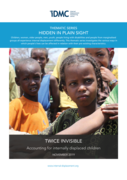
Internally displaced children are twice invisible in global and national data. First, because internally displaced people (IDPs) of all ages are often unaccounted for. Second, because age-disaggregation of any kind of data is limited, and even more so for IDPs.
Planning adequate responses to meet
...
the needs of internally displaced children, however, requires having at least a sense of how many there are and where they are. This report presents the first estimates of the number of children living in internal displacement triggered by conflict and violence at the global, regional and national levels.
more
