
Filter
2604
Text search:
therapeutic
Featured
Recommendations
288
New Publications
631
Language
Document type
No document type
1406
Guidelines
437
Studies & Reports
405
Manuals
150
Strategic & Response Plan
69
Fact sheets
44
Training Material
42
Situation Updates
21
Resource Platforms
12
Brochures
9
Infographics
6
Online Courses
2
Dashboards/Maps
1
Countries / Regions
India
140
Global
90
South Africa
80
Kenya
71
Ethiopia
64
Uganda
54
Western and Central Europe
44
Sierra Leone
43
Nigeria
40
Nepal
38
Africa
35
Ghana
33
Liberia
32
Latin America and the Carribbean
32
Zambia
30
Tanzania
30
Bangladesh
30
Rwanda
29
Namibia
26
Myanmar / Burma
25
Malawi
24
Congo, Democratic Republic of
18
Philippines
18
Zimbabwe
17
South Sudan
17
Lesotho
17
Russia
17
Germany
16
Indonesia
16
Ukraine
16
Burkina Faso
15
Brazil
14
Haiti
13
Syria
13
Eastern Europe
13
Mozambique
12
Eswatini/ Swaziland
12
South–East Asia Region
11
West and Central Africa
10
Guinea
9
Senegal
9
Cambodia
9
East and Southern Africa
9
Middle East and North Africa
9
Asia
9
Pakistan
8
USA
7
Cameroon
7
Yemen
7
Mali
6
Benin
6
Botswana
6
Eastern Europe and Central Asia
6
Venezuela
6
Vietnam
6
Iraq
5
Thailand
5
Sudan
5
Central African Republic
5
Afghanistan
4
China
4
Tajikistan
4
Spain
4
North Macedonia
3
Colombia
3
Bhutan
3
Poland
3
Laos
3
United Kingdom
3
Jordan
2
Turkey
2
Chad
2
Singapore
2
Serbia
2
Bolivia
2
Western Pacific Region
2
Paraguay
2
Fiji
2
Albania
2
Armenia
2
Southern Africa
2
Estonia
2
Romania
2
Lithuania
2
Moldova
2
Iran
2
Uzbekistan
2
Georgia
2
Gabon
2
Mauritius
2
Niger
1
Somalia
1
Egypt
1
Gambia
1
Malaysia
1
Ireland
1
Argentina
1
Peru
1
Switzerland
1
Hungary
1
Burundi
1
Libya
1
Angola
1
Madagascar
1
Mexico
1
Sri Lanka
1
Other region
1
Solomon Islands
1
Mongolia
1
Canada
1
Bulgaria
1
Kyrgyzstan
1
Australia
1
Kazakhstan
1
North America
1
Denmark
1
Belgium
1
France
1
Maldives
1
Portugal
1
Belarus
1
Authors & Publishers
Publication Years
Category
Countries
959
Clinical Guidelines
270
Women & Child Health
141
Public Health
124
Key Resources
119
Capacity Building
41
Pharmacy & Technologies
41
Annual Report MEDBOX
1
Toolboxes
Mental Health
319
AMR
176
COVID-19
161
HIV
148
Pharmacy
134
TB
105
NTDs
105
Caregiver
86
NCDs
68
Disability
61
Ebola & Marburg
60
Conflict
59
Malaria
43
Rapid Response
34
Refugee
34
Natural Hazards
29
Planetary Health
26
Global Health Education
18
Social Ethics
16
Cholera
14
Zika
10
Health Financing Toolbox
10
2.0 Rapid Response
10
Polio
9
Specific Hazards
8
South Sudan
1

The National Strategic Plan on Malaria Prevention and Elimination Period 2021 – 2025 seeks to build on the previous national successes of the National Institute of Malariology, Parasitology, and Entomology (NIMPE) while addressing current challenges to reduce the overall burden of malaria in the S
...

The Rwanda Malaria Strategic Plan 2020–2024 outlines Rwanda’s national strategy to reduce malaria morbidity and mortality by at least 50% compared to 2019 levels. The vision is a malaria-free Rwanda contributing to socioeconomic development.
The plan includes strengthening prevention through lo
...
The document "Combating False Information on Vaccines: A Guide for Health Workers" is designed to help health workers address vaccine misinformation. It begins by defining misinformation and explaining why it spreads rapidly, often due to its emotional appeal and simplistic explanations. The guide i
...
The document "Combating False Information on Vaccines: A Guide for EPI Managers" is designed to help Expanded Program on Immunization (EPI) managers address vaccine misinformation. It begins by defining misinformation and explaining why it spreads rapidly, often due to its emotional appeal and simpl
...

WHO guidelines for clinical management of arboviral diseases: dengue, chikungunya, Zika and yellow fever
recommended
The new WHO guidelines provide clinical management recommendations for four of the most widespread arboviruses affecting humans: dengue, chikungunya, Zika, and yellow fever.
An integrated approach is vital, as these four diseases often present with similar symptoms, especially in the early stages
...

Access to safe, effective and quality-assured health products and technologies is crucial for achieving universal health coverage and primary health care goals. The continued growth of the aging population; increasing burden of noncommunicable diseases; growing burden of mental health issues; climat
...

The ongoing global pandemic of SARS-CoV-2 (Covid-19) poses unique diagnostic and clinical management challenges in regions where seasonal epidemic-prone diseases are endemic. Diseases such as dengue, malaria, seasonal influenza, leptospirosis, chikungunya, scrub typhus and bacterial infections often
...

Early Adolescent Skills for Emotions (EASE) is an evidence-based group psychological intervention to help 10–15-year-olds affected by internalizing problems (e.g. stress and symptoms of anxiety, depression) in communities exposed to adversity. Published by the World Health Organization (WHO) and U
...

The annual bulletin of the Mekong Malaria Elimination (MME) programme is a yearly report that reviews ongoing efforts to combat multidrug resistance and eliminate malaria in the 6 countries of the Greater Mekong subregion (GMS): Cambodia, China (Yunnan province), Lao People's Democratic Republic, My
...

To guide the provision of quality palliative care services across the African region, the African Palliative Care Association (APCA) has developed a framework of core palliative care competencies that can be used by service providers, educators and other stakeholders to guide programmes development.
...
These guidelines have been developed in simple, user-friendly language and they explain the procedures for patients’ access to and the safe management of Schedule I and II drugs that are necessary for the treatment and relief of moderate to severe pain. They provide both procedures for acquisition
...

The Guidelines for the Use of the APCA African Palliative Outcome Scale (POS) has been developed by the APCA, in collaboration with
stakeholders, to help appropriately trained health practitioners and researchers across the region to utilise the APCA African POS in their work place (Powell et
...

In the absence of a such a measure, and building on the success of developing the APCA African
Palliative Outcome Scale (POS) for adults, the African Palliative Care Association has developed the
APCA African Children’s POS. The tool has been validated across diseases, countries, settings and
...

In this guide, the African Palliative Care Association (APCA) has put together evidence‑based information on the use of specific opioids commonly used in the management of moderate‑to‑severe pain to manage both cancer and non‑cancer pain. APCA hopes that this guide will be a useful tool i
...

WHO guideline on balanced national controlled medicines policies to ensure medical access and safety
Access to medicines is essential for attainment of universal health coverage, which is central to achievement of the health-related Sustainable Development Goals. Controlled medicines include those such as opioids, benzodiazepines, barbiturates, amphetamines and others with identified or emergent cl
...
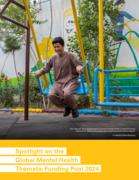
Promoting and protecting the mental health and psychosocial wellbeing of children, adolescents, and their caregivers remains undamental to achieving the Sustainable Development Goals (SDGs), with a direct contribution to SDG 3 (Good Health and Well- eing). In 2024, UNICEF accelerated the scale-up o
...
On 4 September 2025, the Ministry of Health of the Democratic Republic of the Congo (DRC) declared an outbreak of Ebola Virus Disease (EVD) in Kasai Province, following confirmation of Zaire ebolavirus by the National Institute of Biomedical Research (INRB) in Bulape and Mweka Health Zones. As of 19
...

This resource was written to support persons who seek to initiate a support group for suicide loss survivors. Suicide bereavement support groups offer a wide range of benefits that can help individuals to navigate the difficult time following a loss. First and foremost, a support group provides a ch
...
This guideline includes 48 updated and new evidence-based recommendations related to MNS conditions. The guideline is targeted towards non-specialized health workers at primary- or secondary-level healthcare facilities, or those working at the district level including basic inpatient and outpatient
...

In an era of constrained resources and tightening budgets, strategic prioritization in tuberculosis (TB) programming is more critical than ever. Countries must make informed decisions to allocate limited resources effectively - maximizing impact, preventing avoidable deaths, and sustaining progress
...
