
Filter
4003
Text search:
Reproductive
Health
Featured
319
1331
Language
3644
279
108
56
50
32
27
17
15
11
5
5
5
5
3
3
3
3
3
3
3
3
3
2
2
2
2
2
2
2
2
2
2
2
2
2
2
2
1
1
1
1
1
1
1
1
1
1
1
1
1
1
1
1
1
1
Document type
2341
625
454
171
168
89
64
42
16
9
8
5
4
1
Countries
201
165
160
121
116
112
105
96
88
86
82
79
78
76
76
68
53
53
53
51
47
41
40
39
37
34
33
29
29
29
24
24
22
21
21
21
19
19
18
17
16
16
15
15
13
13
12
12
11
11
11
11
10
10
10
9
9
7
7
6
6
5
5
5
5
5
5
4
4
4
4
4
4
3
3
3
3
3
2
2
2
2
2
2
2
2
1
1
1
1
1
1
1
1
1
1
1
1
1
1
1
1
1
1
1
1
1
1
1
1
1
1
1
1
Authors & Publishers
481
127
113
110
84
82
81
75
54
50
45
44
39
39
37
32
28
25
24
20
18
18
18
17
17
17
17
17
17
16
16
16
16
16
14
14
14
13
13
12
12
12
11
11
11
10
10
10
10
9
9
9
9
9
9
9
9
9
9
9
9
8
8
8
8
8
8
8
7
7
7
7
7
7
7
7
7
7
7
7
7
7
7
7
7
7
7
6
6
6
6
6
6
6
6
6
6
6
6
6
6
6
6
6
5
5
5
5
5
5
5
5
5
5
5
5
5
5
5
5
5
5
5
5
5
5
5
5
5
5
4
4
4
4
4
4
4
4
4
4
4
4
4
4
4
4
4
4
4
4
4
4
4
4
4
4
4
4
4
4
4
4
4
4
4
4
4
4
4
4
4
4
4
4
4
4
4
4
3
3
3
3
3
3
3
3
3
3
3
3
3
3
3
3
3
3
3
3
3
3
3
3
3
3
3
3
3
3
3
3
3
3
3
3
3
3
3
3
3
3
3
3
3
3
3
3
3
3
3
3
3
3
3
3
3
3
3
3
3
3
3
3
3
3
3
3
3
3
3
3
3
3
3
3
3
3
3
3
3
3
3
3
3
3
3
3
3
3
3
3
2
2
2
2
2
2
2
2
2
2
2
2
2
2
2
2
2
2
2
2
2
2
2
2
2
2
2
2
2
2
2
2
2
2
2
2
2
2
2
2
2
2
2
2
2
2
2
2
2
2
2
2
2
2
2
2
2
2
2
2
2
2
2
2
2
2
2
2
2
2
2
2
2
2
2
2
2
2
2
2
2
2
2
2
2
2
2
2
2
2
2
2
2
2
2
2
2
2
2
2
2
2
2
2
2
2
2
2
2
2
2
2
2
2
2
2
2
2
2
2
2
2
2
2
2
2
2
2
2
2
2
2
2
2
2
2
2
2
2
2
2
2
2
2
2
2
2
2
2
2
2
2
2
2
2
2
2
2
2
2
2
2
2
2
2
2
2
2
2
2
2
2
2
2
2
2
2
2
2
2
2
2
2
2
2
2
2
2
2
2
2
2
2
2
2
2
2
2
2
2
2
2
2
2
2
2
2
2
2
2
2
2
2
2
2
2
2
2
2
2
2
2
2
2
2
2
2
2
2
2
2
2
2
2
2
2
2
2
2
2
2
2
2
2
2
1
1
1
1
1
1
1
1
1
1
1
1
1
1
1
1
1
1
1
1
1
1
1
1
1
1
1
1
1
1
1
1
1
1
1
1
1
1
1
1
1
1
1
1
1
1
1
1
1
1
1
1
1
1
1
1
1
1
1
1
1
1
1
1
1
1
1
1
1
1
1
1
1
1
1
1
1
1
1
1
1
1
1
1
1
1
1
1
1
1
1
1
1
1
1
1
1
1
1
1
1
1
1
1
1
1
1
1
1
1
1
1
1
1
1
1
1
1
1
1
1
1
1
1
1
1
1
1
1
1
1
1
1
1
1
1
1
1
1
1
1
1
1
1
1
1
1
1
1
1
1
1
1
1
1
1
1
1
1
1
1
1
1
1
1
1
1
1
1
1
1
1
1
1
1
1
1
1
1
1
1
1
1
1
1
1
1
1
1
1
1
1
1
1
1
1
1
1
1
1
1
1
1
1
1
1
1
1
1
1
1
1
1
1
1
1
1
1
1
1
1
1
1
1
1
1
1
1
1
1
1
1
1
1
1
1
1
1
1
1
1
1
1
1
1
1
1
1
1
1
1
1
1
1
1
1
1
1
1
1
1
1
1
1
1
1
1
1
1
1
1
1
1
1
1
1
1
1
1
1
1
1
1
1
1
1
1
1
1
1
1
1
1
1
1
1
1
1
1
1
1
1
1
1
1
1
1
1
1
1
1
1
1
1
1
1
1
1
1
1
1
1
1
1
1
1
1
1
1
1
1
1
1
1
1
1
1
1
1
1
1
1
1
1
1
1
1
1
1
1
1
1
1
1
1
1
1
1
1
1
1
1
1
1
1
1
1
1
1
1
1
1
1
1
1
1
1
1
1
1
1
1
1
1
1
1
1
1
1
1
1
1
1
1
1
1
1
1
1
1
1
1
1
1
1
1
1
1
1
1
1
1
1
1
1
1
1
1
1
1
1
1
1
1
1
1
1
1
1
1
1
1
1
1
1
1
1
1
1
1
1
1
1
1
1
1
1
1
1
1
1
1
1
1
1
1
1
1
1
1
1
1
1
1
1
1
1
1
1
1
1
1
1
1
1
1
1
1
1
1
1
1
1
1
1
1
1
1
1
1
1
1
1
1
1
1
1
1
1
1
1
1
1
1
1
1
1
1
1
1
1
1
1
1
1
1
1
1
1
1
1
1
1
1
1
1
1
1
1
1
1
1
1
1
1
1
1
1
1
1
1
1
1
1
1
1
1
1
1
1
1
1
1
1
1
1
1
1
1
1
1
1
1
1
1
1
1
1
1
1
1
1
1
1
1
1
1
1
1
1
1
1
1
1
1
1
1
1
1
1
1
1
1
1
1
1
1
1
1
1
1
1
1
1
1
1
1
1
1
1
1
1
1
1
1
1
1
1
1
1
1
1
1
1
1
1
1
1
1
1
1
1
1
1
1
1
1
1
1
1
1
1
1
1
1
1
1
1
1
1
1
1
1
1
1
1
1
1
1
1
1
1
1
1
1
1
1
1
1
1
1
1
1
1
1
1
1
1
1
1
1
1
1
1
1
1
1
1
1
1
1
1
1
1
1
1
1
1
1
1
1
1
1
1
1
1
1
1
1
1
1
1
1
1
1
1
1
1
1
1
1
1
1
1
1
1
1
1
1
1
1
1
1
1
1
1
1
1
1
1
1
1
1
1
1
1
1
1
1
1
1
1
1
1
1
1
1
1
1
1
1
1
1
1
1
1
1
1
1
1
1
1
1
1
1
1
1
1
1
1
1
1
1
1
1
1
1
1
1
1
1
1
1
1
1
1
1
1
1
1
1
1
1
1
1
1
1
1
1
1
1
1
1
1
1
1
1
1
1
1
1
1
1
1
1
1
1
1
1
1
1
1
1
1
1
1
1
1
1
1
1
1
1
1
1
1
1
1
1
1
1
1
1
1
1
1
1
1
1
1
1
1
1
1
1
1
1
1
1
1
1
1
1
1
1
1
1
1
1
1
1
1
1
1
1
1
1
1
1
1
1
1
1
1
1
1
1
1
1
1
1
1
1
1
1
1
1
1
1
1
1
1
1
1
1
1
1
1
1
1
1
1
1
1
1
1
1
1
1
1
1
1
1
1
1
1
1
1
1
1
1
1
1
1
1
1
1
1
1
1
1
1
1
1
1
1
1
1
1
1
1
1
1
1
1
1
1
1
1
1
1
1
1
1
1
1
1
1
1
1
1
1
1
1
1
1
1
1
1
1
1
1
1
1
1
1
1
1
1
1
1
1
1
1
1
1
1
1
1
1
1
1
1
1
1
1
1
1
1
1
1
1
1
1
1
1
1
1
1
1
1
1
1
1
1
1
1
1
1
1
1
1
1
1
1
1
1
1
1
1
1
1
1
1
1
1
1
1
1
1
1
1
1
1
1
1
1
1
1
1
1
1
1
1
1
1
1
1
1
1
1
1
1
1
1
1
1
1
1
1
1
1
1
1
1
1
1
1
1
1
1
1
1
1
1
1
1
1
1
1
1
1
1
1
1
1
1
1
1
1
1
1
1
1
1
1
1
1
1
1
1
1
1
1
1
1
1
1
1
1
1
1
1
1
1
1
1
1
1
1
1
1
1
1
1
1
1
1
1
1
1
1
1
1
1
1
1
1
1
1
1
1
1
1
1
1
1
1
1
1
1
1
1
1
1
1
1
1
1
1
1
1
1
1
1
1
1
1
1
1
1
1
1
1
1
1
1
1
1
1
1
1
1
1
1
1
1
1
1
1
1
1
1
1
1
1
1
1
1
1
1
1
1
1
1
1
1
1
1
1
1
1
1
1
1
1
1
1
1
1
1
1
1
1
1
1
1
1
1
1
1
1
1
1
1
1
1
1
1
1
1
1
1
1
1
1
1
1
1
1
1
1
1
1
1
1
1
1
1
1
1
1
1
1
1
1
1
1
1
1
1
1
1
1
1
1
1
1
1
1
1
1
1
1
1
1
1
1
1
1
1
1
1
1
1
1
1
1
1
1
1
1
1
1
1
1
1
1
1
1
1
1
1
1
1
1
1
1
1
1
1
1
1
1
1
1
1
1
1
1
1
1
1
1
1
1
1
1
1
1
1
1
1
1
1
1
1
1
1
1
1
1
1
1
1
1
1
1
1
1
1
1
1
1
1
1
1
1
1
1
1
1
1
1
1
1
1
1
1
1
1
1
1
1
1
1
1
1
1
1
1
1
1
1
1
1
1
1
1
1
1
1
1
1
1
1
1
1
1
1
1
1
1
1
1
1
1
1
1
1
1
1
1
1
1
1
1
1
1
1
1
1
1
1
1
1
1
1
1
1
1
1
1
1
1
1
1
1
1
1
1
1
1
1
1
1
1
1
1
1
1
1
1
1
1
1
1
1
1
1
1
1
1
1
1
1
1
1
1
1
1
1
1
1
1
1
1
1
1
1
1
1
1
1
1
1
1
1
1
1
1
1
1
1
1
1
1
1
1
1
1
1
1
1
1
1
1
1
1
1
1
1
1
1
1
1
1
1
1
1
1
1
1
1
1
1
1
1
1
1
1
1
1
1
1
1
1
1
1
1
1
1
1
1
1
1
1
1
1
1
1
1
1
1
1
1
1
1
1
1
1
1
1
1
1
1
1
1
1
1
1
1
1
1
1
1
1
1
1
1
1
1
1
1
1
1
1
1
1
1
1
1
1
1
1
1
1
1
1
1
1
1
1
1
1
1
1
1
1
1
1
1
1
1
1
1
1
1
1
1
1
1
1
1
1
1
1
1
1
1
1
1
1
1
1
1
1
1
1
1
1
1
1
1
1
1
1
1
1
1
1
1
1
1
1
1
1
1
1
1
1
1
1
1
1
1
1
1
1
1
1
1
1
1
1
1
1
1
1
1
1
1
1
1
1
1
1
1
1
1
1
1
1
1
1
1
1
1
1
1
1
1
1
1
1
1
1
1
1
1
1
1
1
1
1
1
1
1
1
1
1
1
1
1
1
1
1
1
1
1
1
1
1
1
1
1
1
1
1
1
1
1
1
1
1
1
1
1
1
1
1
1
1
1
1
1
1
1
1
1
1
1
1
1
1
1
1
1
1
1
1
1
1
1
1
1
1
1
1
1
1
1
1
1
1
1
1
1
1
1
1
1
1
1
1
1
1
1
1
1
1
1
1
1
1
1
1
1
1
1
1
1
1
1
1
1
1
1
1
1
1
1
1
1
1
1
1
1
1
1
1
1
1
1
1
1
1
1
1
1
1
1
1
1
1
1
1
1
1
1
1
1
1
1
1
1
1
1
1
1
1
1
1
1
1
1
1
1
1
1
1
1
1
1
1
1
1
1
1
1
1
1
1
1
1
1
1
1
1
1
1
1
1
1
1
1
1
1
1
1
1
1
1
1
1
1
1
1
1
1
1
1
1
1
1
1
1
1
1
1
1
1
1
1
1
1
1
1
1
1
1
1
1
1
1
1
1
1
1
1
1
1
1
1
1
1
1
1
1
1
1
1
1
1
1
1
1
1
1
1
1
1
1
1
1
1
1
1
1
1
1
1
1
1
1
1
1
1
1
1
1
1
1
1
1
1
1
1
1
1
1
1
1
1
1
1
1
1
1
1
1
1
1
1
1
1
1
1
1
1
1
1
1
1
1
1
1
1
1
1
1
1
1
1
1
1
1
1
1
1
1
1
1
1
1
1
1
1
1
1
1
1
1
1
1
1
1
1
1
1
1
1
1
1
1
1
1
1
1
1
1
1
1
1
1
1
1
1
1
1
1
1
1
1
1
1
1
1
1
1
1
1
1
1
1
1
1
1
1
1
1
1
1
1
1
1
1
1
1
1
1
1
1
1
1
1
1
1
1
1
1
1
1
1
1
1
1
1
1
1
1
1
1
1
1
1
1
1
1
1
1
1
1
1
1
1
1
1
1
1
1
1
1
1
1
1
1
1
1
1
1
1
1
1
1
1
1
1
1
1
1
1
1
1
1
1
1
1
1
1
1
1
1
1
1
1
1
1
1
1
1
1
1
1
1
1
1
1
1
1
1
1
1
1
1
1
1
1
1
1
1
1
1
1
1
1
1
1
1
1
1
1
1
1
1
1
1
1
1
1
1
1
1
1
1
1
1
1
1
1
1
1
1
1
1
1
1
1
1
1
1
1
1
1
1
1
1
1
1
1
1
1
1
1
1
1
1
1
1
1
1
1
1
1
1
1
1
1
1
1
1
1
1
1
1
1
1
1
1
1
1
1
1
1
1
1
1
1
1
1
1
1
1
1
1
1
1
1
1
1
1
1
1
1
1
1
1
1
1
1
1
1
1
1
1
1
1
1
1
1
1
1
1
1
1
1
1
1
1
1
1
1
1
1
1
1
1
1
1
1
1
1
1
Publication Years
1136
2525
333
7
2
Category
2025
467
240
193
189
140
21
1
Toolboxes
232
207
133
130
127
115
83
83
79
79
78
66
55
49
48
42
39
36
32
30
27
7
5
5
3
1

National Disability Mainstreaming Strategy and Implementation Plan (NDMS&IP) 2018-2023
Department of Disability and elderly affairs
Ministry of Gender, Children, Disability and Social Welfare
(2019)
CC
The NDMS&IP focuses on mainstreaming disability to promote equitable access to services in the six thematic areas of health, education, livelihoods, empowerment, and social inclusion and cross-cutting issues.
The first part of the NDMS&IP outlines
...
incongruences between national and sectoral policies and pieces of legislation on one hand, and practice on the other and identifies key priority areas/themes of the strategy,
medium-term outcomes and strategies for each identified priority area/ theme. This process is largely informed by key findings and recommendations from a study on the Situation of Persons with Disabilities
in Malawi (CBMM/NAD, 2011). The study provides background descriptive information on existing national and sectoral policy and legal framework, level of access by children, adult women and males with disabilities to services in the areas of education, health, livelihoods and other social services as well as of participation by persons with disabilities through self-representation in development activities at various levels. A review of relevant documents at the international level further describes the disability situation in Malawi in the global context.
The second part of the NDMS&IP consists of the operational matrix, (Annex 1), a monitoring and evaluation framework (Annex 2) and budget estimates (Annex 3). This part outlines specific actions by various actors both in the public, private and civil society sectors to prioritise disability in their routine policy, programming, resource mobilisation and allocation, monitoring, evaluation and reporting routines. The action plan lays out priority sectors and concrete actions by setting out implementation schedules, defining targets, assigning responsibility to key duty bearers and rights holders for coordination, decision-making, monitoring and reporting, mobilisation and allocation and control of resources.
more

The objectives of the research presented in this report were to identify case studies of community-led HIV-related health and social inclusion service delivery organizations in eastern and southern Africa; describe the typologies of the services pro
...
vided; and identify evidence of their service delivery and contribution beyond HIV, including advancing universal health coverage.
more

Fragile Beginnings. The Fragile Beginnings series examines the growing body of research on the unique vulnerabilities of children: in utero and at birth, during infancy and childhood and throughout adolescence. Its purpose is to enable evidence-based advocacy and action on children’s environmental
...
health
more

Currently, there are only two manufacturers with HIV POC diagnostic products prequalified by the World Health
Organization (WHO) and eligible for procurement through the United Nations. UNICEF concluded its last tender for
HIV EID and VL POC diagn
...
ostic technologies in 2018 and awarded two manufacturers long-term arrangements
(LTAs) to supply WHO prequalified product
more
This resource is a practical, user-friendly tools that aid in the application of gender-transformative approaches for everyday work at the frontlines within the social, health, education, or legal sectors, among others.
Gender-transformative appr
...
oaches intentionally challenge harmful gender norms, roles, and relations towards a more equal redistribution of power and resources. This includes engaging diverse stakeholders, such as men, boys, and traditional leaders, in redefining gender roles and increasing the agency of women and girls.
more
Migrants in an irregular situation: access to healthcare in 10 European Union Member States
recommended
European Union Agency for Fundamental Rights
(2011)
CC2
This report explores the access to healthcare granted to irregular migrants in 10 EU Member States. It focuses on migrants who are present in an irregular situation, namely those who do not fulfil conditions for entry, stay or residence. Through interviews with a range of different sources including
...
public authorities at the national and local level, health professionals, non-governmental organisations (NGOs) providing helathcare and irregular migrants themselves, this report documents the legal, economic and practical obstacles that hinder migrants' access to healthcare.
For versions in French, Polish, German and Swedish check also http://fra.europa.eu/de/publication/2012/migranten-einer-irregulren-situation-zugang-zu-medizinischer-versorgung-zehn
more

CHAPTER 206 | An Act to establish a national drug policy and a national drug authority to ensure the availability, at all times, of essential, efficacious and cost-effective drugs to the entire population of Uganda, as a means of providing satisfactory hea
...
lth care and safeguarding the appropriate use of drugs.
more
ECDC Technical Report
In line with ECDC’s recommendations provided in the ’Risk Assessment of HTLV-1/2 transmission by tissue/cell transplantation’ dated 14 March 2012, this Directive replaces the term ‘incidence’ with ‘prevalence’ in the description of endemic areas of HTLV-1/2 i ... nfection. According to the new requirements ‘HTLV-1 antibody testing must be performed for donors living in, or originating from high-prevalence areas or with sexual partners originating from those areas or where the donor’s parents originate from those areas’ and this applies to both donors of non-reproductive tissues and cells and reproductive cells.
ECDC contracted experts from the Institut Pasteur in Paris to systematically review the published evidence on the distribution of HTLV-1 infection prevalence throughout the world and to identify high-prevalence countries and areas. more
In line with ECDC’s recommendations provided in the ’Risk Assessment of HTLV-1/2 transmission by tissue/cell transplantation’ dated 14 March 2012, this Directive replaces the term ‘incidence’ with ‘prevalence’ in the description of endemic areas of HTLV-1/2 i ... nfection. According to the new requirements ‘HTLV-1 antibody testing must be performed for donors living in, or originating from high-prevalence areas or with sexual partners originating from those areas or where the donor’s parents originate from those areas’ and this applies to both donors of non-reproductive tissues and cells and reproductive cells.
ECDC contracted experts from the Institut Pasteur in Paris to systematically review the published evidence on the distribution of HTLV-1 infection prevalence throughout the world and to identify high-prevalence countries and areas. more
Maternal, Infant and Young Child Nutrition Strategic Actions:
1 Endorse and disseminate key policies and regulations
2 Improve maternal nutrition
3 Protect, promote, and support optimal infant and young child feeding practices
4 Support optimal infant and young child feeding in ... difficult circumstances
5 Ensure intra-sectoral integration (Health and Nutrition)
6 Improve intersectoral integration (food security and livelihood, WASH, protection, education and shelter)
7 Support capacity building and service strengthening
8 Initiate advocacy and social behavioural change communication
9 Sustain research, information, monitoring and evaluation
10 Mobilise resources and support more
1 Endorse and disseminate key policies and regulations
2 Improve maternal nutrition
3 Protect, promote, and support optimal infant and young child feeding practices
4 Support optimal infant and young child feeding in ... difficult circumstances
5 Ensure intra-sectoral integration (Health and Nutrition)
6 Improve intersectoral integration (food security and livelihood, WASH, protection, education and shelter)
7 Support capacity building and service strengthening
8 Initiate advocacy and social behavioural change communication
9 Sustain research, information, monitoring and evaluation
10 Mobilise resources and support more
Surveys are needed to guide trachoma control efforts in Mozambique, with WHO guidelines for intervention based on the prevalence of trachomatous inflammation–follicular (TF) in children aged 1–9 years and the prevalence of trichiasis in adults aged 15 years and above. We conducted surveys to com
...
plete the map of trachoma prevalence in Mozambique, concluding that it still represents a significant public health problem in many areas of Mozambique.
more
This publication integrates human rights principles into measuring HIV service effectiveness, ensuring accountability for equity and health. It focuses on reducing stigma, removing punitive laws, and ensuring access to care for key populations, aimi
...
ng to achieve 2030 targets.
more

According to the Report, cascading and interlinked crises are putting the 2030 Agenda for Sustainable Development in grave danger, along with humanity’s very own survival. The Report highlights the severity and magnitude of the challenges before us. The confluence of crises, dominated by COVID-19,
...
climate change, and conflicts, are creating spin-off impacts on food and nutrition, health, education, the environment, and peace and security, and affecting all the Sustainable Development Goals (SDGs). The Report details the reversal of years of progress in eradicating poverty and hunger, improving health and education, providing basic services, and much more. It also points out areas that need urgent action in order to rescue the SDGs and deliver meaningful progress for people and the planet by 2030.
more
In October 2022, President Biden signed the Global Malnutrition Prevention and Treatment Act (GMPTA) into law, which directs USAID to prevent and treat malnutrition globally. The GMPTA further codifies USAID’s leadership on nutrition, with a focus on evidence-based interventions across
...
health systems and food systems, in both development and humanitarian settings.
Realizing the potential of good nutrition to save lives and ensure a brighter future for generations to come is central to U.S. Government priorities. For over 60 years, USAID has been a leader in the fight to end global malnutrition. Nutrition affects every aspect of human development: from the ability to fight disease, to children’s performance in school, to a nation’s health and economic advancement. There is overwhelming evidence of the power of good nutrition but, due to challenges in accessing safe, nutritious foods and health and sanitation services, many people in low- and middle-income countries remain undernourished.
more
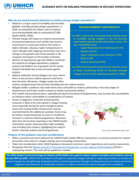
This UNHCR guidance note provides comprehensive recommendations for the prevention and control of malaria in refugee settings worldwide. Aligned with the WHO Global Technical Strategy for Malaria, it outlines strategies to ensure access to effective prevention, diagnosis and treatment, implement sus
...
tainable transmission reduction measures and strengthen surveillance systems. The document is intended as a practical resource for humanitarian actors, public health officials and partners involved in planning and implementing malaria programmes in refugee operations, with the aim of reducing malaria-related morbidity and mortality among vulnerable populations.
more
The interventions summarized in this guide are intended to lower the risk of delivery and post-partum complications for both the mother and the newborn, particularly the risk of postpartum haemorrhage and infections, and improve the immediate care of premature babies. The recommendations are also in
...
tended to minimize the exposure of health care providersto blood and bodily fluids that could transmit Ebola
more

It is the policy of the GoR to ensure that children’s rights are met through the provision of basic needs and services for all children in the country, and protect them from abuse and exploitation. Children are defined as persons below the age of 18 years and the ICRP covers children from the time
...
before their birth until they complete the age of 18 years. The Integrated Child Rights Policy of Rwanda is based on seven key themes: Identity and Nationality; Family and Alternative Care; Survival, Health and Standards of Living; Education; Protection; Justice; and Child Participation.
more
The Early Childhood Development Policy and its Strategic Plan seek to provide a framework to ensure such a holistic and integrated approach to the development of young children. International research has demonstrated the high economic returns on ECD investment and its positive impact on
...
health and education outcomes as well as the overall economic development of a nation. The implementation of the ECD Policy will thus provide Rwanda with the basis for achieving the objectives and goals of the EDPRS and Vision 2020.
more
In April 2018, Refugees International (RI) conducted a mission to Bangladesh, to research the GBV (gender-based violence) response for Rohingya women and girls. RI found that the entire humanitarian system is struggling under tremendous constraints in Bangladesh, and protection and
...
health actors do deliver lifesaving services to survivors in an incredibly challenging environment. This report, however, focuses on key gaps and challenges in GBV programming, as communicated by practitioners deployed to Bangladesh at various stages of the emergency, by local organizations, and by the affected women and girls themselves.
In the analyses and recommendations provided in this report, RI draws in part from the framework of the international initiative to safeguard women and girls in emergencies — the Call to Action on Protection from Gender-Based Violence in Emergencies — and urges the donors and humanitarian organizations that are Call to Action partners to implement it more effectively and with urgency during this emergency. more
In the analyses and recommendations provided in this report, RI draws in part from the framework of the international initiative to safeguard women and girls in emergencies — the Call to Action on Protection from Gender-Based Violence in Emergencies — and urges the donors and humanitarian organizations that are Call to Action partners to implement it more effectively and with urgency during this emergency. more
Policy Brief, Updated in March 2017
Key messages
• Sex workers have the right to equal protection under the law, regardless of the legal status of sex work.
• Sex workers have the right to access HIV, sexually transmitted infection (STI) and other ... health services free from the threat of violence, intimidation, incarceration, and stigma and discrimination.
• Justice and law enforcement sectors, together with the health sector and sex worker communities, should work in partnership to reform relevant legislation, policies and practices.
• Capacity development of all partners is critical to the success of the HIV response among sex workers. more
Key messages
• Sex workers have the right to equal protection under the law, regardless of the legal status of sex work.
• Sex workers have the right to access HIV, sexually transmitted infection (STI) and other ... health services free from the threat of violence, intimidation, incarceration, and stigma and discrimination.
• Justice and law enforcement sectors, together with the health sector and sex worker communities, should work in partnership to reform relevant legislation, policies and practices.
• Capacity development of all partners is critical to the success of the HIV response among sex workers. more
These Guidelines are intended to provide knowledge to the treating ophthalmologists, pediatricians, ocular oncologists, pediatric oncologists, and general physicians to arrive at an early diagnosis of retinoblastoma in the settings of district hospital, in private clinics and hospitals. The guidelin
...
es will enable the contact health personnel to refer at the right
time to the tertiary care hospital for management of retinoblastoma.
more
