Filter
680
Text search:
health
diets
Featured
51
163
Language
Document type
272
234
67
47
21
19
14
2
2
1
1
Countries
76
56
27
14
12
11
11
11
11
10
10
9
9
7
7
7
7
7
6
6
6
6
5
5
4
4
4
4
4
4
3
3
3
3
3
3
3
3
2
2
2
2
2
2
2
2
2
1
1
1
1
1
1
1
1
1
1
1
1
1
1
1
1
1
1
1
1
1
1
1
1
1
1
1
Authors & Publishers
Publication Years
Category
256
94
59
51
47
12
Toolboxes
97
80
36
35
31
22
15
14
9
9
9
8
7
7
6
5
3
3
2
2
1
1
Accessed: 15.03.2019
The Western Pacific Regional Action Plan for the Prevention and Control of Noncommunicable Diseases (2014–2020) was developed in response to a resolution adopted at the sixty-second session of the WHO Regional Committee for the Western Pacific. The regional plan is fully harmonized with
...

Healthy maternal nutrition, exclusive breastfeeding, and optimal infant and young child nutrition are critical for appropriate growth and development, as well as reducing the risk of developing noncommunicable diseases (NCDs), for both mothers and children. On 7–8 November 2018 the WHO Regional Of
...
Excessive consumption of salt (more than 5 g per day) raises blood pressure, a major risk factor for cardiovascular diseases such as heart disease and stroke, and is the leading cause of death in the WHO European Region. Many countries in the Region have initiated national salt reduction strategies,
...
Calls for greater implementation research (IR) capacity came in the wake of compelling evidence that implementation strategies are critically important for the dissemination and facilitation of evidence-informed policies and interventions to tackle noncommunicable diseases (NCDs), thereby improving
...
These new reports from WHO document evidence of widespread inappropriate promotion of baby and toddler foods. Despite the WHO Guidance on ending inappropriate promotion of foods for infants and young children agreed in 2016 and nearly 40 years since the introduction of the International Code of Mark
...
This report on progress achieved in the WHO European Region and Member States in implementing the European food and nutrition action plan 2015–2020 presents selected epidemiological data on the nutritional status of populations throughout the Region and on implementation of policies recommended in
...
Key considerations for the use of law to prevent noncommunicable diseases in the WHO European Region
Report of an intensive legal training and capacity-building workshop on law and noncommunicable diseases (Moscow, 30 May–3 June 2016)
The report summarizes important issues, themes and topics discussed during the meeting in Moscow, ranging from the design and implementation of legislation, reconc
...
The manual has been designed in a comprehensive manner, the aim being to provide a holistic approach to the short-term development of human resources, with a focus on primary care physicians. This is a reference manual meant for primary care physicians who will provide care to older people in primar
...
The global burden of disease associated with air pollution exposure exacts a massive toll on human health worldwide: exposure to air pollution is estimated to cause millions of deaths and lost years of healthy life annually. The burden of disease at
...
This guideline provides evidence-informed guidance on the use of non-sugar sweeteners to reduce the risk of unhealthy weight gain and diet-related noncommunicable diseases in adults and children. The guidance in this guideline is not based on toxicological assessments of the safety of individual no
...

Hypertension is referred to as a “silent killer”. Most people with hypertension are unaware of their condition as in most cases, they experience no warning signs or symptoms hence they are not identified or treated. Hypertention is associated with a number of conditions, disability, and causes o
...

The guidance document provides a set of indicators for assessing the status of development, implementation and monitoring of key policy interventions for prevention and control of NCDs and injuries. It promotes city-level evidence based decision-making processes to identify gaps and take appropriate
...

There has never been a more critical moment to invest in WHO, and strengthen the unique role it plays in global health. Now is the time to sustainably finance WHO and invest in a healthy return for all.

Drawing on the World Health Organization’s package of NCD best buys, the report demonstrates how these evidence-based measures can help countries reduce premature deaths, strengthen health systems
...

A manual for physicians and other senior health workers. This fourth revision of the manual reflects recent clinical experience and research findings in diarrhoea case management. Compared to earlier versions, it includes revised guidelines on the m
...
• provide scientific information on the safety, efficacy, and quality control/ quality assurance of widely used medicinal plants, in order to facilitate their appropriate use in Member States;
• provide models to assist Member States in developing their own mono- graphs or formularies for these
...
Prevention Of Cardiovascular Disease: Guidelines For Assessment And Management Or Cardiocascular Risk
recommended
This publication provides guidance on reducing disability and premature deaths from coronary heart disease, cerebrovascular disease and peripheral vascular disease in people at high risk, who have not yet experienced a cardiovascular event.
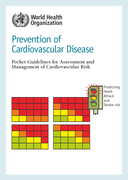
Prevention of Cardiovascular Disease. Pocket Guidelines for Assessment and Management of Cardiovascular Risk
recommended
These pocket guidelines provide evidence-based guidance on how to reduce the incidence of first and recurrent clinical events due to coronary heart disease (CHD), cerebrovascular disease (CeVD) and peripheral vascular disease in two categories of people