Filter
606
Text search:
PEPFAR
Featured
44
197
Language
Document type
357
102
57
23
17
16
15
14
3
1
Countries
36
33
32
28
27
25
23
21
21
20
20
17
16
13
12
9
9
9
9
8
8
6
5
4
4
3
3
2
2
2
2
2
1
1
1
1
1
1
1
1
1
1
1
1
1
1
1
1
1
1
1
1
1
1
Authors & Publishers
Publication Years
Category
323
17
17
12
10
8
5
Toolboxes
136
35
33
23
11
11
10
7
5
4
4
4
3
2
2
1
1
1
1
1
Accessed: 08.10.2019
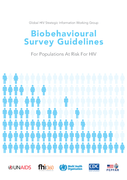
The guidelines fill a gap in providing tools for surveying HIV prevalence in key populations, and the included questionnaires may also inform general population surveys. These guidelines standardize the conduct of biobehavioural surveys to permit comparisons between as well as within countries over
...
Differentiated service delivery is a client-centered approach, simplifying and adapting services to better meet the needs of people living with HIV and reducing unnecessary burdens on the health care system. Differentiated ART delivery for clinically stable children and adolescents is supported by g
...
Global HIV Strategic Information Working Group
For Populations At Risk For HIV
WHO working group on HIV incidence assays meeting report
10–11 December 2015
Glion, Switzerland
UNAIDS/WHO working group on global HIV/AIDS and STI surveillance
WHO/HIV/2017.03

UNAIDS 2016 / Meeting Report
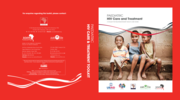
Dans la plupart des pays, les services de lutte contre la tuberculose (TB) sont décentralisés jusqu’aux dispensaires
les plus périphériques et souvent au sein même des villages et des quartiers. Par contre, les services
de lutte contre le VIH/Sida sont généralement beaucoup plus centralis
...
Accessed: 30.01.2020


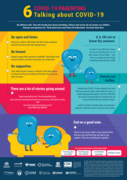
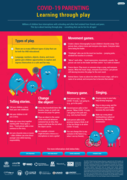
Be willing to talk. They will already have heard something. Silence and secrets do not protect our children. Honesty and openness do. Think about how much they will understand. You know them best.
Updated 8 June 2020
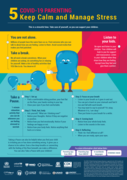
This is a stressful time. Take care of yourself, so you can support your children.
Updated 8 June 2020
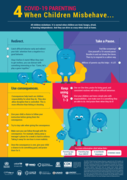
All children misbehave. It is normal when children are tired, hungry, afraid, or learning independence. And they can drive us crazy when stuck at home.
Updated 8 June 2020
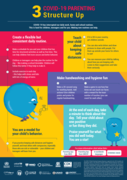
COVID-19 has taken away our daily work, home and school routines. This is hard for children, teenagers and for you. Making new routines can help.
Updated 8 June 2020
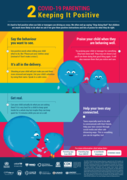
It‘s hard to feel positive when our kids or teenagers are driving us crazy. We often end up saying “Stop doing that!” But children are much more likely to do what we ask if we give them positive instructions and lots of praise for what they do right.
Updated 8 June 2020
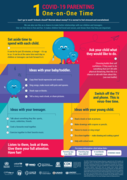
Can’t go to work? Schools closed? Worried about money? It is normal to feel stressed and overwhelmed. School shutdown is also a chance to make better relationships with our children and teenagers. One-on-One time is free and fun. It makes children feel loved and secure, and shows them that they a
...

As information about COVID-19 is rapidly evolving, it can be challenging to navigate and synthesize all of the information. The purpose of this document is to provide a synthesized, indexed reference of accurate, standardized COVID-19 information from trustworthy sources. Information is presented in
...