
Filter
389
Text search:
Medical
News
Today
Featured
Recommendations
26
New Publications
97
Language
Document type
No document type
223
Studies & Reports
74
Manuals
38
Guidelines
17
Training Material
13
Strategic & Response Plan
8
Situation Updates
7
Fact sheets
6
Resource Platforms
2
Brochures
1
Countries / Regions
Global
26
India
17
Syria
13
Sierra Leone
10
Latin America and the Carribbean
10
Kenya
9
Africa
9
Liberia
8
Uganda
8
Ukraine
7
Western and Central Europe
7
Asia
7
Ethiopia
6
Rwanda
6
Nepal
5
Myanmar / Burma
5
Venezuela
5
Guinea
4
Nigeria
4
Tanzania
4
Congo, Democratic Republic of
3
Philippines
3
Afghanistan
3
Russia
3
Ghana
2
Pakistan
2
South Sudan
2
Germany
2
Lebanon
2
South Africa
2
Malawi
2
Brazil
2
East and Southern Africa
2
West and Central Africa
2
Middle East and North Africa
2
South–East Asia Region
2
Eastern Europe and Central Asia
2
Vietnam
2
Spain
2
Senegal
1
Mali
1
USA
1
Cameroon
1
Haiti
1
Somalia
1
Iraq
1
Jordan
1
Zambia
1
Turkey
1
Thailand
1
China
1
Indonesia
1
Malaysia
1
Ireland
1
Bangladesh
1
Mozambique
1
Namibia
1
Peru
1
Croatia
1
El Salvador
1
Greece
1
Libya
1
Guatemala
1
Madagascar
1
Yemen
1
Western Pacific Region
1
Eastern Europe
1
Georgia
1
Japan
1
France
1
United Kingdom
1
Portugal
1
Authors & Publishers
Publication Years
Category
Countries
99
Key Resources
24
Public Health
22
Clinical Guidelines
18
Women & Child Health
17
Capacity Building
8
Pharmacy & Technologies
2
Annual Report MEDBOX
1
Toolboxes
COVID-19
54
Mental Health
37
HIV
30
Disability
23
Conflict
23
Global Health Education
20
Refugee
18
Ebola & Marburg
15
TB
15
Planetary Health
14
Caregiver
10
Social Ethics
8
Health Financing Toolbox
8
Rapid Response
6
AMR
6
NTDs
6
Natural Hazards
5
NCDs
5
Cholera
3
Polio
3
Zika
3
Pharmacy
3
Malaria
3
Specific Hazards
2
Special issue: WHO South-East Asia Journal of Public Health -Vol. 5, Issue 1, April 2016.This special This issue contains a rich collection of articles, demonstrating the encouraging scientific momentum to address the growing burden of diabetes in the region
This Manual is primarily intended for community level volunteers trained in Community Based Disaster Risk Management (CBDRM) and CBDRM Practitioners and Professionals.
The year of publication is not specified in the document.
The year of publication is not specified in the document.
An Independent Report
of the West Africa Commission on Drugs
The objective of this study is to analyze the strengths, weaknesses, sustainability, and impact of the tsunami response in Sri Lanka and Indonesia 10 years later. A cross cutting theme of this study is the assessment of whether communities are now better prepared to respond to and cope with disaster
...
Crisis Emergency Risk Communication. Manual
recommended
The CERC manual provides an evidence-based framework and recommended practices for anyone who communicates on behalf of an organization responding to major emergencies such as natural disasters.
Domestic Violence Act Training Module
Minimum standards of home care for older people in Red Cross Red Crescent volunteer-based programming in the Europe Zone

Despite the increasing population of refugees stuck in protracted situations and our awareness of the vulnerability of children and adolescents growing in up these contexts, relatively little is known about community based child protection mechanisms (CBCPMs) in refugee communities. CBCPMs, defined
...
TO HIS HOLINESS POPE JOHN PAUL II
A lack of knowledge about the threat of vaccine-preventable diseases, risks and benefits of vaccines, mistrust of government and health workers, poor service delivery and alternative health or religious beliefs play a role in lower uptake of some vaccines. These challenges underscore the importance
...
The Sustainable Development Goals (SDGs) were launched in September 2015, made up of 17 Goals and 169 Targets that set out a plan of action that will shape the mainstream development agenda for the next 15 years1. There has already been much debate about how these Goals will be achieved, but the sig
...
This report found that fewer than 15 percent of more than 3,000 school-age asylum-seeking children on the islands were enrolled in public school at the end of the 2017-2018 school year, and that in government-run camps on the islands, only about 100 children, all preschoolers, had access to formal e
...
Climate change is already having severe impacts across our planet, bringing new and previously unimaginable challenges to the people least responsible for greenhouse gas emissions.
This report, the first we’ve released jointly in the history of our organizations, provides a sobering review of h
...

nt. J. Environ. Res. Public Health 2014, 11(12), 13097-13116; https://doi.org/10.3390/ijerph111213097
Climate change will increase the frequency and magnitude of extreme weather events and create risks that will impact health care facilities. Health care facilities will need to assess climate chang
...

The QualityRights training and orientation modules have been developed to enhance the knowledge, skills and understanding of key stakeholders on how to promote the rights of people with psychosocial, intellectual or cognitive disabilities, improve the quality of services and support provided in the
...
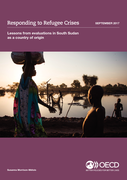
This working paper is a case study on South Sudan as an important refugee country of origin. The case study looks at issues of forced displacement in South Sudan and underscores the linkages between internally displaced persons and South Sudanese refugees. The case study highlights the importance of
...
The education sector forms an important part of the child protection response in refugee settings, and UNHCR’s Education Strategy (2012-16) reflects a focus on refugee education as a core component of UNHCR’s protection mandate. The right to education for all children also forms part of the Unit
...
Volume 2 · Supplement 4 · November 2016
ISSN 2055-66-40 – Print
Foreword
| ISSN 2055-66-59 – Online
www.viruseradication.com
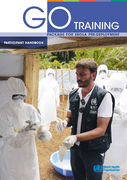
GO pre-deployment training: participant handbook
recommended
This is a pre-deployment training, tailored specially to the Ebola outbreak in West Africa, offered to WHO personnel, consultants, and key partners. The material covered in modules 1-4 is applicable and useful to frontline response workers, national and international. Only Module 5, which focuses on
...
