
Filter
2535
Text search:
clinical
guideline
Featured
Recommendations
370
New Publications
661
Language
Document type
No document type
1272
Guidelines
679
Studies & Reports
274
Manuals
149
Strategic & Response Plan
63
Training Material
39
Fact sheets
35
Situation Updates
10
Infographics
5
Resource Platforms
4
Brochures
2
App
1
Online Courses
1
Videos
1
Countries / Regions
India
144
Global
91
South Africa
82
Kenya
74
Ethiopia
69
Nigeria
56
Nepal
50
Tanzania
48
Sierra Leone
38
Bangladesh
37
Rwanda
36
Western and Central Europe
32
Ghana
30
Africa
30
Liberia
28
Namibia
28
Indonesia
27
Uganda
26
Russia
26
Latin America and the Carribbean
25
Zambia
23
Malawi
21
Brazil
19
Philippines
17
Myanmar / Burma
17
Ukraine
15
Eastern Europe
15
South–East Asia Region
14
Zimbabwe
12
Cambodia
11
Argentina
11
Germany
10
East and Southern Africa
10
Asia
10
South Sudan
9
Syria
9
Eswatini/ Swaziland
8
Lesotho
8
West and Central Africa
8
Burkina Faso
7
Senegal
7
Congo, Democratic Republic of
7
Mozambique
7
Botswana
7
Middle East and North Africa
7
Eastern Europe and Central Asia
7
Guinea
6
Cameroon
6
Colombia
6
Peru
5
Ecuador
5
Angola
5
Madagascar
5
Yemen
5
Western Pacific Region
5
USA
4
Afghanistan
4
Thailand
4
Chile
4
Paraguay
4
Bhutan
4
Spain
4
Mali
3
Guinea-Bissau
3
Sri Lanka
3
Albania
3
Timor Leste/ East Timor
3
Tajikistan
3
North America
3
Sudan
2
Benin
2
North Macedonia
2
El Salvador
2
Southern Africa
2
Laos
2
Moldova
2
Vietnam
2
Côte d’Ivoire / Ivory Coast
1
Saudi Arabia
1
Pakistan
1
Iraq
1
Lebanon
1
Egypt
1
Gambia
1
China
1
Libya
1
Other region
1
Venezuela
1
Canada
1
Qatar
1
Estonia
1
Romania
1
Iran
1
Australia
1
Kazakhstan
1
Georgia
1
Jamaica
1
Japan
1
Denmark
1
United Kingdom
1
Portugal
1
Authors & Publishers
Publication Years
Category
Countries
925
Clinical Guidelines
373
Women & Child Health
202
Public Health
152
Key Resources
89
Pharmacy & Technologies
39
Capacity Building
31
Annual Report MEDBOX
1
Toolboxes
COVID-19
240
HIV
233
Mental Health
216
TB
168
Caregiver
115
NCDs
114
AMR
95
NTDs
71
Ebola & Marburg
62
Rapid Response
48
Pharmacy
48
Malaria
30
2.0 Rapid Response
30
Conflict
27
Disability
22
Planetary Health
21
Refugee
20
Zika
19
Global Health Education
15
Polio
11
Cholera
9
Specific Hazards
9
Natural Hazards
8
Health Financing Toolbox
5
Social Ethics
4

This publication provides guidance for planning country-specific programming to achieve the triple elimination of mother-to-child (or vertical) transmission of HIV, syphilis and hepatitis B virus. It is based on the WHO Triple Elimination Framework, which promotes an integrated, person-centred appro
...

Access to safe, effective and quality-assured health products and technologies is crucial for achieving universal health coverage and primary health care goals. The continued growth of the aging population; increasing burden of noncommunicable diseases; growing burden of mental health issues; climat
...

Breastfeeding is a cornerstone of healthy infant nutrition, development and survival. It is critical for countries* to improve breastfeeding rates in order to achieve global targets for newborn and child health and survival, as well as economic growth and environmental sustainability

Malaria remains a significant public health concern in the SADC region, accounting for 20% of childhood deaths, as well as prompting numerous outpatient visits and hospitalisations. Around three-quarters of the population, including 35 million children under the age of five and 8.5 million pregnant
...

Non-Communicable Diseases (NCDs) have emerged as conditions of great public health concern in Kenya accounting for 39% of deaths annually. The Ministry of Health through the Department of Non-Communicable Diseases has adopted the vision of achieving a nation free from preventable burden of NCDs. Fur
...
Health in All Policies (HiAP) promotes health and equity. It is based on the recognition that our greatest health challenges for example, non-communicable diseases, health inequities and inequalities, climate change, and spiraling health care costs are highly complex and often linked through the soc
...

This resulting toolkit is a practical guide intended to assist users to become advocates for palliative care in a practical and effective
way. It is not necessarily a resource to read from cover to cover; rather, it can also be used selectively to each reader’s needs to engage audiences and
...
On 13 August 2024, the Africa Centres for Disease Control (Africa CDC) declared the multi-country mpox outbreak a public health emergency of continental security, with strong recommendations to improve surveillance and vaccine deployment in all AU Member States. On 14 August 2024, the WHO Director-G
...

WHO, as the coordinating authority on international health, supports countries in protecting public health through evidence-based policies and actions. Considering the significant health burden and the multiple potential benefits of interventions, the WHO Air Quality, Energy and Health Unit aims to
...

WHO consolidated guidelines on tuberculosis: Module 6: tuberculosis and comorbidities, 2nd ed
recommended
Addressing TB comorbidities and risk factors is central to the World Health Organization (WHO) End TB Strategy. These guidelines consolidate the latest WHO recommendations on TB and key comorbidities. The guidelines are a living document and will include dedicated sections for each key TB comorbidit
...

Building on the WHO guidelines for disclosure to children up to age 12 in 2011, this implementation guidance provides evidence on existing interventions that support children and adolescents living with HIV in the process of disclosure. It includes interventions that focuses on safe disclosure, as w
...

Adolescents and young adults aged 10-24 remain underserved in the global response against HIV. Combination prevention, treatment and care programmes use a mix of evidence-based interventions to meet the current HIV prevention needs of adolescents and young adults. However, there needs to be a focus
...

Program Considerations
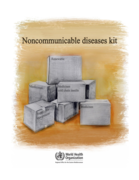
WHO has developed a new health kit to support treatment for chronic disease patients in emergency settings. The prevalence of NCDs is increasing worldwide, including in emergency/crisis-prone areas. Yet current humanitarian response has not accounted for this emerging burden. The NCD kit attends to
...
