
Filter
3055
Text search:
International
AIDS
society
Featured
Recommendations
235
New Publications
812
Language
Document type
No document type
2118
Studies & Reports
383
Guidelines
259
Manuals
118
Strategic & Response Plan
91
Training Material
35
Fact sheets
21
Situation Updates
11
Resource Platforms
7
Infographics
4
Brochures
2
Online Courses
2
Countries / Regions
India
108
Kenya
100
Global
97
South Africa
93
Nigeria
78
Uganda
78
Zambia
67
Nepal
65
Malawi
65
Sierra Leone
55
Myanmar / Burma
51
Western and Central Europe
51
Ethiopia
50
Rwanda
50
Liberia
49
Namibia
49
Ghana
48
Tanzania
47
Africa
44
Bangladesh
43
Lesotho
38
Ukraine
37
Zimbabwe
31
Asia
31
Eastern Europe
30
Mozambique
24
Botswana
24
Philippines
23
Indonesia
23
Cambodia
21
Latin America and the Carribbean
20
Russia
17
Senegal
16
East and Southern Africa
14
Cameroon
13
Eswatini/ Swaziland
13
South–East Asia Region
13
Thailand
12
Congo, Democratic Republic of
11
Burkina Faso
10
Germany
10
Albania
10
Guinea
9
Pakistan
9
South Sudan
9
West and Central Africa
9
Tajikistan
9
Syria
8
Georgia
8
Haiti
7
China
7
Vietnam
7
Lebanon
6
Benin
6
Brazil
6
North Macedonia
6
Venezuela
5
Moldova
5
Afghanistan
4
Papua New Guinea
4
Middle East and North Africa
4
Armenia
4
Mali
3
Jordan
3
Sudan
3
Central African Republic
3
Peru
3
Serbia
3
Colombia
3
Yemen
3
Western Pacific Region
3
Southern Africa
3
Laos
3
Kyrgyzstan
3
North America
3
Japan
3
USA
2
Togo
2
Iraq
2
Honduras
2
El Salvador
2
Angola
2
Guatemala
2
Mexico
2
Nicaragua
2
Sri Lanka
2
Bhutan
2
Canada
2
Kazakhstan
2
Portugal
2
Côte d’Ivoire / Ivory Coast
1
Morocco
1
Somalia
1
Turkey
1
Egypt
1
Chad
1
Gambia
1
Argentina
1
Dominican Republic
1
Switzerland
1
Hungary
1
Croatia
1
Burundi
1
Madagascar
1
Eastern Europe and Central Asia
1
Paraguay
1
Fiji
1
Poland
1
Palestine
1
North Korea
1
Timor Leste/ East Timor
1
Bulgaria
1
Estonia
1
Romania
1
Iran
1
Gabon
1
Turkmenistan
1
Jamaica
1
Norway
1
Spain
1
Azerbaijan
1
Bosnia and Herzegovina
1
Belize
1
Costa Rica
1
Panama
1
Authors & Publishers
Publication Years
Category
Countries
1176
Clinical Guidelines
174
Public Health
149
Women & Child Health
130
Key Resources
117
Capacity Building
42
Pharmacy & Technologies
13
Annual Report MEDBOX
1
Toolboxes
HIV
610
TB
262
Disability
238
Mental Health
172
COVID-19
84
AMR
56
Caregiver
53
Global Health Education
52
Health Financing Toolbox
51
Ebola & Marburg
40
NTDs
38
Planetary Health
36
Conflict
35
Pharmacy
30
Malaria
30
Refugee
27
NCDs
26
Natural Hazards
23
Rapid Response
20
2.0 Rapid Response
13
Polio
12
Social Ethics
10
Specific Hazards
8
Cholera
6
Zika
5
This report presents the most current data on four specific forms of violence – violent discipline and exposure to domestic abuse during early childhood; violence at school; violent deaths among adolescents; and sexual violence in childhood and adolescence. The statistics reveal that children expe
...
The scope of the Guidance is primarily the education in rural settings in Myanmar, but it covers some of the issues which have pan Myanmar implication and relevance. Considering the importance, complexity and vastness of the subject, similar type of initiatives on urban school and education system a
...
В этом разделе рассматривается недостаток доступа к медицинской помощи и непрерывности ее оказания внутри и вокруг мест добычи, а также политики, которые препятст
...
This guide is available in English, French, Spanish, Russian, Arabic and Chinese
This guide consolidates COVID-19 guidance for human resources for health managers and policy-makers at national, subnational and facility levels to design, manage and preserve the workforce necessary to manage the COVI
...
Cochrane Database of Systematic Reviews 2021, Issue 2. Art. No.: CD009593. DOI: 10.1002/14651858.CD009593.pub5.
Although Shiga toxin-producing Escherichia coli (STEC) have been isolated from a variety of food production animals, they are most commonly associated with ruminants from which we derive meat and milk. Because of the widespread and diverse nature of ruminant-derived food production, coupled with the
...
The Leonard Cheshire Disability and Inclusive Development Centre | University College London | 4 Taviton Street | London WC1H OBT | United Kingdom| Principal Investigator: Dr Raymond Lang | Email: r.lang@ucl.ac.uk | Tel: +44 (0)207 679 1519 | Research Commissioned by the Southern African Federation
...
The emergence and transmission of zoonotic diseases are driven by complex interactions
between health, environmental, and socio-political systems. Human movement is considered
a significant and increasing factor in these processes, yet forced migration remains an
understudied area of zoonotic res
...
NUDOR’s first strategic plan (2010-2016) focused on establishing NUDOR as a viable, well-run organisation. Significant progress has been made towards these aims and therefore the strategy and has been reviewed by NUDOR board, secretariat and member organisations. The updated strategic plan now cov
...
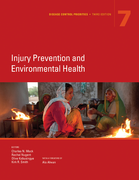
The substantial burden of death and disability that results from interpersonal violence, road traffic injuries, unintentional injuries, occupational health risks, air pollution, climate change, and inadequate water and sanitation falls disproportionally on low- and middle-income countries. Injury Pr
...
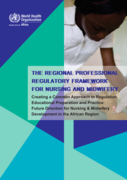
Creating a common approach ro regulation, educational preparation and practice: future direction for nursing & midwifery development in the African Region
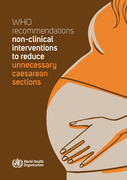
This new guideline on non-clinical interventions to reduce unnecessary caesarean sections incorporates the views, fears and beliefs of both women and health professionals about caesarean sections. It also considers the complex dynamics and limitations of health systems and organizations and relation
...
This guide focuses on the evaluation of psychosocial programs that are aligned with two main goals: - To promote psychosocial wellbeing by promoting an environment that provides appropriate care, opportunities for development and protects children from exposure to situations that are harmful to thei
...

How to respond to, mitigate, and prevent risks to children’s protection and well-being is a profound, if unanswered, question. Practitioners agree that it is necessary to develop or strengthen protective factors at multiple levels, such as the family, community, and national levels.
Pan African Medical Journal 2017;27:215. doi: 10.11604/pamj.2017.27.215.12994
