
Filter
2483
Text search:
approval
Featured
181
701
Language
2435
47
39
24
18
18
14
13
4
3
3
3
3
2
2
2
2
2
2
2
2
2
1
1
1
1
1
1
1
1
1
1
1
1
1
1
1
1
1
1
1
1
1
1
1
Document type
1306
512
336
130
78
61
27
17
11
2
2
1
Countries / Regions
129
101
77
72
69
69
67
60
56
55
48
45
42
39
39
37
35
34
34
32
30
30
29
19
19
18
17
15
14
14
14
13
13
13
13
13
13
12
11
10
9
9
9
9
9
9
8
8
8
8
8
7
7
7
7
7
6
6
6
6
5
5
4
4
4
4
4
3
3
3
3
3
3
3
3
3
3
3
2
2
2
2
2
2
2
2
2
2
2
2
2
2
2
2
2
2
1
1
1
1
1
1
1
1
1
1
1
1
1
1
1
1
1
1
1
1
1
1
1
Authors & Publishers
329
116
87
66
39
34
32
27
26
26
22
17
17
15
15
14
13
12
12
11
11
11
11
11
10
10
10
10
9
9
9
9
9
8
8
8
8
8
8
7
7
7
7
7
7
7
7
7
6
6
6
6
6
6
6
6
6
5
5
5
5
5
5
5
5
5
5
5
5
5
5
5
5
5
5
4
4
4
4
4
4
4
4
4
4
4
4
4
4
4
4
4
4
4
4
4
4
4
4
4
4
3
3
3
3
3
3
3
3
3
3
3
3
3
3
3
3
3
3
3
3
3
3
3
3
3
3
3
3
3
3
3
3
3
3
3
3
3
3
3
3
3
3
3
3
3
3
3
2
2
2
2
2
2
2
2
2
2
2
2
2
2
2
2
2
2
2
2
2
2
2
2
2
2
2
2
2
2
2
2
2
2
2
2
2
2
2
2
2
2
2
2
2
2
2
2
2
2
2
2
2
2
2
2
2
2
2
2
2
2
2
2
2
2
2
2
2
2
2
2
2
2
2
2
2
2
2
2
2
2
2
2
2
2
2
2
2
2
2
2
2
2
2
2
2
2
2
2
2
2
2
2
2
2
2
2
2
2
2
2
2
2
2
2
2
2
2
2
2
2
2
2
2
2
2
2
2
2
2
2
2
2
2
2
2
2
2
2
2
2
2
2
2
2
2
2
2
2
2
2
2
2
2
2
2
1
1
1
1
1
1
1
1
1
1
1
1
1
1
1
1
1
1
1
1
1
1
1
1
1
1
1
1
1
1
1
1
1
1
1
1
1
1
1
1
1
1
1
1
1
1
1
1
1
1
1
1
1
1
1
1
1
1
1
1
1
1
1
1
1
1
1
1
1
1
1
1
1
1
1
1
1
1
1
1
1
1
1
1
1
1
1
1
1
1
1
1
1
1
1
1
1
1
1
1
1
1
1
1
1
1
1
1
1
1
1
1
1
1
1
1
1
1
1
1
1
1
1
1
1
1
1
1
1
1
1
1
1
1
1
1
1
1
1
1
1
1
1
1
1
1
1
1
1
1
1
1
1
1
1
1
1
1
1
1
1
1
1
1
1
1
1
1
1
1
1
1
1
1
1
1
1
1
1
1
1
1
1
1
1
1
1
1
1
1
1
1
1
1
1
1
1
1
1
1
1
1
1
1
1
1
1
1
1
1
1
1
1
1
1
1
1
1
1
1
1
1
1
1
1
1
1
1
1
1
1
1
1
1
1
1
1
1
1
1
1
1
1
1
1
1
1
1
1
1
1
1
1
1
1
1
1
1
1
1
1
1
1
1
1
1
1
1
1
1
1
1
1
1
1
1
1
1
1
1
1
1
1
1
1
1
1
1
1
1
1
1
1
1
1
1
1
1
1
1
1
1
1
1
1
1
1
1
1
1
1
1
1
1
1
1
1
1
1
1
1
1
1
1
1
1
1
1
1
1
1
1
1
1
1
1
1
1
1
1
1
1
1
1
1
1
1
1
1
1
1
1
1
1
1
1
1
1
1
1
1
1
1
1
1
1
1
1
1
1
1
1
1
1
1
1
1
1
1
1
1
1
1
1
1
1
1
1
1
1
1
1
1
1
1
1
1
1
1
1
1
1
1
1
1
1
1
1
1
1
1
1
1
1
1
1
1
1
1
1
1
1
1
1
1
1
1
1
1
1
1
1
1
1
1
1
1
1
1
1
1
1
1
1
1
1
1
1
1
1
1
1
1
1
1
1
1
1
1
1
1
1
1
1
1
1
1
1
1
1
1
1
1
1
1
1
1
1
1
1
1
1
1
1
1
1
1
1
1
1
1
1
1
1
1
1
1
1
1
1
1
1
1
1
1
1
1
1
1
1
1
1
1
1
1
1
1
1
1
1
1
1
1
1
1
1
1
1
1
1
1
1
1
1
1
1
1
1
1
1
1
1
1
1
1
1
1
1
1
1
1
1
1
1
1
1
1
1
1
1
1
1
1
1
1
1
1
1
1
1
1
1
1
1
1
1
1
1
1
1
1
1
1
1
1
1
1
1
1
1
1
1
1
1
1
1
1
1
1
1
1
1
1
1
1
1
1
1
1
1
1
1
1
1
1
1
1
1
1
1
1
1
1
1
1
1
1
1
1
1
1
1
1
1
1
1
1
1
1
1
1
1
1
1
1
1
1
1
1
1
1
1
1
1
1
1
1
1
1
1
1
1
1
1
1
1
1
1
1
1
1
1
1
1
1
1
1
1
1
1
1
1
1
1
1
1
1
1
1
1
1
1
1
1
1
1
1
1
1
1
1
1
1
1
1
1
1
1
1
1
1
1
1
1
1
1
1
1
1
1
1
1
1
1
1
1
1
1
1
1
1
1
1
1
1
1
1
1
1
1
1
1
1
1
1
1
1
1
1
1
1
1
1
1
1
1
1
1
1
1
1
1
1
1
1
1
1
1
1
1
1
1
1
1
1
1
1
1
1
1
1
1
1
1
1
1
1
1
1
1
1
1
1
1
1
1
1
1
1
1
1
1
1
1
1
1
1
1
1
1
1
1
1
1
1
1
1
1
1
1
1
1
1
1
1
1
1
1
1
1
1
1
1
1
1
1
1
1
1
1
1
1
1
1
1
1
1
1
1
1
1
1
1
1
1
1
1
1
1
1
1
1
1
1
1
1
1
1
1
1
1
1
1
1
1
1
1
1
1
1
1
1
1
1
1
1
1
1
1
1
1
1
1
1
1
1
1
1
1
1
1
1
1
1
1
1
1
1
1
1
1
1
1
1
1
1
1
1
1
1
1
1
1
1
1
1
1
1
1
1
1
1
1
1
1
1
1
1
1
1
1
1
1
1
1
1
1
1
1
1
1
1
1
1
1
1
1
1
1
1
1
1
1
1
1
1
1
1
1
1
1
1
1
1
1
1
1
1
1
1
1
1
1
1
1
1
1
1
1
1
1
1
1
1
1
1
1
1
1
1
1
1
1
1
1
1
1
1
1
1
1
1
1
1
1
1
1
1
1
1
1
1
1
1
1
1
1
1
1
1
1
1
1
1
1
1
1
1
1
1
1
1
1
1
1
1
1
1
1
1
1
1
1
1
1
1
1
1
1
1
1
1
1
1
1
1
1
1
1
1
1
1
1
1
1
1
1
1
1
1
1
1
1
1
1
1
1
1
1
1
1
1
1
1
1
1
1
1
1
1
1
1
1
1
1
1
1
1
1
1
1
1
1
1
1
1
1
1
1
1
1
1
1
1
1
1
1
1
1
1
1
1
1
1
1
1
1
1
1
1
1
1
1
1
1
1
1
1
1
1
1
1
1
1
1
1
1
1
1
1
1
1
1
1
1
1
1
1
1
1
1
1
1
1
1
1
1
1
1
1
1
1
1
1
1
1
1
1
1
1
1
1
1
1
1
1
1
1
1
1
1
1
1
1
1
1
1
1
1
1
1
1
1
1
1
1
1
1
1
1
1
1
1
1
1
1
1
1
1
1
1
1
1
1
1
1
1
1
1
1
1
1
1
1
1
1
1
1
1
1
1
1
1
1
1
1
1
1
1
1
1
1
1
1
1
1
1
1
1
1
1
1
1
1
1
1
1
1
1
1
1
1
1
1
1
1
1
1
1
1
1
1
1
1
1
1
1
1
1
1
1
1
1
1
1
1
1
1
1
1
1
1
1
1
1
1
1
1
1
1
1
1
1
1
1
1
1
1
1
1
1
1
1
1
1
1
1
1
1
1
1
1
1
1
1
1
1
1
1
1
1
1
1
1
1
1
1
1
1
1
1
1
1
1
1
1
1
1
1
1
1
1
1
1
1
1
1
1
1
1
1
1
1
1
1
1
1
1
1
1
1
1
1
1
1
1
1
1
1
1
1
1
1
1
1
1
1
1
1
1
1
1
1
1
1
1
1
1
1
1
1
1
1
1
1
1
1
1
1
1
1
1
1
1
1
1
1
1
1
1
1
1
1
1
1
1
1
1
1
1
1
1
1
1
1
1
1
1
1
1
1
1
1
1
1
1
1
1
1
1
1
1
1
1
1
1
1
1
1
1
1
1
1
1
1
1
1
1
1
1
1
1
1
1
1
1
1
1
1
1
1
1
1
1
1
1
1
1
1
1
1
1
1
1
1
1
1
1
1
1
1
1
1
1
1
1
1
1
1
1
1
1
1
1
1
1
1
1
1
1
1
1
1
1
1
1
1
1
1
1
1
1
1
1
1
1
1
1
1
1
1
1
1
1
1
1
1
1
1
1
1
1
1
1
1
1
1
1
1
1
1
1
1
1
1
1
1
1
1
1
1
1
1
1
1
1
1
1
1
1
1
1
1
1
1
1
1
1
1
1
1
1
1
1
1
1
1
1
1
1
1
1
1
1
1
1
1
1
1
1
1
1
1
1
1
1
1
1
1
1
1
1
1
1
1
1
1
1
1
1
1
1
1
1
1
1
1
1
1
1
1
1
1
1
1
1
1
1
1
1
1
1
1
1
1
1
1
1
1
1
1
1
1
1
1
1
1
1
1
1
1
1
1
1
1
1
1
1
1
1
1
1
1
1
1
1
1
1
1
1
1
1
1
1
1
1
1
1
1
1
1
1
1
1
1
1
1
1
1
1
1
1
1
1
1
1
1
1
1
1
1
1
1
1
1
1
1
1
1
1
1
1
1
1
1
1
1
1
1
1
1
1
1
1
1
1
1
1
1
1
1
1
1
1
1
1
1
1
1
1
1
1
1
1
1
1
1
1
1
1
1
1
1
1
1
1
1
1
1
1
1
1
1
1
1
1
1
1
1
1
1
1
1
1
1
1
1
1
1
1
1
1
1
1
1
1
1
1
1
1
1
1
1
1
1
1
1
1
1
1
1
1
1
1
1
1
1
1
1
1
1
1
1
1
1
1
1
1
1
1
1
1
1
1
1
1
1
1
1
1
1
1
1
1
1
1
1
1
1
1
1
1
1
1
1
1
1
1
1
1
1
1
1
1
1
1
1
1
1
1
1
1
1
1
1
1
1
1
1
1
1
1
1
1
1
1
1
1
1
1
1
1
1
1
1
1
1
1
1
1
1
1
1
1
1
1
1
1
1
1
1
1
1
1
1
1
1
1
1
1
1
1
1
1
1
1
1
1
1
1
1
1
1
1
1
1
1
1
1
1
1
1
1
1
1
1
1
1
1
1
1
1
1
1
1
1
1
1
1
1
1
1
1
1
1
1
1
1
1
1
1
1
1
1
1
1
1
1
1
1
1
1
1
1
1
1
1
1
1
1
1
1
1
1
1
1
1
1
1
1
1
1
1
1
1
1
1
1
1
1
1
1
1
1
1
1
1
1
1
1
1
1
1
1
1
1
1
1
1
1
1
1
1
1
1
1
1
1
1
1
1
1
1
1
1
1
1
1
1
1
1
1
1
1
1
1
1
1
1
1
1
1
1
1
1
1
1
1
1
1
1
1
1
1
1
1
1
1
1
1
1
1
1
1
1
1
1
1
1
1
1
1
1
1
1
1
1
1
1
1
1
1
1
1
1
1
1
1
1
1
1
1
1
1
1
1
1
1
1
1
1
1
1
1
1
1
1
1
Publication Years
763
1511
191
15
1
2
Category
1111
143
133
97
95
44
32
Toolboxes
227
146
144
120
108
81
73
73
65
62
57
56
49
48
41
35
32
30
26
23
17
14
12
7
7
2
The Lancet Regional Health - Americas 2024;30: 100681
Published Online 3 February 2024 https://doi.org/10.1016/j.lana.2024.100681
While motivational factors vary, opportunities for career advancement, stimulating and challenging tasks, opportunities for promotion, and co-worker recognition are core factors that can engender retention of rural health workers. Interventions are required to enhance rural health worker motivation
...
and retention, including strengthening the supervision system, developing career progression pathways, and ensuring clear and transparent incentives. Strategies around retention need to be addressed as these would better enable rural primary health workers to cope with the challenging conditions they work in rural areas.
more

Lessons learned from recent public health events such as the COVID-19 pandemic, Ebola virus disease, Zika virus disease outbreaks, and other public health threats, including earthquakes and floods, have highlighted the need for countries to continuously develop, strengthen, and maintain capacities r
...
equired under the International Health Regulations (2005) (IHR (2005)).
Developing capacities for health security in a country requires the engagement of public and private entities across a broad range of sectors, including human and animal health, agriculture, environment, finance, security, emergency management, education, and transportation. The World Health Organization (WHO) is mandated through various resolutions, decisions, and reports of the World Health Assembly, and through the IHR (2005), to provide technical guidance and support to its Member States in developing, strengthening, and maintaining their health systems, including capacities required under the IHR (2005).
For countries to better prevent, prepare for, detect, notify, respond to, and recover from public health emergencies, they must build and maintain IHR core capacities and support the strengthening of health emergency prevention, preparedness, response, and resilience (HEPR) capacities. National Action Plans for Health Security (NAPHS), as capacity development plans, provide the tasks and resources needed to ensure adequate capacities are in place to prevent, detect, respond to, and recover from public health events in a sustainable manner. Investing in the resilience of these capacities within national health systems at national and local levels not only improves national health security but also helps safeguard economic, social, and political developments.
more

Buruli ulcer (BU), a neglected tropical disease (NTD), is an infection of the skin and subcutaneous tissue caused by Mycobacterium ulcerans. The disease has been documented in many South American, Asian, and Western Pacific countries and is widespread throughout much of Africa, especially in West
...
and Central Africa.
more
Diagnostics 2019, 9(4), 204; https://doi.org/10.3390/diagnostics9040204

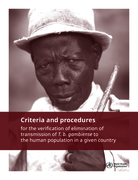
Having established the goal of eliminating transmission of gambiense human African trypanosomiasis (g-HAT) to humans, the HAT-e-TAG considered which elements should be developed to assess this goal.

HAT diagnosis relies on laboratory techniques because clinical signs and symptoms are unspecific. Serodiagnostic tests exist only for Tbg and are based on the detection of specific antibodies, thus they are not confirmatory of infection. With the current low disease prevalence, the positive predicti
...
ve value of serological tests is particularly low. Field-applicable tools include the card agglutination test for trypanosomiasis (CATT) used mainly in active screening by specialized mobile teams, and the rapid diagnostic tests that are more suitable for individual testing at point-of-care.
more
Parasites Vectors 14, 50 (2021). https://doi.org/10.1186/s13071-020-04555-8
The IAPB School Eye Health Workgroup has released these guidelines to help deliver standardised comprehensive eye health services to more than 700 million children attending schools around the world. These guidelines direct the planning and implementation of school eye health initiatives for policym
...
akers, health authorities, and related professionals. They emphasize effective, efficient, and sustainable programs, particularly in low- and middle-income countries. Monitoring and evaluation should be planned from the outset, and existing local guidelines should be integrated.
more

Trachoma is the world’s leading infectious cause of blindness. It is one of 18 neglected
tropical diseases (NTDs) that affect over one billion of the world’s poorest people.
Version 1: March 9, 2021. A living document

The second edition of the Women and Trachoma: Achieving Gender Equity in the Implementation of SAFE manual provides an updated resource for realistically increasing, improving, and supporting gender representation within trachoma elimination efforts at all levels. From the trachoma workforce to the
...
patients, from trichiasis surgeons to schoolteachers, and from national to international managers and coordinators, the manual breaks down the various levels of trachoma elimination programming to highlight the areas where women and girls can have a greater impact in elimination effort
more
Lancet Glob Health 2022; 10: e491–500

Twenty-Fourth Annual Trachoma Control Program Review, Summary Proceedings

Tax capacity—the policy, institutional, and technical capabilities to collect tax revenue—is part of a deeper process of state building that is essential for achieving the sustainable development goals. This Staff Discussion Note shows that developing countries have made some progress in revenue
...
mobilization during the past decades, but that much more is needed. It finds that a staggering 9 percentage-point increase in the tax-to-GDP ratio is feasible through a combination of tax system reform and institutional capacity building. Achieving this calls for a holistic and institution-based approach that focuses on improving policy, administration, and legal implementation of core taxes. The note offers practical lessons and guidance, based on IMF capacity-building experience in this area.
more

Insufficient funding is hindering the achievement of malaria elimination targets in Africa, despite the pressing need for increased investment in malaria control. While Western donors attribute their inaction to financial constraints, the global health community has limited knowledge of China’s ex
...
panding role in malaria prevention. This knowledge gap arises from the fact that China does not consistently report its foreign development assistance activities to established aid transparency initiatives. Our work focuses on identifying Chinese-funded malaria control projects throughout Africa and linking them to official data on malaria prevalence. By doing so, we aim to shed light on China’s contributions to malaria control efforts, analysing their investments and assessing their impact. This would provide valuable insights into the development of effective financing mechanisms for future malaria control in Africa.
more

The COVID-19 pandemic demonstrated that
the world was not well prepared to respond
to an infectious disease threat of this magnitude. Countries across all socioeconomic and development categories have struggled
to implement effective national responses. Substantial amounts of additional investmen
...
t are required to support the development of country capacities to prevent, detect and respond to both existing and emerging
infectious disease threats. Prior research efforts have estimated that between US$96 and $204billion is required, globally, to
advance country-level health security capacities, with US$63–131billion needed over a 3-year period. Given the substantial costs
of ongoing COVID-19 response, estimated to
be over US$12.5trillion through 2024, and an estimated 12.1–22.7million excess deaths, globally, due to COVID-19 as of January 2022,
the importance and potential return on investment of such upfront investments in capacity building are more evident than ever before.
more
In contrast to bilateral aid, aid disbursed from
multilateral institutions increased significantly at the onset
of the COVID-19 pandemic. Yet, at a time when a coherent
and effective multilateral response is needed most, the
COVID-19 pandemic revealed a shifting landscape of donor
agencies that
...
struggle with basic functions, such as crossnational coordination. While multilaterals are uniquely
positioned to transcend national priorities and respond
to pandemics, functionally we find official development
assistance (ODA) from these entities may increasingly
mimic the attributes of bilateral aid. We explore three
important, but not comprehensive, attributes of aid leading
up to and during the COVID-19 pandemic: (1) earmarking,
(2) donor concentration and (3) aid modality.
more
The relative priority received by issues
in global health agendas is subjected to impressionistic
claims in the absence of objective methods of assessment
of priority. To build an approach for conducting structured
assessments of comparative priority health issues receive,
we expand the public
...
arenas model (2021) and offer a
framework for future assessments of health issue priority
in global and national health agendas.
more
