
Filter
2426
Text search:
First
Aid
Africa
Featured
Recommendations
217
New Publications
644
Language
Document type
No document type
1370
Studies & Reports
504
Guidelines
220
Manuals
150
Strategic & Response Plan
76
Training Material
45
Fact sheets
34
Situation Updates
16
Resource Platforms
8
Infographics
2
App
1
Countries / Regions
Global
151
Sierra Leone
98
Liberia
86
Kenya
83
South Africa
83
Nigeria
73
Uganda
67
Ethiopia
59
Rwanda
47
Malawi
46
Zambia
43
India
42
Africa
42
Syria
40
Congo, Democratic Republic of
39
South Sudan
37
Guinea
34
Tanzania
34
Namibia
34
Ghana
32
Mozambique
31
Zimbabwe
27
Lesotho
27
Yemen
22
Nepal
21
East and Southern Africa
21
West and Central Africa
20
Central African Republic
18
Middle East and North Africa
18
Senegal
16
Western and Central Europe
16
Myanmar / Burma
14
Latin America and the Carribbean
14
Burkina Faso
13
Cameroon
13
South–East Asia Region
13
China
12
Bangladesh
12
Haiti
11
Somalia
10
Ukraine
10
Afghanistan
9
Botswana
9
Germany
8
Sudan
8
Benin
8
Asia
8
Mali
7
Côte d’Ivoire / Ivory Coast
7
Lebanon
7
Cambodia
7
Indonesia
7
Eswatini/ Swaziland
6
Venezuela
6
Togo
5
Jordan
5
Brazil
5
Colombia
5
Eastern Europe and Central Asia
5
Philippines
4
Pakistan
4
Iraq
4
Chad
4
Burundi
4
Eastern Europe
4
Gambia
3
Papua New Guinea
3
Serbia
3
Greece
3
Angola
3
Mexico
3
Western Pacific Region
3
Vietnam
3
Guinea-Bissau
2
Egypt
2
Libya
2
Madagascar
2
Sri Lanka
2
Chile
2
Palestine
2
Southern Africa
2
Iran
2
Jamaica
2
Japan
2
Mauritius
2
Saudi Arabia
1
Niger
1
Thailand
1
Peru
1
Croatia
1
Honduras
1
Paraguay
1
Poland
1
Italy
1
Albania
1
Armenia
1
Mongolia
1
Laos
1
Congo-Brazzaville
1
Canada
1
Tajikistan
1
Russia
1
Qatar
1
Bulgaria
1
Romania
1
Moldova
1
Kyrgyzstan
1
Gabon
1
Turkmenistan
1
Portugal
1
Spain
1
Azerbaijan
1
Bosnia and Herzegovina
1
Authors & Publishers
Publication Years
Category
Countries
833
Key Resources
233
Clinical Guidelines
138
Women & Child Health
132
Public Health
117
Capacity Building
55
Pharmacy & Technologies
20
Annual Report MEDBOX
2
Toolboxes
COVID-19
180
HIV
167
Mental Health
144
Ebola & Marburg
142
Disability
124
Conflict
105
Health Financing Toolbox
99
TB
89
Planetary Health
77
Refugee
72
NTDs
64
Caregiver
55
Global Health Education
53
Rapid Response
49
Natural Hazards
46
AMR
46
2.0 Rapid Response
38
Pharmacy
29
Malaria
23
NCDs
22
Polio
12
Zika
11
Social Ethics
11
Specific Hazards
10
Cholera
9
South Sudan
2
Typhoon
2
Over the period 2015 to 2019, scaling up a package of selected nutrition-specific and nutrition sensitive interventions to cover 90 per cent of Sudan would:
- Reduce the under-five mortality rate to 49/1,000 live births
- Reduce the prevalence of stunting to 25 per cent
- Reduce the ...
- Reduce the under-five mortality rate to 49/1,000 live births
- Reduce the prevalence of stunting to 25 per cent
- Reduce the ...

The Global Programme on Tuberculosis & Lung Health of the World Health Organization (WHO/GTB) is now combining all current recommendations into one overall set of consolidated guidelines on TB. The guidelines contain recommendations pertaining to all areas related to the programmatic management of T
...
What countries need: Investments needed for 2010 targets
The growing understanding of how sequence information can contribute to improved public health is driving global investments in sequencing facilities and programmes. The falling cost and complexity of generating GSD provides opportunities for expanding sequencing capacity; however, challenges to wid
...


To meet our Strategy objectives and get within reach
of the 2030 SDG 3 target related to the three diseases,
the Global Fund needs to raise US$18 billion for the
Eighth Replenishment. That sum is essential to drive the
required pace of progress in the fight against HIV, TB
and malaria, and to m
...
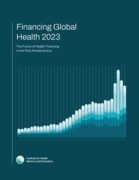
IHME’s Financing Global Health report provides an overview of health spending around the world, with a special focus on investments in health in low- and middle-income countries. The report examines how this funding for health is changing each year and forecasts how it may change in the future. Fi
...
Development finance is at a turning point, as the macroeconomic environment has changed profoundly and the financing gap for low- and middle-income countries has widened. The events that led to this new situation are the multiple crises that the global economy is facing, such as the climate crisis,
...

The Council was established in late 2020 by Dr Tedros Adhanom
Ghebreyesus (Director-General, WHO) to provide new economic thinking – reassessing how health and wellbeing are valued, produced and distributed across the economy. An all-female group of 10 distinguished economists and area experts, t
...

The COVID-19 pandemic exposed critical gaps in the global response to health crises, particularly in the financing of pandemic prevention, preparedness, response, recovery, and reconstruction. This chapter presents a comprehensive framework for pandemic financing that spans the entire pandemic cycle
...

This Guide is part of WHO’s overall programme of work on Political Economy of Health Financing Reform: Analysis and Strategy to Support UHC. The impetus for this work came from demands for more concrete evidence, recognition and integration of political economy issues within
health financing, and
...

The world is facing a sustainable development crisis. The 2024 Financing for Sustainable Development Report: Financing for Development at a Crossroads finds that financing challenges are at the heart of the crisis and imperil the SDGs and climate action. The window to rescue the SDGs and prevent a c
...
This publication uses graphics to explain the importance of development cooperation in general and for health in particular. Financial contributions in the context of development cooperation have proven to be indispensable, effective, affordable and responsible in recent decades.

This toolkit is a comprehensive set of practical tools and resources designed to support country-level risk communication and community engagement (RCCE) practitioners, decision-makers, and partners to plan and implement readiness and response activities for yellow fever outbreaks. The toolkit conta
...

This publication provides guidance for planning country-specific programming to achieve the triple elimination of mother-to-child (or vertical) transmission of HIV, syphilis and hepatitis B virus. It is based on the WHO Triple Elimination Framework, which promotes an integrated, person-centred appro
...

WHO guidelines for clinical management of arboviral diseases: dengue, chikungunya, Zika and yellow fever
recommended
The new WHO guidelines provide clinical management recommendations for four of the most widespread arboviruses affecting humans: dengue, chikungunya, Zika, and yellow fever.
An integrated approach is vital, as these four diseases often present with similar symptoms, especially in the early stages
...

Access to safe, effective and quality-assured health products and technologies is crucial for achieving universal health coverage and primary health care goals. The continued growth of the aging population; increasing burden of noncommunicable diseases; growing burden of mental health issues; climat
...

This guide aims to provide an overview of successful practice from the field for the disaster risk reduction/management practitioner interested in EWS. It presents guiding principles that will build a strong foundation for the design or strengthening of EWS at any level. It is not an operational, bu
...

Growing emergencies and displacements across the world demand increasingly complex interventions and responses. The World Health Organization (WHO) has developed Malaria control in emergencies: a field manual to provide technical guidance to help partners respond effectively to malaria in emergency
...
