
Filter
2165
Text search:
burden
of
disability
Featured
212
505
Language
2092
58
50
42
27
15
14
9
4
3
2
2
2
2
2
2
2
2
2
1
1
1
1
1
1
1
1
1
1
1
1
1
1
1
1
1
1
1
Document type
1185
470
221
115
111
21
20
11
6
2
1
1
1
Countries
154
101
59
55
45
44
43
43
35
33
32
31
29
28
28
27
26
25
23
22
22
21
21
16
14
14
14
13
12
11
11
11
10
10
8
8
8
7
7
7
7
7
6
6
5
5
5
5
5
5
5
4
4
4
4
4
4
4
4
4
3
3
3
3
3
3
3
2
2
2
2
2
2
2
2
2
2
2
2
1
1
1
1
1
1
1
1
1
1
1
1
1
1
1
1
1
1
1
1
1
1
1
1
1
1
1
Authors & Publishers
301
108
86
74
74
47
44
26
23
20
20
18
16
15
13
13
11
11
10
10
10
9
9
9
8
8
8
8
8
7
7
7
7
6
6
6
6
6
6
6
6
6
6
6
6
6
5
5
5
5
5
5
5
5
5
5
5
5
5
5
4
4
4
4
4
4
4
4
4
4
4
4
4
4
4
4
4
4
4
4
4
4
4
4
4
3
3
3
3
3
3
3
3
3
3
3
3
3
3
3
3
3
3
3
3
3
3
3
3
3
3
3
3
3
3
3
3
3
3
3
3
3
3
3
3
3
3
3
3
3
3
3
2
2
2
2
2
2
2
2
2
2
2
2
2
2
2
2
2
2
2
2
2
2
2
2
2
2
2
2
2
2
2
2
2
2
2
2
2
2
2
2
2
2
2
2
2
2
2
2
2
2
2
2
2
2
2
2
2
2
2
2
2
2
2
2
2
2
2
2
2
2
2
2
2
2
2
2
2
2
2
2
2
2
2
2
2
2
2
2
2
2
2
2
2
2
2
2
2
2
2
2
2
2
2
2
2
2
2
2
2
2
2
2
2
2
2
2
2
2
2
2
2
2
2
2
1
1
1
1
1
1
1
1
1
1
1
1
1
1
1
1
1
1
1
1
1
1
1
1
1
1
1
1
1
1
1
1
1
1
1
1
1
1
1
1
1
1
1
1
1
1
1
1
1
1
1
1
1
1
1
1
1
1
1
1
1
1
1
1
1
1
1
1
1
1
1
1
1
1
1
1
1
1
1
1
1
1
1
1
1
1
1
1
1
1
1
1
1
1
1
1
1
1
1
1
1
1
1
1
1
1
1
1
1
1
1
1
1
1
1
1
1
1
1
1
1
1
1
1
1
1
1
1
1
1
1
1
1
1
1
1
1
1
1
1
1
1
1
1
1
1
1
1
1
1
1
1
1
1
1
1
1
1
1
1
1
1
1
1
1
1
1
1
1
1
1
1
1
1
1
1
1
1
1
1
1
1
1
1
1
1
1
1
1
1
1
1
1
1
1
1
1
1
1
1
1
1
1
1
1
1
1
1
1
1
1
1
1
1
1
1
1
1
1
1
1
1
1
1
1
1
1
1
1
1
1
1
1
1
1
1
1
1
1
1
1
1
1
1
1
1
1
1
1
1
1
1
1
1
1
1
1
1
1
1
1
1
1
1
1
1
1
1
1
1
1
1
1
1
1
1
1
1
1
1
1
1
1
1
1
1
1
1
1
1
1
1
1
1
1
1
1
1
1
1
1
1
1
1
1
1
1
1
1
1
1
1
1
1
1
1
1
1
1
1
1
1
1
1
1
1
1
1
1
1
1
1
1
1
1
1
1
1
1
1
1
1
1
1
1
1
1
1
1
1
1
1
1
1
1
1
1
1
1
1
1
1
1
1
1
1
1
1
1
1
1
1
1
1
1
1
1
1
1
1
1
1
1
1
1
1
1
1
1
1
1
1
1
1
1
1
1
1
1
1
1
1
1
1
1
1
1
1
1
1
1
1
1
1
1
1
1
1
1
1
1
1
1
1
1
1
1
1
1
1
1
1
1
1
1
1
1
1
1
1
1
1
1
1
1
1
1
1
1
1
1
1
1
1
1
1
1
1
1
1
1
1
1
1
1
1
1
1
1
1
1
1
1
1
1
1
1
1
1
1
1
1
1
1
1
1
1
1
1
1
1
1
1
1
1
1
1
1
1
1
1
1
1
1
1
1
1
1
1
1
1
1
1
1
1
1
1
1
1
1
1
1
1
1
1
1
1
1
1
1
1
1
1
1
1
1
1
1
1
1
1
1
1
1
1
1
1
1
1
1
1
1
1
1
1
1
1
1
1
1
1
1
1
1
1
1
1
1
1
1
1
1
1
1
1
1
1
1
1
1
1
1
1
1
1
1
1
1
1
1
1
1
1
1
1
1
1
1
1
1
1
1
1
1
1
1
1
1
1
1
1
1
1
1
1
1
1
1
1
1
1
1
1
1
1
1
1
1
1
1
1
1
1
1
1
1
1
1
1
1
1
1
1
1
1
1
1
1
1
1
1
1
1
1
1
1
1
1
1
1
1
1
1
1
1
1
1
1
1
1
1
1
1
1
1
1
1
1
1
1
1
1
1
1
1
1
1
1
1
1
1
1
1
1
1
1
1
1
1
1
1
1
1
1
1
1
1
1
1
1
1
1
1
1
1
1
1
1
1
1
1
1
1
1
1
1
1
1
1
1
1
1
1
1
1
1
1
1
1
1
1
1
1
1
1
1
1
1
1
1
1
1
1
1
1
1
1
1
1
1
1
1
1
1
1
1
1
1
1
1
1
1
1
1
1
1
1
1
1
1
1
1
1
1
1
1
1
1
1
1
1
1
1
1
1
1
1
1
1
1
1
1
1
1
1
1
1
1
1
1
1
1
1
1
1
1
1
1
1
1
1
1
1
1
1
1
1
1
1
1
1
1
1
1
1
1
1
1
1
1
1
1
1
1
1
1
1
1
1
1
1
1
1
1
1
1
1
1
1
1
1
1
1
1
1
1
1
1
1
1
1
1
1
1
1
1
1
1
1
1
1
1
1
1
1
1
1
1
1
1
1
1
1
1
1
1
1
1
1
1
1
1
1
1
1
1
1
1
1
1
1
1
1
1
1
1
1
1
1
1
1
1
1
1
1
1
1
1
1
1
1
1
1
1
1
1
1
1
1
1
1
1
1
1
1
1
1
1
1
1
1
1
1
1
1
1
1
1
1
1
1
1
1
1
1
1
1
1
1
1
1
1
1
1
1
1
1
1
1
1
1
1
1
1
1
1
1
1
1
1
1
1
1
1
1
1
1
1
1
1
1
1
1
1
1
1
1
1
1
1
1
1
1
1
1
1
1
1
1
1
1
1
1
1
1
1
1
1
1
1
1
1
1
1
1
1
1
1
1
1
1
1
1
1
1
1
1
1
1
1
1
1
1
1
1
1
1
1
1
1
1
1
1
1
1
1
1
1
1
1
1
1
1
1
1
1
1
1
1
1
1
1
1
1
1
1
1
1
1
1
1
1
1
1
1
1
1
1
1
1
1
1
1
1
1
1
1
1
1
1
1
1
1
1
1
1
1
1
1
1
1
1
1
1
1
1
1
1
1
1
1
1
1
1
1
1
1
1
1
1
1
1
1
1
1
1
1
1
1
1
1
1
1
1
1
1
1
1
1
1
1
1
1
1
1
1
1
1
1
1
1
1
1
1
1
1
1
1
1
1
1
1
1
1
1
1
1
1
1
1
1
1
1
1
1
1
1
1
1
1
1
1
1
1
1
1
1
1
1
1
1
1
1
1
1
1
1
1
1
1
1
1
1
1
1
1
1
1
1
1
1
1
1
1
1
1
1
1
1
1
1
1
1
1
1
1
1
1
1
1
1
1
1
1
1
1
1
1
1
1
1
1
1
1
1
1
1
1
1
1
1
1
1
1
1
1
1
1
1
1
1
1
1
1
1
1
1
1
1
1
1
1
1
1
1
1
1
1
1
1
1
1
1
1
1
1
1
1
1
1
1
1
1
1
1
1
1
1
1
1
1
1
1
1
1
1
1
1
1
1
1
1
1
1
1
1
1
1
1
1
1
1
1
1
1
1
1
1
1
1
1
1
1
1
1
1
1
1
1
1
1
1
1
1
1
1
1
1
1
1
1
1
1
1
1
1
1
1
1
1
1
1
1
1
1
1
1
1
1
1
1
1
1
1
1
1
1
1
1
1
1
1
1
1
1
1
1
1
1
1
1
1
1
1
1
1
1
1
1
1
1
1
1
1
1
1
1
1
1
1
1
1
1
1
1
1
1
1
1
1
1
1
1
1
1
1
1
1
1
1
1
1
1
1
1
1
1
1
1
1
1
1
1
1
1
1
1
1
1
1
1
1
1
1
1
1
1
1
1
1
1
1
1
1
1
1
1
1
1
1
1
1
1
1
1
1
1
1
1
1
1
1
1
1
1
1
1
1
1
1
1
1
1
1
1
1
1
1
1
1
1
1
1
1
1
1
1
1
1
1
1
1
1
1
1
1
1
1
1
1
1
1
1
1
1
1
1
1
1
1
1
1
1
1
1
1
1
1
1
1
1
1
1
1
1
1
1
1
1
1
1
1
1
1
1
1
1
1
1
1
1
1
1
1
1
1
1
1
1
1
1
1
1
1
1
1
1
1
1
1
1
1
1
1
1
1
1
1
1
1
1
1
1
1
1
1
1
1
1
1
1
1
1
1
1
1
1
1
1
1
1
1
1
1
1
1
1
1
1
1
1
1
1
1
1
1
1
1
1
1
1
1
1
1
1
1
1
1
1
1
1
1
1
1
1
1
1
1
1
1
1
1
1
1
1
Publication Years
637
1328
195
5
Category
754
212
186
109
98
23
6
2
Toolboxes
348
213
149
105
91
86
85
62
58
44
43
31
30
25
19
14
12
12
10
8
7
7
3
3
1

States have committed and assumed obligations to address multiple and intersecting forms of discrimination against refugees, internally displaced persons, asylum seekers, returnees and stateless persons. The Global Compact on Refugees places ending
...
discrimination of any kind based on the grounds of race, colour, sex, language, religion, political or other opinion, national or social origin, property, birth, disability, age, or other status at the centre of action to prevent displacement and to ensure peaceful coexistence between refugee and host communities. Narratives about cultural diversity and inclusion are important, but there is also a pressing need in many societies for conversations and action to address racism, racial discrimination, xenophobia and related intolerance.
more
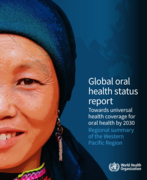
This regional summary draws on the WHO Global oral health status report (2), published in 2022, which provides a comprehensive overview of the global oral disease burden, the global health importanc
...
e of oral health and the impact of oral diseases over the life course.
The summary focuses on the oral health status in the Western Pacific Region and is split into four sections: (a) oral diseases are global and regional health problems; (b) the burden of the main oral diseases; (c) key challenges and opportunities towards oral health for all in the Western Pacific Region; and (d) road map towards UHC for oral health 2030. This regional summary is based on the 27 Member States in the Region.
more

Child and adolescent mental health policy in South Africa: history, current policy development and implementation, and policy analysis
S. Mokitimi; M. Schneider; P. J. de Vries
International Journal of Mental Health Systems; BioMed Central
(2018)
CC
Mental health problems represent the greatest global burden of disease among children and adolescents. There is, however, lack of policy developmen
...
t and implementation for child and adolescent mental health (CAMH), particularly in low- and middle-income countries (LMICs) where children and adolescents represent up to 50% of populations. South Africa, an upper-middle income country is often regarded as advanced in health and social policy-making and implementation in comparison to other LMICs. It is, however, not clear whether this is the case for CAMH.
more

As our world changes, so too does the burden of disease. Globalisation, evolving trade and consumption patterns, and increased access to life-saving medical care are just some
...
of the factors that have transformed the global health landscape.
more

The global prevalence, morbidity and mortality related to childhood asthma among children has increased significantly over the last 40 years. Although asthma is recognized as the most common chronic disease in children, issues of underdiagnosis and
...
undertreatment persist. There are substantial global variations in the prevalence of asthma symptoms in children, with up to 13-fold differences between countries. The rising number of hospital admissions for asthma may reflect an increase in asthma severity, poor disease management and/or the effect of poverty. The financial burden of asthma is relatively high within developed countries (those for which data is available) spending 1 to 2% of their healthcare budget on this condition. Established in 1989, the Global Initiative for Asthma (GINA) attempts to raise awareness about the increasing prevalence of asthma, improve management and reduce the burden of asthma worldwide. Despite global efforts, GINA has not achieved its goal, even among developed nations. There are multiple barriers to reducing the global burden of asthma, including limited access to care and/or medications, and lack of prioritization as a public healthcare priority. In addition, the diversity of healthcare systems worldwide and large differences in access to care require that asthma management guidelines be tailored to local needs.
more
A set of 5 training videos on child mental health created by the Ethiopian Federal Ministry of Health.
The research team produced five short training videos, modelling an HEW interviewing mothers
...
of children with autism or intellectual disability to demonstrate skills in early detection, supportive counselling and problem solving. The videos are produced in Amharic (the official Ethiopian language) – a version with English transcripts and subtitles is also available.
In addition, a ‘Mental Health Guide’ was produced that reinforces the training provided in the associated HEAT module, and extends training in childhood developmental and mental health problems.
more
Mental Health in the Asia-Pacific Region: An Overview
Alexander Lourdes Samy, Zahra Fazli Khalaf, & Wah-Yun Low
International Journal of Behavioral Science
(2015)
CC
Mental health problem is one of the growing major public health issues in the Asia Pacific region. It contributes to the high number of Disability
...
Adjusted Life Years (DALYs), morbidity and mortality in the region. It is expected that leading mental health problems will occur in the low-and middle-income countries (LMICs) and majority of the countries which comes under this category are in the Asia Pacific region. In addition, mental health problem hamper the achievement of Millennium Development Goals (MDGs), particularly MDG 1, MDG 4 and MDG 5. The most common mental health problems in the region are depression, anxiety, posttraumatic stress disorder, suicidal behaviour and substance abuse disorder. Several modifiable and non-modifiable risk factors were identified for the cause of these major mental health issues. Interventions, programmes and policies need to be designed in order to curb mental health problems at all levels.
more
This document outlines Rwanda's policy on non-communicable diseases. The overall goal of NCDs Policy is to alleviate the burden of NCDs and their r
...
isk factors and protect Rwandan population from premature morbidity and mortality related to NCDs. This policy was developed through a series of consultative meetings and workshops of NCDs' core team members of MOH and RBC, National Technical Working Group (TWG), all implementing and non implementing partners and other development partners. This policy was developed in line with the Millennium Development Goals (MDGs), Vision 2020, Rwanda Economic Development Poverty Reduction Strategy (EDPRS II) of 2013-18 and NCDs Global Action Plan 2013-2020 and national Health Policy. This policy focuses on of the following NCDs: Cardiovascular diseases, Chronic Pulmonary Diseases (CPD), Cancers, Diabetes, injuries and disabilities, oral, eye and kidney diseases.
more

The mandate of the National Tuberculosis Control Programme is to provide leadership and stewardship to accelerate intense and coordinated efforts to reduce the adult TB burden
...
of 290 per 100,000 population recently established in the 2013 National TB Prevalence Survey. Other key challenges are low TB case notification, unacceptably high TB death rates, low antiretroviral therapy (ART) coverage among TB/HIV patients and low drug-resistant notification and treatment.
more

The Kenya Health Policy 2014-2030 aims at attaining the highest possible standard of health in a manner responsive to the health needs of our population. One
...
of the major policy directions towards realizing the intentions of this policy is to halt and reverse the
rising burden of non-communicable diseases.
more

The attainment of Zambia’s goal of being a prosperous and middle-income country by 2030 as stipulated in its Vision 2030 is dependent on among others, a healthy and productive population. Therefor
...
e, the Government of the Republic of Zambia (GRZ) has prioritized health as a key socio-economic investment in the Seventh National Development Plan 2017-2021. The government is also committed to achieving the targets under the health goal number three and other health related targets under other goals of the 2030 Sustainable Development agenda. Despite progress which has been made in improving the health of Zambians, the country still faces a high burden of communicable diseases and a growing burden of non-communicable diseases. Structural and social deprivation including poverty, inequalities and marginalisation also remain major threats to health. In order to effectively address all the social determinants of health, all sectors should take into account health and well-being as a key element of policy development.
more

This Communication Guide for Malaria Control Interventions is aligned with Tanzania’s Malaria Strategic Plan (2015–2020) and provides comprehensive guidance on the implementation of Social and Behaviour Change Communication (SBCC) for the preven
...
tion, diagnosis and treatment of malaria. It is intended for all stakeholders and implementing partners, with the aim of ensuring harmonised messaging and coordinated communication efforts. The guide outlines strategies, key messages, communication channels and target audiences, with a focus on sustaining and improving malaria-related behaviours at the individual, family and community levels. It incorporates malaria stratification and supports the development of tailored SBCC interventions in different risk areas. Developed with contributions from the Ministry of Health and Social Welfare, the National Malaria Control Programme and various partner organisations, the guide aims to reduce the malaria burden and promote a malaria-free Tanzania. Supplemented by Standard Operating Procedures (SOPs), the guide serves as a practical tool for consistent and effective malaria communication nationwide.
more
Food environments are usually defined as the settings with all the different types of
food made available and accessible to people as they go about their daily lives.
That is, the range of food
...
in supermarkets, small retail outlets, wet markets, street
food stalls, coffee shops, tea houses, school canteens, restaurants, and all the other
venues where people buy and eat food. These environments differ enormously depending on the context. They can be extensive and diverse, with a seemingly endless array of options and price ranges, or they can be sparse, with very few options on offer. Because they determine what food consumers can access at a given moment in time, at what price, and with what degree of convenience, food environments both constrain and prompt the consumer’s choice.Food environments are influenced by the food systems which supply them, and vice versa. Food systems encompass the entire range of activities, people and institutions involved in the production, processing,
marketing, consumption and disposal of food (FAO, 2013). They include but are not limited to food supply chains. Making food systems nutrition-sensitive can contribute to addressing all forms of malnutrition, as food systems determine whether the food needed for good nutrition are available, affordable, acceptable and of adequate
quantity and quality. How closely food systems and food environments are interrelated and interdependent, and the degree to which external factors affect nutrition outcomes, varies from setting to setting.Many of today’s food systems
and food environments are challenged in supporting consumer choices that are
consistent with healthy diets and good nutrition. Consumers are not making choices based on nutrition and health, and poor diet is now the number one risk factor for death and disability worldwide (GBD, 2015). Food systems that do not enable healthy diets are increasingly recognized as an underlying cause of malnutrition (GLOPAN, 2016), and malnutrition, irrespective of form, has a huge cost. Economic costs associated with undernutrition are estimated at $1-2 trillion per year, about 2-3% of global GDP (FAO, 2013); the global economic cost of obesity and associated diet-related non-communicable diseases is estimated at $2 trillion per year, about 2.8% of global GDP (McKinsey, 2014). Influencing food environments for promoting healthy diets is an emerging strategy to address today’s nutrition challenges.
more

Since the discovery of insulin nearly 100 years ago, advances in diabetes treatments and therapies have transformed the lives of people
with diabetes (PwD), notably reducing the daily
...
burden of its management.
Newer technologies, including those driven by artificial intelligence, have the potential to further improve the quality of life of PwD and help
identify and diagnose people at risk of developing Type 2 diabetes and diabetes-related complications early. However, medical and technological advances alone are not enough to fix the diabetes challenge. It is also critical to acknowledge the complexity and the seriousness of diabetes, its impact on the quality of life and well-being of over 32 million PwD in the EU and the financial burden it represents for health systems and society at large.
more

Diabetes is a significant public health issue that affects approximately one in 10 adults globally, with type 2 diabetes accounting for 90–95% of cases. This chronic condition causes considerable morbidity and mortality and is growing in impact, w
...
ith cases projected to rise from 537 million in 2021 to 784 million by 2045.1 As cases rise, it is imperative to ensure the healthcare workforce is prepared to care for affected individuals. However, there is a growing global shortage of healthcare workers, which was estimated, pre pandemic, to reach 15 million by 2030.2 Therefore, all of the healthcare workforce will need to be utilised to their fullest potential in order to address the growing global burden of diabetes. Pharmacists will continue to be essential in this endeavour.
more
Burden of T. solium: Neurocysticercosis is a disease induced by T. solium larvae penetrating human tissues, especially the nervous system. Neurocysticercosis burdens economies, societies and individ
...
uals because of the impact of epilepsy on wages, health costs and social stigmatization of sufferers. Health systems are also burdened as treatments must be tailored to individual needs.
more

The document "Global Report on Diabetes" by the World Health Organization (WHO) provides an in-depth analysis of diabetes as a global health challenge. It covers the rising prevalence of the disease
...
, the associated risk factors, and the increasing burden on healthcare systems, particularly in low- and middle-income countries. The report discusses strategies for preventing Type 2 diabetes, managing diabetes effectively, and reducing complications through integrated healthcare approaches. It emphasizes the need for global action, national policies, and collaboration across sectors to address diabetes and improve health outcomes worldwide.
more
Worldwide, there are about 17 million deaths due to cardiovascular disease (CVD) each year and at least two or three times as many non-fatal events. Raised cholesterol greatly increases the risks of stroke and heart disease, causing a large
health
...
burden across the world. The World Health Organization has identified control of cholesterol as part of a Total Risk Approach to the prevention of CVD as a public health priority.
more

Access to safe, effective and quality-assured health products and technologies is crucial for achieving universal health coverage and primary health care goals. The continued growth of the aging population; increasing
...
burden of noncommunicable diseases; growing burden of mental health issues; climate change; shifting patterns of vector borne diseases, fungal disease and waterborne diseases; antimicrobial resistance; and new infectious hazards create an ongoing need for equitable access to safe, effective and quality-assured health products and technologies, and renewed investments in research and development for innovative health products and technologies.
The coronavirus pandemic exposed the inequalities in access to health products, highlighting the need for longer-term strategies to strengthen access to health products and technologies outside of and in emergency situations. While technological and scientific advances present an opportunity to increase access to health products and technologies, the risk of increasing inequality due to higher prices for new health products and technologies; the persisting problem of substandard and falsified medical products; a lack of skilled workforce in many low- and middle-income countries; and a lack of data for decisionmaking and for measuring progress present significant challenges.
more
Mortality and burden of disease attributable to selected major risks
