
Filter
491
Text search:
World
Health
Organization,
South-East
Asia
Featured
Recommendations
60
New Publications
133
Language
Document type
No document type
237
Studies & Reports
104
Guidelines
71
Manuals
31
Strategic & Response Plan
21
Training Material
8
Fact sheets
6
Resource Platforms
5
Situation Updates
4
Infographics
3
Online Courses
1
Countries / Regions
Global
41
South–East Asia Region
34
India
20
Myanmar / Burma
15
Asia
15
Bangladesh
10
Nepal
7
Western and Central Europe
6
Nigeria
5
Philippines
5
Kenya
5
Cambodia
5
Syria
4
Indonesia
4
Latin America and the Carribbean
4
Congo, Democratic Republic of
3
Tanzania
3
Thailand
3
South Africa
3
Middle East and North Africa
3
Western Pacific Region
3
Ethiopia
2
Uganda
2
China
2
Rwanda
2
Brazil
2
East and Southern Africa
2
West and Central Africa
2
Eastern Europe and Central Asia
2
Africa
2
Russia
2
Cameroon
1
Ghana
1
South Sudan
1
Egypt
1
Malaysia
1
Malawi
1
Sudan
1
Benin
1
Eswatini/ Swaziland
1
Serbia
1
Croatia
1
Sri Lanka
1
Yemen
1
Other region
1
Venezuela
1
Eastern Europe
1
Timor Leste/ East Timor
1
Tajikistan
1
Kazakhstan
1
Vietnam
1
Japan
1
Maldives
1
Authors & Publishers
Publication Years
Category
Countries
94
Clinical Guidelines
71
Women & Child Health
44
Public Health
43
Key Resources
32
Capacity Building
13
Pharmacy & Technologies
10
Toolboxes
HIV
46
Mental Health
36
NTDs
34
TB
32
Planetary Health
28
COVID-19
25
AMR
21
Caregiver
20
Rapid Response
16
Global Health Education
15
Disability
14
NCDs
10
Zika
9
Pharmacy
9
Conflict
7
Natural Hazards
7
Ebola & Marburg
6
Refugee
6
2.0 Rapid Response
6
Polio
5
Malaria
4
Specific Hazards
3
Cholera
2
Typhoon
1
Social Ethics
1
Health Financing Toolbox
1
Technical Series on Safer Primary Care
The World Health Organization’s comprehensive antenatal care (ANC) guideline WHO recommendations on antenatal care for a positive pregnancy exper
...
Localized cutaneous leishmaniasis and its evolving forms (diffuse cutaneous leishmaniasis, mucosal leishmaniasis and cutaneous leishmaniasis recidivans), together with the sequela of visceral leishmaniasis (post-kala-azar dermal leishmaniasis), account for about one million cases of dermal leishmani
...
2016 data
The report was coordinated by Anastasia Pharris and Annemarie Stengaard.
Report review and production support were provided by Andrew J. Amato-Gauci, Mike Catchpole, Denis Coulombier, Masoud Dara, Nedret Emiroglu, Rachel Katterl, Shahin Khasiyev, Valentina Lazdina, Teymur Noori, Marc
...

Water, sanitation and hygiene (WASH) are critical in the prevention and care for all of the 17 neglected tropical diseases (NTDs) scheduled for intensified control or elimination by 2020.
Provision of safe water, sanitation and hygiene is one of the five key interventions within the global NTD ...
Provision of safe water, sanitation and hygiene is one of the five key interventions within the global NTD ...
Effective malaria prevention is threatened by widespread and increasing vector insecticide resistance. Failure to mitigate this threat will likely result in an increased burden of disease, with significant cost implications. This new framework provides support for the development of a national insec
...

Based on the survey, five principles for deinstitutionalization were identified: community-based services must be in place; the health workforce must be committed to change; political support at the highest and broadest levels is crucial; timing is
...
Good primary care may lead to fewer avoidable hospitalizations, but unsafe primary care can cause avoidable illness and injury, leading to unnecessary hospitalizations, and in some cases, disability and even death.Implementing system changes and practices are crucial to improve safety at all levels
...
This publication is based on the list of clinical interventions selected from clinical guidelines on prevention, screening, diagnosis, treatment, palliative care, monitoring and end of life care. This publication addresses medical devices for six types of cancer: breast, cervical, colorectal, leukem
...
Manual for Early Implementation
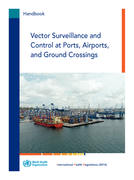
The purpose of this handbook is to provide guidance to Member States on the practical aspects of maintaining sanitary standards at international borders at ports, airports, and ground crossings (points of entry) as set out in the International Health
...
More than 700 000 people lose their life to suicide every year. The world is not on track to reach the 2030 suicide reduction targets. WHO advocates for countries to take action to prevent suicide, ideally through a comprehensive national suicide pr
...
The main message emerging from this new comprehensive global assessment is that premature death and disease can be prevented through healthier environments – and to a significant degree. Analysing the latest data on the environment-disease nexus and the devastating impact of environmental hazards
...
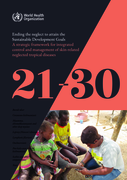
Skin-related neglected tropical diseases, or “skin NTDs”, are historically neglected because active case detection, individual case management, significant resources and intensive effort are required to control, eliminate and eradicate them. Integrated control and management of skin NTDs offers
...
