
Filter
2435
Text search:
Ministry
of
Public
Health
&
Sanitation
Featured
Recommendations
203
New Publications
903
Language
Document type
No document type
1427
Studies & Reports
396
Guidelines
222
Strategic & Response Plan
156
Manuals
120
Situation Updates
51
Training Material
31
Fact sheets
26
Resource Platforms
4
Brochures
1
Online Courses
1
Countries / Regions
Sierra Leone
165
Kenya
151
India
133
Global
95
Ethiopia
85
Liberia
83
Myanmar / Burma
83
Nepal
77
Uganda
62
Malawi
57
Zambia
53
Syria
53
Rwanda
53
Bangladesh
53
Nigeria
47
Ghana
44
Tanzania
43
Namibia
35
Congo, Democratic Republic of
34
South Sudan
31
Latin America and the Carribbean
31
Haiti
28
Mozambique
27
Indonesia
26
Guinea
24
Africa
23
Zimbabwe
21
Cambodia
20
Ukraine
20
Yemen
20
Lesotho
19
South Africa
18
Senegal
15
South–East Asia Region
14
Western and Central Europe
13
Botswana
12
Madagascar
12
Pakistan
11
Jordan
11
Sudan
11
Brazil
11
Venezuela
11
Burkina Faso
9
Philippines
9
Lebanon
9
Eswatini/ Swaziland
9
Middle East and North Africa
9
Cameroon
8
Iraq
8
Benin
8
Asia
8
Central African Republic
7
Colombia
7
East and Southern Africa
7
Western Pacific Region
7
Laos
7
Mali
6
Somalia
6
China
6
West and Central Africa
6
Côte d’Ivoire / Ivory Coast
5
Afghanistan
5
Burundi
5
Palestine
5
Vietnam
5
Germany
4
Peru
4
Greece
4
Timor Leste/ East Timor
4
Moldova
4
Togo
3
Gambia
3
Argentina
3
Eastern Europe
3
Tajikistan
3
Iran
3
Guinea-Bissau
2
Saudi Arabia
2
Niger
2
Turkey
2
Egypt
2
Thailand
2
North Macedonia
2
Croatia
2
Ecuador
2
El Salvador
2
Libya
2
Mexico
2
Sri Lanka
2
Chile
2
Eastern Europe and Central Asia
2
Paraguay
2
Fiji
2
Albania
2
Japan
2
Mauritius
2
Morocco
1
USA
1
Chad
1
Malaysia
1
Singapore
1
Papua New Guinea
1
Vanuatu
1
Dominican Republic
1
Serbia
1
Hungary
1
Honduras
1
Bolivia
1
Angola
1
Bhutan
1
Poland
1
Italy
1
Armenia
1
Southern Africa
1
Russia
1
Qatar
1
Romania
1
Uzbekistan
1
Kyrgyzstan
1
Georgia
1
Turkmenistan
1
Maldives
1
Tunisia
1
Portugal
1
Spain
1
Azerbaijan
1
Belarus
1
Bosnia and Herzegovina
1
Authors & Publishers
Publication Years
Category
Countries
1343
Key Resources
221
Public Health
111
Clinical Guidelines
75
Women & Child Health
72
Capacity Building
41
Pharmacy & Technologies
5
Annual Report MEDBOX
1
Toolboxes
COVID-19
175
Ebola & Marburg
136
Conflict
114
Disability
99
Planetary Health
94
AMR
87
NTDs
69
Natural Hazards
68
Rapid Response
66
Caregiver
52
HIV
49
Refugee
47
Mental Health
44
Global Health Education
44
2.0 Rapid Response
44
Cholera
40
TB
37
Health Financing Toolbox
17
Malaria
17
Pharmacy
16
Zika
12
NCDs
11
Polio
9
Specific Hazards
7
Typhoon
5
Social Ethics
3
South Sudan
1
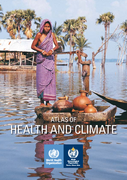
The Atlas of health and climate is a product of this unique collaboration between the meteorological and
...

UNHCR’s Public Health Strategy 2021-2025 is based on the lessons learnt, and builds on the achievements, of the Global Strategy for
...

Guidelines on sanitation and health
recommended
The new WHO Guidelines on Sanitation and Health summarize the evidence on the effectiveness of a range
...
The document is structured into five sections. The first presents the key experiences and challenges that justify a renewal of the EPHFs. The second section updates the groundwork for the exercise of
...

In many of Myanmar’s contested regions, healthcare services are provided through two parallel governance systems – by the government’s Ministry of
...
Save the Children in collaboration with the Bhubaneswar Municipal Corporation (BMC) and the state National Health Mission (NHM) undertook this study in the urban slums of Bhubaneswar city to generat
...
Health care-associated infections (HAI) are one of the most common adverse events in care delivery and a major public
...

A two-week mission was conducted by WASH and quality UHC technical experts from WHO headquarters and supported by the WHO Ethiopia Country Office (WASH and health systems teams) in July 2016, to understand how change in WASH services and quality imp
...
22 July 2022. This document summarizes current WHO guidance for public health surveillance of coronavirus disease 2019 (COVID-19) in humans caused
...
A focus on Cambodia and Ethiopia
o date, little evidence is available on how such integration occurs at country level. To address this knowledge gap, WHO has conducted several in-depth situational analysis in countries that are undertaking actions to improve WASH in
...

Despite its rich culture, great economic potential, high level of education and last but not least its sheer size – it is the largest state whose borders lie entirely within Europe and is 1.7 times the size
...

Safe water, sanitation and hygiene (collectively known as WASH) are crucial for human health and well-being. Yet, millions of people globally lack
...

PHSM are vital in reducing the risk and scale of infectious disease transmission and lowering hospitalization and deaths. Examples include contact tracing, quarantine and isolation, mask use, ventilation, school or workplace measures, mobility restr
...
Lessons from three African Countries.
Achieving Health for All, and in particular universal health coverage (UHC), will not happen without fully functioning basic water,
...
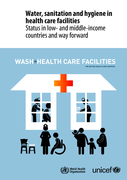
This report presents, for the first time, a global assessment of the extent to which health care facilities provide essential water, sanitation and
...
Peru celebrates 200 years of independence in 2021. Over this period of independent life, and despite the turbulent socio-political scenarios, from internal armed conflict to economic crisis to polit
...
This document highlights the key aspects of safe health-care waste management in order to guide policy-makers, practitioners and facility managers to improve such services in
...
This report contains the results of an in-depth Training Needs Assessment (TNA) of Health Workers in the 4 project counties
...

In 2015, 5.9 million children under age five died (1). The major causes of child deaths globally are pneumonia, prematurity, intrapartum-related complications, neonatal sepsis, congenital anomalies, diarrhoea, injuries and malaria (2). Most
...
DHS Working Paper No. 136
A total of 1,222 children age 6-23 months were included in this analysis. Twenty percent of children were stunted and 43% were moderately anemic. Regarding IYCF practice ...
A total of 1,222 children age 6-23 months were included in this analysis. Twenty percent of children were stunted and 43% were moderately anemic. Regarding IYCF practice ...
