
Filter
540
Text search:
Ministry
of
Health,
Cambodia
Featured
Recommendations
29
New Publications
164
Language
Document type
No document type
349
Studies & Reports
80
Guidelines
65
Manuals
18
Strategic & Response Plan
11
Fact sheets
6
Training Material
3
Resource Platforms
3
Situation Updates
2
Infographics
2
Videos
1
Countries / Regions
Cambodia
73
Global
33
Myanmar / Burma
32
Asia
21
Nepal
11
Kenya
11
Ethiopia
10
Vietnam
9
South–East Asia Region
8
Thailand
7
Laos
7
Senegal
6
Philippines
6
India
5
Tanzania
5
Indonesia
5
Bangladesh
5
Liberia
4
China
4
Rwanda
4
Sierra Leone
3
Nigeria
3
Cameroon
3
Ghana
3
Malawi
3
Namibia
3
Western Pacific Region
3
Latin America and the Carribbean
3
Western and Central Europe
3
Africa
3
Pakistan
2
Zambia
2
Malaysia
2
South Africa
2
Mozambique
2
Ukraine
2
Russia
2
Guinea
1
Burkina Faso
1
Congo, Democratic Republic of
1
USA
1
Uganda
1
South Sudan
1
Afghanistan
1
Chad
1
Singapore
1
Benin
1
Eswatini/ Swaziland
1
Ecuador
1
Lesotho
1
Mexico
1
Sri Lanka
1
Yemen
1
East and Southern Africa
1
West and Central Africa
1
Middle East and North Africa
1
Eastern Europe and Central Asia
1
Eastern Europe
1
Palestine
1
Kyrgyzstan
1
Turkmenistan
1
Authors & Publishers
Publication Years
Category
Countries
167
Clinical Guidelines
36
Public Health
33
Key Resources
33
Women & Child Health
27
Capacity Building
15
Pharmacy & Technologies
8
Toolboxes
HIV
80
Disability
46
TB
44
Mental Health
31
Planetary Health
20
NTDs
20
AMR
14
Malaria
14
COVID-19
12
Pharmacy
12
Global Health Education
10
Caregiver
10
Rapid Response
6
Health Financing Toolbox
6
NCDs
6
Conflict
4
Natural Hazards
4
Ebola & Marburg
3
Refugee
3
2.0 Rapid Response
3
Specific Hazards
2
Polio
1
Guideline
Iron deficiency is one of the most common forms of nutritional deficiencies, particularly among vulnerable groups such as women, children and low-income populations. Iron deficiency o ...
Iron deficiency is one of the most common forms of nutritional deficiencies, particularly among vulnerable groups such as women, children and low-income populations. Iron deficiency o ...
This paper has been prepared to inform discussion at the conference “Beating the DRUM - Domestic Resource Use and Mobilization for accelerating progress towards SDG3,”. Many countries face critical shortfalls in domestic resource use and mobilization (DRUM) for
...

The World Health Organization (WHO) and the global community of countries, partners, donors, technical experts, scientists and field implementation teams continue to work towards the ultimate goal
...
The 2023 Country Presence Report provides an overview of what WHO does in countries to advance towards the SDGs and implement GPW13, how we do it, with whom we work, and what is needed to overcome challenges for achieving results and impact in count
...
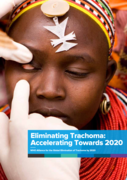
Trachoma is the world’s leading infectious cause of blindness. It is one of 18 neglected
tropical diseases (NTDs) that affect over one billion of
...

Addressing comorbidities and risk factors for tuberculosis (TB) is a crucial component of the World Health Organization (WHO)’s End TB Strategy. This WHO operational handbook on tuberculosis. Modu
...
This manual provides guidance for policymakers on the issue of prehospital trauma care systems. The main areas covered include the organisation of the prehospital trauma care system, capacity develo
...
A framework for action provides a guide for those involved in the development of the multisectoral action plan. It starts with a wide-ranging vision and, through a series of increasingly specific in
...
The Strategic Framework for Emergency Preparedness is a unifying framework which identifies the principles and elements of effective country health emergency preparedness. It adopts the major lesson
...

This analytical report reviews and discusses the potential role and influence of political commitment in implementing endorsements and conducting policy in the field of tuberculosis (TB) prevention
...
Policy Note #4: Myanmar Health Systems in Transition Policy Notes Series
Protecting people from financial hardship when they fall ill is one of the two key elements ...
Protecting people from financial hardship when they fall ill is one of the two key elements ...
Addressing comorbidities and risk factors for tuberculosis (TB) is a crucial component of the World Health Organization (WHO)’s End TB Strategy. This WHO operational handbook on tuberculosis. Mo
...
In 2017, 3.6 million of the estimated 10 million people with TB worldwide were “missed” by national TB programmes (NTPs). Two thirds of them are thought to access TB treatment
...

Offering additional pre-exposure prophylaxis (PrEP) choices has the potential to increase uptake and effective use of PrEP, and of HIV prevention overall, as it allows people to choose a method that
...

This brief report summarizes recent information on HIV drug resistance (HIVDR) in the era of integrase-strand transfer inhibitors (INSTI) for HIV prevention and treatment.
Recent efforts to fight malaria in the Greater Mekong Subregion (GMS) have yielded impressive results. According to the latest WHO estimates, the six GMS countries cut their malaria case incidence by an estimated 54% between 2012 and 2015. Malaria death rates fell by 84% over the same period.
I ...
I ...

An Indicator-based Approach - This manual presents an indicator-based approach for rapidly assessing pharmaceutical management systems and programs. The manual contains a set of 46 indicators of per
...
