
Filter
475
Text search:
Ministry
of
Health,
Botswana
Featured
Recommendations
26
New Publications
84
Language
Document type
No document type
294
Studies & Reports
93
Guidelines
40
Manuals
18
Strategic & Response Plan
13
Situation Updates
5
Training Material
4
Fact sheets
4
Infographics
3
Resource Platforms
1
Countries / Regions
Botswana
64
Namibia
26
Africa
24
Global
24
Zambia
21
Zimbabwe
16
Malawi
16
Lesotho
14
Kenya
12
South Africa
12
East and Southern Africa
12
Senegal
8
Eswatini/ Swaziland
8
Nigeria
7
Ethiopia
7
West and Central Africa
7
Rwanda
6
Guinea
4
Sierra Leone
4
Liberia
4
Uganda
4
Tanzania
4
Mozambique
4
Congo, Democratic Republic of
3
Ghana
3
Chad
3
Burkina Faso
2
Mali
2
Cameroon
2
Nepal
2
Ukraine
2
Angola
2
Middle East and North Africa
2
South–East Asia Region
2
Latin America and the Carribbean
2
Southern Africa
2
Russia
2
Côte d’Ivoire / Ivory Coast
1
Togo
1
Philippines
1
India
1
Somalia
1
Pakistan
1
South Sudan
1
Iraq
1
Afghanistan
1
Egypt
1
Indonesia
1
Papua New Guinea
1
Benin
1
Vanuatu
1
Ecuador
1
Madagascar
1
Eastern Europe and Central Asia
1
Western and Central Europe
1
Asia
1
Solomon Islands
1
Venezuela
1
Eastern Europe
1
North Korea
1
Iran
1
Mauritius
1
Authors & Publishers
Publication Years
Category
Countries
201
Public Health
28
Clinical Guidelines
25
Women & Child Health
20
Key Resources
11
Pharmacy & Technologies
6
Capacity Building
5
Toolboxes
HIV
112
TB
30
Disability
27
COVID-19
23
Planetary Health
13
Mental Health
10
Health Financing Toolbox
10
Caregiver
9
Global Health Education
7
Pharmacy
6
Malaria
6
Ebola & Marburg
5
Natural Hazards
5
Refugee
5
NTDs
4
2.0 Rapid Response
4
NCDs
3
AMR
2
Cholera
1
Conflict
1
Rapid Response
1
Specific Hazards
1
Social Ethics
1
There is a substantial and ever-increasing unmet need for rehabilitation worldwide, which is particularly profound in low- and middle
-income countries. The availability of accessible and affordable rehabilitation is necessary for many people with
...

Promoting health and preventing disease is a critical component of the effort required to achieve Universal Health Coverage (UHC). to date, efforts
...

While there has been real progress in addressing the burden of disease in the WHO African region, the COVID-19 pandemic has highlighted the link between health, economics and security, as the region
...

Offering additional pre-exposure prophylaxis (PrEP) choices has the potential to increase uptake and effective use of PrEP, and of HIV prevention overall, as it allows people to choose a method that
...
This brief report summarizes recent information on HIV drug resistance (HIVDR) in the era of integrase-strand transfer inhibitors (INSTI) for HIV prevention and treatment.

These guidelines update earlier WHO recommendations to maximize the HIV prevention impact of safe VMMC services and aim to guide the transition to the sustained provision of interventions with a foc
...
This report presents country, regional and global estimates of low birth weight for 2000, together with a detailed description of the methods used in calculating the estimates. Some limited data on
...
This brief update on tuberculosis (TB) in the African region covers the state of TB in the WHO African region, strategic priorities and targets and the impact of COVID-19 on essential services. This
...
This document is a guide defining requirements for quality and safety for malaria rapid diagnostic testing services to safeguard the quality of the results, the safety of the operators and patients
...

World malaria report 2024
recommended
New data from the WHO reveal that an estimated 2.2 billion cases of malaria and 12.7 million deaths have been averted since 2000, but the disease remains a serious global health threat, particularly
...
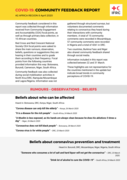
Community feedback considered in this report was collected through information received from Community Engagement and Accountability (CEA) focal points,as well as through primary data collection,in 10 African countries.Red Cross and Red Crescent National Society CEA focal points were asked to share
...

Adolescents and young adults aged 10-24 remain underserved in the global response against HIV. Combination prevention, treatment and care programmes use a mix of evidence-based interventions to meet the current HIV prevention needs
...
WHO published the first COVID-19 Strategic Response and Preparedness Plan (SPRP) on 3 February, 2020. This report highlights the main points of progress that were made up to 30 June 2020 under the three objectives outlined in the SPRP: scaling up in
...

This document aims to assist countries to take the first step towards better considering gender and equity issues in their efforts to tackle antimicrobial resistance (AMR), to inform the implementation of strategies in national action plans and cont
...
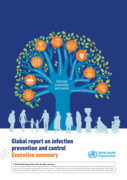
Health care-associated infections (HAIs) affect patients and health systems every day, causing immense suffering, driving higher health-care costs
...
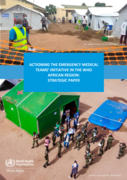
Emergency medical teams (EMT) are first response health care providers – doctors, nurses, paramedics, and others – during outbreaks and emergencies or disasters, working with governments, charities such as nongovernmental organizations (NGOs), a
...
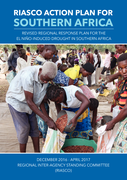
El Niño conditions persisting during the 2015/16 planting season have caused the worst drought in 35 years in Southern Africa, resulting in a second consecutive failed harvest. This has created severe food shortages and compounded existing vulnerabilities. Since July 2016, Namibia and
...

To meet our Strategy objectives and get within reach
of the 2030 SDG 3 target related to the three diseases,
the Global Fund needs to raise US$18 billion for the
Eighth Replenishment. That sum is essential to drive the
required pace
...
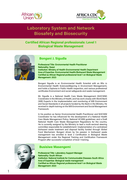
The Africa Centres for Disease Control and Prevention (Africa CDC) Biosafety and Biosecurity Initiative was launched by the Africa CDC in April 2019 with the aim of strengthening the African Union (AU) Member States’ biosafety and biosecurity syst
...
