
Filter
1965
Text search:
Maternal
Death
Review
Featured
203
634
Language
1911
47
41
33
23
16
6
2
2
2
2
2
1
1
1
1
1
1
1
1
1
1
1
Document type
1160
284
271
97
86
30
17
10
4
3
2
1
Countries
94
71
68
68
57
55
54
54
51
48
46
44
42
37
37
34
32
21
20
19
19
18
17
16
15
15
13
12
12
12
12
11
10
9
9
9
7
7
7
7
7
6
6
6
6
5
5
4
4
4
4
4
3
3
3
3
3
3
3
3
2
2
2
2
2
2
2
1
1
1
1
1
1
1
1
1
1
1
1
1
1
1
1
1
1
1
1
1
1
1
1
1
1
1
Authors & Publishers
283
85
57
53
48
43
33
29
22
20
18
16
16
15
11
10
10
10
10
10
9
9
8
8
8
8
8
8
8
7
7
7
7
7
7
6
6
6
6
6
6
6
6
5
5
5
5
5
5
5
5
4
4
4
4
4
4
4
4
4
4
4
4
4
4
4
4
4
4
4
4
3
3
3
3
3
3
3
3
3
3
3
3
3
3
3
3
3
3
3
3
3
3
3
3
3
3
3
3
3
3
3
3
3
3
3
3
3
3
3
3
3
3
3
3
3
3
2
2
2
2
2
2
2
2
2
2
2
2
2
2
2
2
2
2
2
2
2
2
2
2
2
2
2
2
2
2
2
2
2
2
2
2
2
2
2
2
2
2
2
2
2
2
2
2
2
2
2
2
2
2
2
2
2
2
2
2
2
2
2
2
2
2
2
2
2
2
2
2
2
2
2
2
2
2
2
2
2
2
2
2
2
2
2
2
2
2
2
2
2
2
2
2
2
2
2
2
2
2
2
2
2
2
2
2
2
2
2
2
2
2
2
2
2
2
2
2
2
2
2
2
2
2
2
2
2
2
2
1
1
1
1
1
1
1
1
1
1
1
1
1
1
1
1
1
1
1
1
1
1
1
1
1
1
1
1
1
1
1
1
1
1
1
1
1
1
1
1
1
1
1
1
1
1
1
1
1
1
1
1
1
1
1
1
1
1
1
1
1
1
1
1
1
1
1
1
1
1
1
1
1
1
1
1
1
1
1
1
1
1
1
1
1
1
1
1
1
1
1
1
1
1
1
1
1
1
1
1
1
1
1
1
1
1
1
1
1
1
1
1
1
1
1
1
1
1
1
1
1
1
1
1
1
1
1
1
1
1
1
1
1
1
1
1
1
1
1
1
1
1
1
1
1
1
1
1
1
1
1
1
1
1
1
1
1
1
1
1
1
1
1
1
1
1
1
1
1
1
1
1
1
1
1
1
1
1
1
1
1
1
1
1
1
1
1
1
1
1
1
1
1
1
1
1
1
1
1
1
1
1
1
1
1
1
1
1
1
1
1
1
1
1
1
1
1
1
1
1
1
1
1
1
1
1
1
1
1
1
1
1
1
1
1
1
1
1
1
1
1
1
1
1
1
1
1
1
1
1
1
1
1
1
1
1
1
1
1
1
1
1
1
1
1
1
1
1
1
1
1
1
1
1
1
1
1
1
1
1
1
1
1
1
1
1
1
1
1
1
1
1
1
1
1
1
1
1
1
1
1
1
1
1
1
1
1
1
1
1
1
1
1
1
1
1
1
1
1
1
1
1
1
1
1
1
1
1
1
1
1
1
1
1
1
1
1
1
1
1
1
1
1
1
1
1
1
1
1
1
1
1
1
1
1
1
1
1
1
1
1
1
1
1
1
1
1
1
1
1
1
1
1
1
1
1
1
1
1
1
1
1
1
1
1
1
1
1
1
1
1
1
1
1
1
1
1
1
1
1
1
1
1
1
1
1
1
1
1
1
1
1
1
1
1
1
1
1
1
1
1
1
1
1
1
1
1
1
1
1
1
1
1
1
1
1
1
1
1
1
1
1
1
1
1
1
1
1
1
1
1
1
1
1
1
1
1
1
1
1
1
1
1
1
1
1
1
1
1
1
1
1
1
1
1
1
1
1
1
1
1
1
1
1
1
1
1
1
1
1
1
1
1
1
1
1
1
1
1
1
1
1
1
1
1
1
1
1
1
1
1
1
1
1
1
1
1
1
1
1
1
1
1
1
1
1
1
1
1
1
1
1
1
1
1
1
1
1
1
1
1
1
1
1
1
1
1
1
1
1
1
1
1
1
1
1
1
1
1
1
1
1
1
1
1
1
1
1
1
1
1
1
1
1
1
1
1
1
1
1
1
1
1
1
1
1
1
1
1
1
1
1
1
1
1
1
1
1
1
1
1
1
1
1
1
1
1
1
1
1
1
1
1
1
1
1
1
1
1
1
1
1
1
1
1
1
1
1
1
1
1
1
1
1
1
1
1
1
1
1
1
1
1
1
1
1
1
1
1
1
1
1
1
1
1
1
1
1
1
1
1
1
1
1
1
1
1
1
1
1
1
1
1
1
1
1
1
1
1
1
1
1
1
1
1
1
1
1
1
1
1
1
1
1
1
1
1
1
1
1
1
1
1
1
1
1
1
1
1
1
1
1
1
1
1
1
1
1
1
1
1
1
1
1
1
1
1
1
1
1
1
1
1
1
1
1
1
1
1
1
1
1
1
1
1
1
1
1
1
1
1
1
1
1
1
1
1
1
1
1
1
1
1
1
1
1
1
1
1
1
1
1
1
1
1
1
1
1
1
1
1
1
1
1
1
1
1
1
1
1
1
1
1
1
1
1
1
1
1
1
1
1
1
1
1
1
1
1
1
1
1
1
1
1
1
1
1
1
1
1
1
1
1
1
1
1
1
1
1
1
1
1
1
1
1
1
1
1
1
1
1
1
1
1
1
1
1
1
1
1
1
1
1
1
1
1
1
1
1
1
1
1
1
1
1
1
1
1
1
1
1
1
1
1
1
1
1
1
1
1
1
1
1
1
1
1
1
1
1
1
1
1
1
1
1
1
1
1
1
1
1
1
1
1
1
1
1
1
1
1
1
1
1
1
1
1
1
1
1
1
1
1
1
1
1
1
1
1
1
1
1
1
1
1
1
1
1
1
1
1
1
1
1
1
1
1
1
1
1
1
1
1
1
1
1
1
1
1
1
1
1
1
1
1
1
1
1
1
1
1
1
1
1
1
1
1
1
1
1
1
1
1
1
1
1
1
1
1
1
1
1
1
1
1
1
1
1
1
1
1
1
1
1
1
1
1
1
1
1
1
1
1
1
1
1
1
1
1
1
1
1
1
1
1
1
1
1
1
1
1
1
1
1
1
1
1
1
1
1
1
1
1
1
1
1
1
1
1
1
1
1
1
1
1
1
1
1
1
1
1
1
1
1
1
1
1
1
1
1
1
1
1
1
1
1
1
1
1
1
1
1
1
1
1
1
1
1
1
1
1
1
1
1
1
1
1
1
1
1
1
1
1
1
1
1
1
1
1
1
1
1
1
1
1
1
1
1
1
1
1
1
1
1
1
1
1
1
1
1
1
1
1
1
1
1
1
1
1
1
1
1
1
1
1
1
1
1
1
1
1
1
1
1
1
1
1
1
1
1
1
1
1
1
1
1
1
1
1
1
1
1
1
1
1
1
1
1
1
1
1
1
1
1
1
1
1
1
1
1
1
1
1
1
1
1
1
1
1
1
1
1
1
1
1
1
1
1
1
1
1
1
1
1
1
1
1
1
1
1
1
1
1
1
1
1
1
1
1
1
1
1
1
1
1
1
1
1
1
1
1
1
1
1
1
1
1
1
1
1
1
1
1
1
1
1
1
1
1
1
1
1
1
1
1
1
1
1
1
1
1
1
1
1
1
1
1
1
1
1
1
1
1
1
1
1
1
1
1
1
1
1
1
1
1
1
1
1
1
1
1
1
1
1
1
1
1
1
1
1
1
1
1
1
1
1
1
1
1
1
1
1
1
1
1
1
1
1
1
1
1
1
1
Publication Years
514
1275
174
2
Category
937
255
197
113
86
54
10
Toolboxes
119
112
77
74
67
54
47
40
37
33
28
26
25
25
21
17
16
15
11
10
9
8
6
5
The primary audience for these recommendations includes health professionals who are responsible for developing national and local health-care guidelines and protocols and health workers involved in the provision of care to women and their newborns during pregnancy, labour and childbirth; this inclu
...
des midwives, nurses, general medical practitioners and obstetricians. The primary audience also includes managers of maternal and child health programmes, and relevant staff in ministries of health and educational and training institutions, in all settings.
more
The primary audience for these recommendations includes health professionals who are responsible for developing national and local health-care guidelines and protocols and health workers involved in the provision of care to women and their newborns during pregnancy, labour and childbirth; this inclu
...
des midwives, nurses, general medical practitioners and obstetricians. The primary audience also includes managers of maternal and child health programmes, and relevant staff in ministries of health and educational and training institutions, in all settings.
more

Globally, over two million women live with obstetric fistula with the majority of the cases
being from Africa. In low-resource settings such as Zambia, obstetric fistula (OF) is a visible indicator of
gaps in maternal health care resulting in fa
...
ilure to provide adequate, accessible and quality maternal health
care, including family planning, skilled birth attendance, basic and emergency obstetric and neonatal care,
and affordable treatment of fistula. OF is preventable and treatable, and no woman in Zambia should continue to endure the condition. It is therefore necessary that Zambia intensifies national scale up of OF management centers including
community based interventions, train more surgeons and other health workers to provide quality and
affordable care closer to the women who are silently suffering from obstetric fistula.
more

WHO today released its first roadmap to tackle postpartum haemorrhage (PPH) – defined as excessive bleeding after childbirth - which affects millions of women annually and is the world’s leading cause of maternal deaths.
Despite being prevent
...
able and treatable, PPH results in around 70 000 deaths every year. For those who survive, it can cause disabilities and psychological trauma that last for years.
“Severe bleeding in childbirth is one of the most common causes of maternal mortality, yet it is highly preventable and treatable,” said Dr Tedros Adhanom Ghebreyesus, WHO Director-General. “This new roadmap charts a path forward to a world in which more women have a safe birth and a healthy future with their families.”
The Roadmap aims to help countries address stark differences in survival outcomes from PPH, which reflect major inequities in access to essential health services. Over 85% of deaths from PPH happen in sub-Saharan Africa and South Asia. Risk factors include anaemia, placental abnormalities, and other complications in pregnancy such as infections and pre-eclampsia.
Many risk factors can be managed if there is quality antenatal care, including access to ultrasound, alongside effective monitoring in the hours after birth. If bleeding starts, it also needs to be detected and treated extremely quickly. Too often, however, health facilities lack necessary healthcare workers or resources, including lifesaving commodities such as oxytocin, tranexamic acid or blood for transfusions.
“Addressing postpartum haemorrhage needs a multipronged approach focusing on both prevention and response - preventing risk factors and providing immediate access to treatments when needed - alongside broader efforts to strengthen women’s rights,” said Dr Pascale Allotey, WHO Director for Sexual and Reproductive Health and HRP, the UN’s special programme on research development and training in human reproduction. “Every woman, no matter where she lives, should have access to timely, high quality maternity care, with trained health workers, essential equipment and shelves stocked with appropriate and effective commodities – this is crucial for treating postpartum bleeding and reducing maternal deaths.”
more
Operational Guidelines on Quality Assurance in Public Health Facilities
Ministry of Health & Family Welfare Government of India
Ministry of Health & Family Welfare Government of India
(2013)
C1
For the Assesor's Guide Vol 1 and 2 see: nrhm.gov.in/images/pdf/programmes/maternal-health/guidelines/Operational_Guidelines_for_Quality_Assurance_in_Public_Health_Facilities_and_checklists-3_books.zip

Reference Guide Version 2. Revised. The Nutrition Program Design Assistant is a tool to help organizations design the nutrition component of their community-based maternal and child health, food security, or other development program. The tool focus
...
es on prevention and also provides guidance on recuperative approaches that are needed when there is a high prevalence of acute malnutrition
more
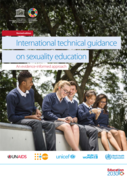
International technical guidance on sexuality education. An evidence-informed approach.
UNESCO
(2018)
CC
This revised and fully updated edition of the
International technical guidance on sexuality education
benefits from a new review of the current evidence, and reaffirms the position of sexuality education within a framework of human rights and gen
...
der equality. It promotes structured learning about sex and relationships in a manner that is positive, affirming, and centered on the best interest of the young person. By outlining the essential components of effective sexuality education programmes, the Guidance enables national authorities to design comprehensive curricula that will have a positive impact on young people’s health and well-being.
more

Prevention, early identification, assessment and intervention in low- and middle-income countries | A Review | CHILD AND ADOLESCENT HEALTH AND DEVELOPMENT
These standards for the quality of paediatric care in health facilities form part of normative
guidance for improving the quality of maternal, newborn, child and adolescent health care.
In view of the importance of the continuum of both the life-c
...
ourse and service delivery (1),
these standards build on the Standards for improving the quality of maternal and newborn
care in health facilities (2), during labour, childbirth and the early postnatal period.
more
The recommendations in this guideline are intended to inform the development of relevant national- and local-level health policies and clinical protocols. Therefore, the target audience includes national and local public health policy-makers, implementers and managers of
...
maternal and child health programmes, health care facility managers, nongovernmental organizations (NGOs), professional societies involved in the planning and management of maternal and child health services, health care professionals (including nurses, midwives, general medical practitioners and obstetricians) and academic staff involved in training health care professionals.
more
Improving the quality of care for mothers and newborns in health facilities: learner's manual. Version 02.
World Health Organization (WHO), Regional Office for South-East Asia
WHOCC AIIMS, UNICEF, UNFPA and USAID
(2017)
C_WHO
A training package for building capacity of healthcare teams in health facilities for continous quality improvement of maternal and newborn healthcare. The focus is on the care of mothers and newborns at the time of child birth since a large proport
...
ion of maternal deaths, newborn deaths and stillbirths happen around that time.
The 4-Step POCQI (Point of care Quality Improvement) package includes Coaching manual and Learner manual that present a demystified and simple model of quality improvement at the level of health facilities using local data to identify quality gaps, analyse underlying causes and improve health care practices in their own specific context without much additional resources.
more

Digital Comprehensive Summaries of Uppsala Dissertations from the Faculty of Medicine | The aim of this study was to explore the risk factors for stillbirth and neonatal death and change in perinatal outcomes after the introduction of helping Babies
...
Breathe Quality Improvement Cycle in Nepal.
more
Building on Nigeria’s Call to Action to Save Newborn Lives, the Federal Ministry of Health (FMoH) has developed the National Strategy and Implementation Plan for Scale-up of Chlorhexidine. The Ministry incorporated existing maternal, newborn, and
...
child health plans with additional comprehensive strategic planning and consultation to develop a comprehensive, five-year costed scale-up plan. The strategy and implementation plan is intended to guide programming, resource allocation, and commitments to achieve the national objective of Chlorhexidine uptake of 52% after the fifth year of national scaleup.
more

Cardiovascular diseases, principally ischemic heart disease (IHD), are the most important cause of death and disability in the majority of low- and lower-middle-income countries (LLMICs). In these countries, IHD mortality rates are significantly gre
...
ater in individuals of a low socioeconomic status (SES).
Three important focus areas for decreasing IHD mortality among those of low SES in LLMICs are (1) acute coronary care; (2) cardiac rehabilitation and secondary prevention; and (3) primary prevention. Greater mortality in low SES patients with acute coronary syndrome is due to lack of awareness of symptoms in patients and primary care physicians, delay in reaching healthcare facilities, non-availability of thrombolysis and coronary revascularization, and the non-affordability of expensive medicines (statins, dual anti-platelets, renin-angiotensin system blockers). Facilities for rapid diagnosis and accessible and affordable long-term care at secondary and tertiary care hospitals for IHD care are needed. A strong focus on the social determinants of health (low education, poverty, working and living conditions), greater healthcare financing, and efficient primary care is required. The quality of primary prevention needs to be improved with initiatives to eliminate tobacco and trans-fats and to reduce the consumption of alcohol, refined carbohydrates, and salt along with the promotion of healthy foods and physical activity. Efficient primary care with a focus on management of blood pressure, lipids and diabetes is needed. Task sharing with community health workers, electronic decision support systems, and use of fixed-dose combinations of blood pressure-lowering drugs and statins can substantially reduce risk factors and potentially lead to large reductions in IHD. Finally, training of physicians, nurses, and health workers in IHD prevention should be strengthened.
more
Haiti, one of the poorest countries in the world, was devastated by an earthquake in 2010. The disaster uncovered the realities of a non-existent mental health care system with only ten psychiatrists nationwide. Attempts were made to assess the increased prevalence of mental illness, likely due to t
...
he trauma to which many were exposed. Several interventions were carried out with aims to integrate mental health into primary health care services. The interplay between socio-cultural beliefs and health (both mental and physical) in Haiti has been widely commented upon by both foreign aid and local caregivers. Observations frequently highlight barriers to the willingness of patients to seek care and to their acceptance of biomedicine over traditional Vodou beliefs. The perception of Haitian beliefs as barriers to the availability and acceptance of mental health care has intensified the difficulty in providing effective recommendations and interventions both before and after the earthquake. Argued in this review is the importance of considering the interactions between socio-cultural beliefs and mental health when developing models for the prevention, screening, classification and management of mental illness in Haiti. These interactions, especially relevant in mental health care and post-disaster contexts, need to be acknowledged in any healthcare setting. The successes and failures of Haiti’s situation provide an example for global consideration.
more

COVID-19 Vaccines: 1 Safety Surveillance 2 Manual
While there is no indication that pregnant women have an increased susceptibility to infection with SARS-CoV-2, there is evidence that pregnancy may increase the risk of severe illness and mortality from COVID-19 disease in comparison with non-pregn
...
ant women of reproductive age. As seen with non-pregnant women, a high proportion of pregnant women have asymptomatic SARS-CoV-2 infection and severe disease is associated with recognized medical (e.g., high body-mass index (BMI), diabetes, pre-existing pulmonary or cardiac conditions) and social (e.g., social deprivation, ethnicity) risk factors. Pregnant women with symptomatic COVID-19 appear to have an increased risk of intensive care unit admission, mechanical ventilation and death in comparison with non-pregnant women of reproductive age, although the absolute risks remain low. COVID-19 may increase the risk of preterm birth, compared with pregnant women without COVID-19, although the evidence is inconclusive.
more
First Global Patient Safety Challenge Clean Care is Safer Care
The WHO Guidelines on Hand Hygiene in Health Care provide health-care workers (HCWs), hospital administrators and health authorities with a thorough review of evidence on hand hygiene i
...
n health care and specific recommendations to improve practices and reduce transmission of pathogenic microorganisms to patients and HCWs. The present Guidelines are intended to be implemented in any situation in which health care is delivered either to a patient or to a specific group in a population. Therefore, this concept applies to all settings where health care is permanently or occasionally performed, such as home care by birth attendants.
more
The 7th edition of the Orange Guide provides practical guidance to health workers on the front line of TB control. It includes sections on HIV, MDR-TB and a review of the recommended treatment regimens
Guideline: Nutritional care and support for patients with tuberculosis
Maria del Carmen Casanovas, Knut Lönnroth, Luz Maria De-Regil et al
World Health Organization
(2013)
C_WHO
Undernutrition increases the risk of tuberculosis (TB) and in turn TB can lead to malnutrition. Undernutrition is therefore highly prevalent among people with TB. It has been demonstrated that undernutrition is a risk factor for progression from TB infection to active TB disease and that undernutrit
...
ion at the time of diagnosis of active TB is a predictor of increased risk of death and TB relapse. However, the evidence concerning the effect of nutritional supplementation on TB prevention and health outcomes among people with TB had not previously been systematically reviewed. This guideline provides guidance on the principles and recommendations for nutritional care and support of patients with TB as part of their regular TB care
more
This research is one case in a study commissioned by the World Food Programme to investigate the participation of recipient community in the targeting and management of humanitarian food assistance in complex emergencies. The study involved a substantial desk
...
review of existing documentation, and three weeks of field work in February and March 2008. The purpose of the study was to understand the ways in which participatory or community-based approaches to targeting have been attempted, within the definition of community-based targeting suggested by WFP. The study was not an evaluation of targeting methods, although some critical examination of targeting was necessary in order to understand the constraints on community participation.
Related resources
more
