
Filter
293
Filtered Results: 293
Text search:
Logistics
Cluster,
WFP
Featured
Recommendations
22
New Publications
128
Language
Document type
No document type
175
Strategic & Response Plan
35
Studies & Reports
27
Situation Updates
20
Guidelines
17
Manuals
14
Training Material
1
Dashboards/Maps
1
Infographics
1
Online Courses
1
Fact sheets
1
Countries / Regions
Sierra Leone
21
South Sudan
17
Nepal
16
Mozambique
16
Myanmar / Burma
14
Congo, Democratic Republic of
12
Liberia
10
Global
9
Syria
8
Haiti
7
Kenya
6
Nigeria
6
Malawi
6
Zimbabwe
6
Philippines
6
Yemen
6
Ethiopia
6
Guinea
5
Bangladesh
5
Uganda
5
Central African Republic
5
Ukraine
3
Rwanda
3
Africa
3
Tanzania
3
West and Central Africa
3
Sudan
3
Pakistan
3
Lesotho
2
Ghana
2
Niger
2
Afghanistan
2
Burundi
2
East and Southern Africa
2
Papua New Guinea
2
Somalia
2
Togo
1
Iran
1
Burkina Faso
1
Peru
1
Asia
1
Venezuela
1
Djibouti
1
Namibia
1
Palestine
1
Bhutan
1
Botswana
1
Zambia
1
Ecuador
1
Madagascar
1
Eswatini/ Swaziland
1
Authors & Publishers
Publication Years
Category
Countries
138
Key Resources
44
Women & Child Health
8
Public Health
7
Capacity Building
5
Clinical Guidelines
4
Toolboxes
Ebola & Marburg
37
COVID-19
36
Natural Hazards
35
Conflict
31
Rapid Response
11
2.0 Rapid Response
11
HIV
8
Planetary Health
7
Refugee
3
Disability
3
TB
2
Caregiver
2
Health Financing Toolbox
2
Zika
2
Polio
2
Typhoon
2
South Sudan
1
Cholera
1
NTDs
1
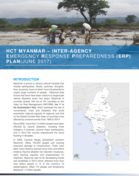
The ERP approach seeks to improve effectiveness by reducing both time and effort, enhancing predictability through establishing predefined roles, responsibilities and coordination mechanisms. The Emergency Response Preparedness Plan (ERPP) has four main components: i) Risk Assessment, ii) Minimum Pr...
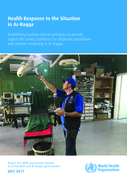
Establishing trauma referral pathways to provide urgent life-saving assistance for displaced populations and civilians remaining in Ar-Raqqa.
In July 2017, a WHO team comprising an external trauma care specialist and two WHO staff members visited the governorates of Ar-Raqqa and neighbouring Al-Ha...
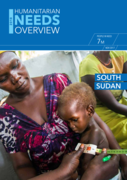
2018 South Sudan Humanitarian Needs Overview
recommended
This document provides the Humanitarian Country Team’s shared understanding of the crisis, including the most pressing
humanitarian needs and the estimated number of people who need assistance. It represents a consolidated evidence base and
helps inform joint strategic response planning.
As ...

In Control. A Practical Handbook for Professionals Working in Health Emergencies Internationally
recommended
In Control imparts knowledge, provokes reflection and triggers curiosity. The first half of the book provides an overview of the organisations, principles, frameworks and themes that every professional deploying to health emergencies should be aware of. The second half of the book provides practical...
The Guide has been developed to enhance the knowledge capabilities of NDMAs and their local partners. This is accomplished by exposing them to the existing tools and services developed by the international community to facilitate effective disaster response to any scale of disaster (small, medium an...
Myanmar is prone to various natural hazards that include earthquakes, floods, cyclones, droughts, fires, tsunamis, some of whichhave the potential to impact large numbers of people. In the event that large numbers of people are affected(such as was the case in 2008 following cyclone Nargis), the gov...

WHO published the first COVID-19 Strategic Response and Preparedness Plan (SPRP) on 3 February, 2020. This report highlights the main points of progress that were made up to 30 June 2020 under the three objectives outlined in the SPRP: scaling up international coordination and support; scaling up co...
A “catastrophic” combination of drought and communities’ declining resilience has left an estimated 2.3 million people facing severe acute food insecurity – up from an estimate of 1.7 million people a month ago.
Communities across southern Africa have been affected by drought since late 2...
Reflections and a call for action after a two-year exploration of emergency response in acute conflicts
There is general consensus that the humanitarian sector is failing to mount timely and adequate responses in the acute phase of conflict-related emergencies, according to the two-year Emergen...
There is general consensus that the humanitarian sector is failing to mount timely and adequate responses in the acute phase of conflict-related emergencies, according to the two-year Emergen...
The Monitoring Report, which covers the first two months of the response from 25 August to 31 October, highlights the work of the Government of Bangladesh, in cooperation with humanitarian partners who are working to provide relief services for the refugee population and Bangladeshi host communities...

This evaluation is the first systematic effort by UNICEF to generate evidence on how well its global as well as country level Community Management of Acute Malnutrition (CMAM) strategies have worked, including their acceptance and ownership in various contexts and appropriateness of investments in c...
Mozambique registered its first COVID-19 case on 22 March 2020 and since then numbers have steadily grown over the following three months with cases now reported in all provinces. In response, a level 3 State of emergency was enacted on 1 April 2020 and has been extended until 29 July 2020, with mea...
The refugee exodus from South Sudan continues at an alarming rate, even as the crisis is entering its fifth year. Close to 2.4 million South Sudanese have fled to neighbouring countries mostly to Uganda—the largest host country in sub-Saharan Africa—followed by Sudan, Ethiopia, Kenya, the Democr...

The Global Appeal provides updated information for government, private donors, partners and other readers interested in UNHCR's priorities and budgeted activities for 2021 to protect and improve the lives of tens of millions of people of concern (refugees, internally displaced people, stateless pers...
2020 was a year like no other. Amidst on-going humanitarian crises, largely fuelled by conflict and violence but also driven by the effects of climate change – such as the largest locust infestation in a generation – the world had to contend with a global pandemic. In less than one year (March-D...
