Filter
314
Text search:
Профилактика
Featured
53
44
Language
Document type
104
76
37
21
19
17
14
9
7
5
3
1
1
Countries
25
25
16
8
8
6
5
5
5
5
4
3
3
2
2
2
2
2
2
2
2
2
2
2
1
1
1
1
1
1
1
1
1
1
1
1
1
1
1
1
1
1
1
1
1
1
1
1
Authors & Publishers
Publication Years
Category
136
123
51
34
14
11
6
Toolboxes
48
42
38
33
30
17
14
14
9
9
8
5
4
4
3
3
2
1
1
Effective implementation of WHO PEN, combined with other very cost effective population-wide interventions, will help even resource constrained settings to attain the global voluntary targets related to reduction of premature mortality and preventionof heart attacks and strokes.
The World Health Organization (WHO) Global Status Report on Noncommunicable Diseases 2010 projects that noncommunicable diseases (NCDs) will be responsible for over 44 million deaths during the next decade, representing an increase of about 15% since 2010. Most of these deaths will occur in the WHO
...
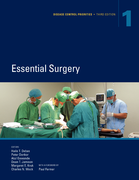
The volume presents data on the surgical burden of disease, disability, congenital anomalies, and trauma, along with health impact and economic analyses of procedures, platforms, and packages to improve care in settings with severe budget limitations. Essential Surgery identifies 44 surgical procedu
...
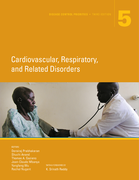
This volume on CVDs, renal, and respiratory disorders has particularly high value. It carries the potential to become the most effective game-changer in global health by helping all countries to combat, contain, and control the biggest killer presently prowling the globe and by enabling us to reach
...
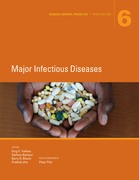
Infectious diseases are the leading cause of death globally, particularly among children and young adults. The spread of new pathogens and the threat of antimicrobial resistance pose particular challenges in combating these diseases. Major Infectious Diseases identifies feasible, cost-effective pack
...
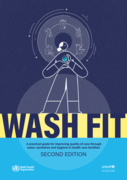
2nd edition
WASH FIT is a risk-based, continuous improvement framework with a set of tools for undertaking water, sanitation and hygiene (WASH) improvements as part of wider quality improvements in health care facilities. It is aimed at small primary, and in some instances secondary, health care fa
...
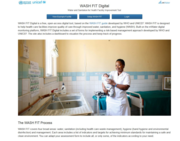
WASH FIT Digital is a free, open-access digital tool, based on the WASH FIT guide developed by WHO and UNICEF. WASH FIT is designed to help health care facilities improve quality of care through improved water, sanitation, and hygiene (WASH). Built on the mWater digital monitoring platform, WASH FIT
...
Fact sheet
Good hygiene is critical to ensure that healthcare staff provide quality care, reduce the spread of infections, and protect the health of communities. This fact sheet explores the healthcare-related risks of poor hygiene and the critical elements of hand hygiene needed to improve qua ...
Good hygiene is critical to ensure that healthcare staff provide quality care, reduce the spread of infections, and protect the health of communities. This fact sheet explores the healthcare-related risks of poor hygiene and the critical elements of hand hygiene needed to improve qua ...

These standard operating procedures are intended to be used when a Member State wishes to request validation of national elimination of trachoma as a public health problem following implementation of the SAFE strategy,1 which comprises: surgery for trachomatous trichiasis, antibiotics to clear infec
...
A concept (leaflet)
This document outlines the concept of a stimulus package for rabies elimination. The aim of a stimulus package is to catalyse rabies control by starting community projects, building local capacity and using success to generate momentum for growth. Governments could apply for ...
This document outlines the concept of a stimulus package for rabies elimination. The aim of a stimulus package is to catalyse rabies control by starting community projects, building local capacity and using success to generate momentum for growth. Governments could apply for ...
ПРАКТИЧЕСКИЕ ШАГИ ПО ОБЕСПЕЧЕНИЮ ВСЕОБЩЕГО ДОСТУПА К КАЧЕСТВЕННОЙ ПОМОЩИ
Rabies is a global public health problem with important socioeconomic impacts. Human rabies is preventable; almost all cases are transmitted through the bite of a rabid dog. Elimination of human rabies is possible. Technical support and tools are available. This report covers:
- Why investment ...
- Why investment ...
This guidance has been developed in line with the WHO corporate risk management framework, the WHO business continuity and contingency plans, as well as the Inter-Agency Emergency Response Preparedness Framework. It is based on a common organiza-tional approach and procedures for managing including
...
As of October 2017, the global database comprised almost 30 000 records, including results from bioassays to measure phenotypic resistance, and biochemical and molecular tests for resistance mechanisms. The current report presents an overview of data on malaria vector resistance for 2010 to 2016. It
...

La concentration en éthanol est mesurée par une méthode densitométrique à l’aide d’un alcoomètre Gay LUSSAC à l’échelle v/v.